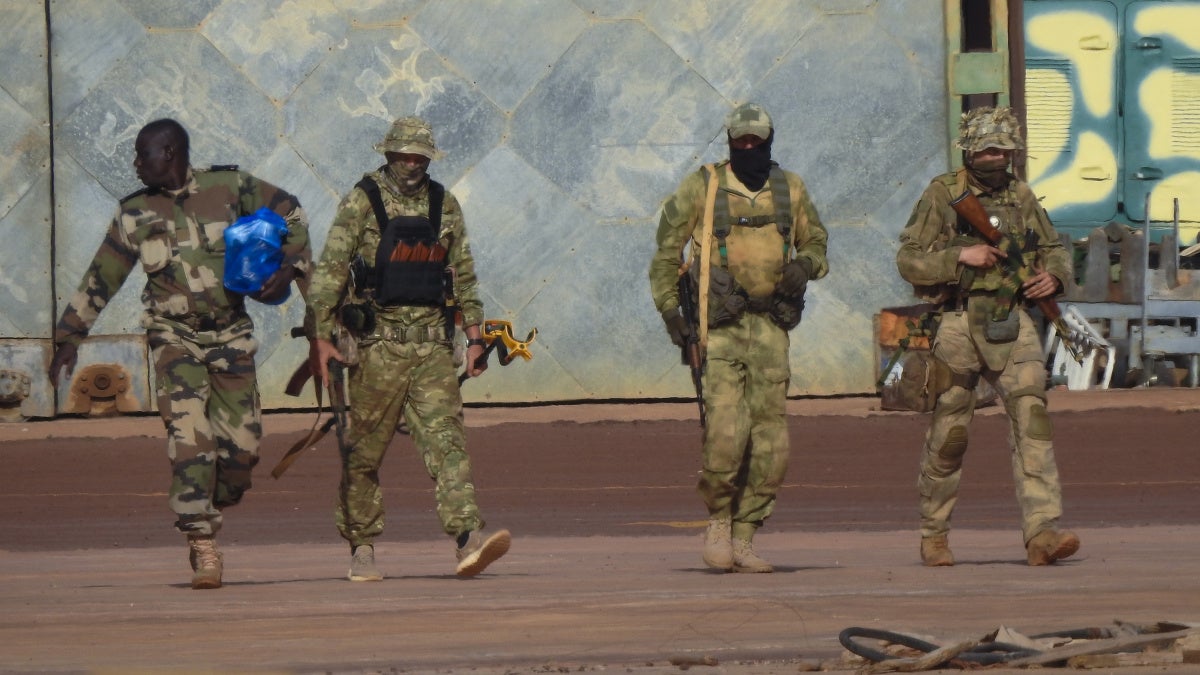
Since January 2025, soldiers from the Malian armed forces and their Russian allies from the Wagner Group have been implicated in a series of extrajudicial executions and forced disappearances targeting Peul civilians, according to reports from Human Rights Watch.
The accusations come amid ongoing counterinsurgency operations in Mali’s central and southern regions, where military and Wagner forces are accused of collectively targeting Peul men, often under the pretext of suspected collaboration with Islamist armed groups such as the Group for the Support of Islam and Muslims (JNIM).
escalating violence in central Mali
Human Rights Watch has documented at least 12 extrajudicial killings and the forced disappearance of 81 others among Peul men since January 2025. Witness testimonies and local reports indicate that soldiers and Wagner fighters have systematically targeted Peul civilians, accusing them of supporting Islamist militants without credible evidence.
- January 2025 (Kobou, Ségou region): Soldiers killed three Peul men, including two elderly individuals, and burned at least 30 homes. Bodies were found with blindfolds and tied hands.
- March 26, 2025 (Farana, Tombouctou region): Four Peul men were beaten, tortured, and forcibly disappeared near a river; only bloodstains and human remains were found.
- April 12, 2025 (Sebabougou, Kayes region): Over 100 Peul men were arrested and taken to a military camp, where dozens were allegedly executed. Bodies of 43 men were later discovered near the base.
- March 19, 2025 (Kourma, Ségou region):
- March 30, 2025 (Belidanédji, Ségou region): Six Peul civilians were executed after soldiers clashed with Islamist fighters.
- May 14, 2025 (Sikere): Four Peul men were executed in a mosque courtyard after being accused of supporting Islamist groups.
role of the Wagner Group and Africa Corps
The Wagner Group, which has operated in Mali since 2022, announced its withdrawal in June 2025, claiming its mission was complete. However, sources within diplomatic and security circles indicate that Wagner fighters are being replaced by Africa Corps, a Russian-backed paramilitary unit under direct Kremlin control, following the death of Wagner founder Yevgeny Prigozhin in 2023.
Both Wagner and Africa Corps have been accused of war crimes alongside the Malian army, including arbitrary arrests, torture, and mass executions. The Malian junta, which seized power in 2021, continues to deny the presence of foreign mercenaries publicly, despite multiple reports and admissions from Russian officials.
international calls for accountability
The African Union (AU) has been urged to intensify efforts to protect civilians in Mali, including supporting investigations into abuses and pressuring authorities to hold perpetrators accountable. The AU’s intervention is critical as Mali’s withdrawal from the Economic Community of West African States (ECOWAS) in January 2025 has limited access to regional judicial mechanisms for victims.
Human Rights Watch has called on Malian and Russian authorities to investigate these crimes and ensure justice for the victims. The organization also highlighted that Mali is a state party to the Rome Statute, allowing the International Criminal Court (ICC) to pursue cases of war crimes committed in the country since 2012.
“Senior Malian and Russian officials must be aware that they could be held accountable for crimes committed by their forces.”
— Ilaria Allegrozzi, Senior Sahel Researcher at Human Rights Watch
legal framework and ongoing violations
All parties in the Malian conflict are bound by international humanitarian law, including Common Article 3 of the Geneva Conventions, which prohibits murder, cruel treatment, and torture of detainees. Forced disappearances, such as those documented in Sebabougou and Kourma, violate the International Convention for the Protection of All Persons from Enforced Disappearance, to which Mali is a signatory.
The Malian junta’s refusal to cooperate with investigations and its continued denial of abuses have raised concerns about the protection of civilians and the rule of law in the country.
key findings
- 12 confirmed extrajudicial killings of Peul civilians by Malian forces and Wagner/Africa Corps.
- 81 forced disappearances since January 2025, with many victims last seen in military custody.
- Mass detentions and torture in military camps, including secret confinement in shipping containers.
- Destruction of civilian property, with entire villages burned to the ground.
- No credible evidence of collaboration between arrested civilians and Islamist groups.
As the conflict in Mali escalates, the international community faces mounting pressure to ensure that perpetrators of these atrocities are held responsible and that civilians, particularly the Peul community, are protected from further harm.