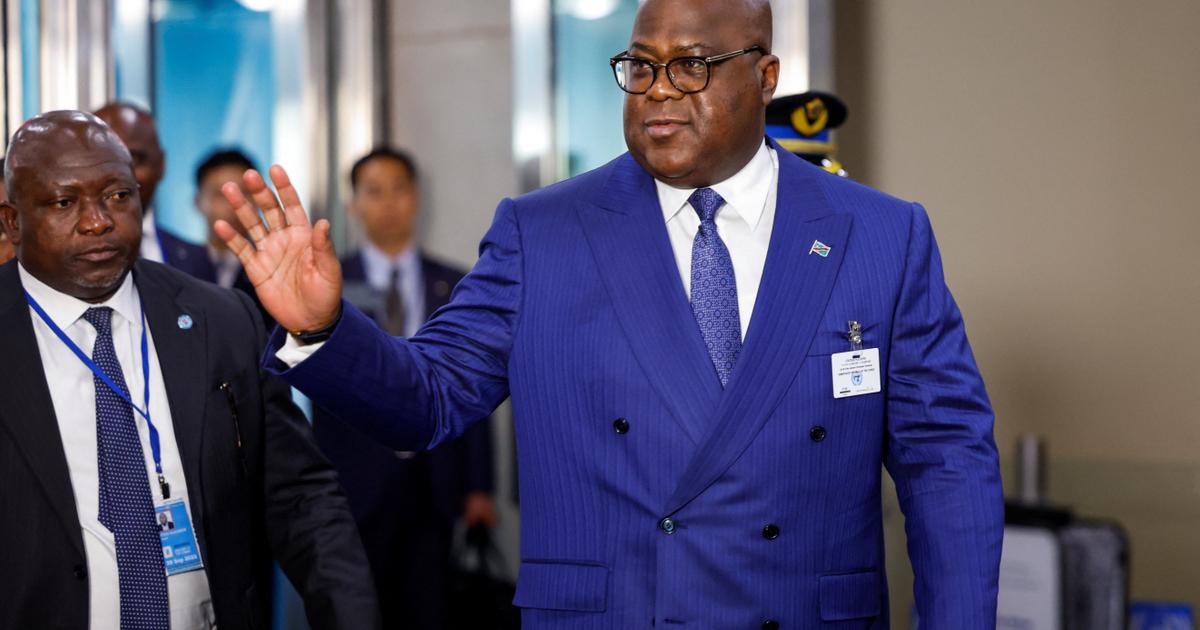
On Thursday, August 13, President Félix Tshisekedi of the Democratic Republic of Congo (DRC) requested Parliament to reconsider the legislation outlining procedures for a constitutional reform referendum. This move came amidst escalating tensions and a “countdown” set by the Coalition Article 64 (C64), a significant opposition platform established in May by the DRC’s leading political forces.
The C64 views this proposed constitutional amendment, championed by the presidential party since 2024, as a strategic maneuver to enable President Tshisekedi to pursue a third term in office. This ambition directly conflicts with the provisions of the 2006 Constitution, which explicitly prohibits a president from serving more than two terms.
In Kinshasa, on Wednesday, August 12, Dieudonné Bolengetenge, Secretary-General of Moïse Katumbi’s Ensemble pour la République and spokesperson for C64, issued a stark warning. He declared that the coalition would no longer heed advice but would instead instigate widespread mobilizations if the president failed to initiate a national dialogue.
The coalition had set Saturday, August 15, as a critical deadline to evaluate any progress in the political dialogue initiated by the president. Simultaneously, C64 urged the populace to engage in “mobilization and resistance” should the “withdrawal of the referendum bill currently under parliamentary review” not be confirmed.
A small step in the right direction
Despite President Tshisekedi’s concession not fully aligning with the C64’s demands—which has opted to “maintain” its pressure—it has been described as “a small step in the right direction.” Prince Epenge, a co-founder of the Coalition C64, shared this perspective.
A planned march in Kinshasa by the C64, originally scheduled for July 22, was postponed following interventions by the Catholic and Protestant Churches of Congo. These influential religious bodies had called upon political stakeholders to prioritize dialogue and de-escalation.
Beyond the C64, a collective of 65 Congolese civil society organizations presented a memorandum to the head of state and the nation’s principal institutions on Monday, August 10. In this document, they implored Félix Tshisekedi to abandon his proposed referendum for constitutional reform. They argued that “such an initiative risks exacerbating political tensions, deepening social divides, and diverting institutions from the nation’s true priorities.”