Why the M51.3 test marks a turning point for French nuclear deterrence
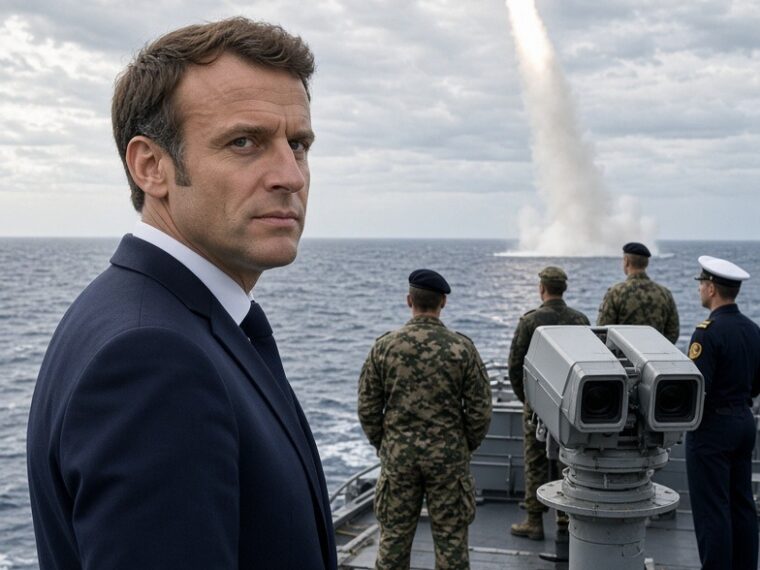
The successful test launch of the M51.3 ballistic missile from the nuclear-powered submarine Le Vigilant on October 6, 2026, was far more than a routine military exercise. Watched by President Emmanuel Macron aboard the Auvergne frigate, the demonstration signaled a major evolution in France’s strategic posture amid deepening European security tensions. With no live nuclear warhead, the missile’s flight was tracked by the Monge test vessel under the supervision of the French Defence Procurement Agency (DGA), confirming the readiness of the new M51.3 system.
This was the first operational acceptance test of the upgraded missile, which entered service in October 2025. Designed to enhance France’s sea-based deterrent, the M51.3 is engineered to overcome advances in enemy missile defense systems, ensuring the credibility of France’s nuclear response in an era of escalating threats. But beyond technical performance, the test carried a clear strategic message: France is reinforcing its autonomous deterrent capacity as a cornerstone of European stability.
Rising tensions: how Europe’s security environment has shifted
The backdrop of the M51.3 test could not be more volatile. Since Russia’s full-scale invasion of Ukraine in 2022, the European security landscape has been reshaped by a surge in hostile actions—including airspace violations, drone incursions, and cyber incidents—many of which have been attributed to Moscow. NATO has responded by increasing surveillance and defense on its eastern flank, particularly in Poland and Romania, where repeated airspace breaches have triggered rapid reaction protocols.
Recent incidents underscore the growing complexity of threats. In September 2026, an Italian fighter jet operating under NATO command shot down a drone in Lithuanian airspace, likely of Russian origin, after it entered from Belarus. In the Baltic Sea, coordinated interceptions by Swedish and Finnish jet fighters of Russian military aircraft further highlight the region’s heightened state of alert following Finland and Sweden’s NATO accession.
While NATO Secretary-General Mark Rutte has repeatedly stated that there is no immediate threat to Alliance territory, he has emphasized that any aggressive action against a member would be preceded by detectable military preparations. This cautious assessment reflects a broader European strategy: prepare for escalation without assuming direct conflict.
Drone attacks and hybrid warfare: the new face of European conflict
The threat matrix has expanded beyond traditional military assets. In October 2026, a Togolese-flagged merchant ship was sunk near Bulgaria after a drone strike, with another vessel hit the day before. Though definitive attribution remains pending, initial security assessments point to Russian involvement. Such incidents reveal a strategic shift: modern threats are not only measured in tanks and missiles but in inexpensive drones, infrastructure sabotage, and covert operations that can cross borders undetected.
This transformation demands a broader approach to deterrence—one that integrates conventional power, cyber resilience, and autonomous nuclear capability. France’s modernization of its nuclear arsenal, including the M51.3 and future hypersonic missiles, is positioned as a safeguard against this evolving threat landscape.
The role of nuclear deterrence in a multipolar world
At the heart of France’s stance lies a fundamental doctrine: to be free, one must be feared; to be feared, one must be powerful. This principle underpins President Macron’s call for a credible, lasting deterrent force. France operates a two-pronged nuclear force—the oceanic component, based on ballistic missile submarines (SSBNs), and the airborne component—which must survive a surprise attack and deliver a decisive response.
The M51.3 upgrade enhances range, precision, and penetration capability, specifically designed to counter advancing missile defense systems. Beyond the missile itself, France is investing heavily in its armed forces, with defense spending expected to double over a decade. New SSBNs are under construction, and a strategic hypersonic glide vehicle program is underway for the air component of the deterrent.
These efforts reflect a strategic choice: not to rely solely on conventional forces or allied guarantees, but to maintain a fully independent nuclear capability as a final insurance against existential threats to national interests.
Balancing autonomy with European cooperation
Yet France’s approach is not isolationist. While emphasizing autonomy, Paris aligns with NATO’s eastern defense buildup and supports integrated European defense initiatives. The recent activation of Eastern Sentry, a NATO operation strengthening airspace monitoring over Poland and Romania, complements France’s own deterrent modernization.This dual strategy—autonomous nuclear deterrence paired with collective defense—aims to deter aggression without triggering direct confrontation. The M51.3 test, conducted as Russia’s war in Ukraine grinds on and hybrid threats intensify, is a reminder: in today’s Europe, security is not just about preparing for crisis—it’s about preventing it from spiraling into open war.
What the M51.3 test means for France and Europe
The M51.3’s operational validation represents more than a technological milestone. It is a commitment to deterrence as a living, adaptive strategy—one that evolves with new threats, from hypersonic glide vehicles to drone swarms and cyber warfare. By maintaining a credible, modern nuclear arsenal, France asserts its role as a stabilizing force in a continent on edge.
Emmanuel Macron’s presence during the test underscored its political weight: deterrence is not just a military tool, but a geopolitical statement. In an era where security boundaries are blurred by hybrid tactics and regional conflicts, France is reinforcing its voice—loud, clear, and backed by action.