Guinea’s rigorous anti-illegal mining campaign reveals a harsh migration reality
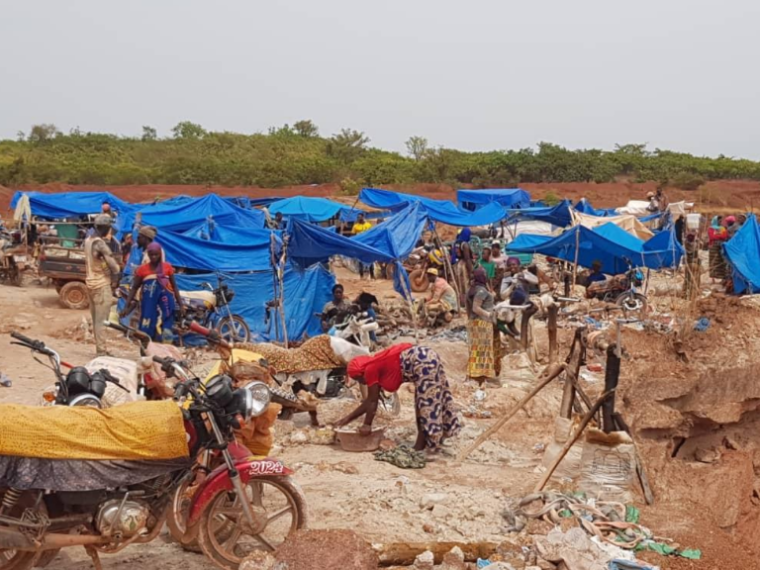
Guinea’s sweeping crackdown on illegal gold mining has exposed a hidden migration crisis involving thousands of economic migrants. Among the 1,412 individuals arrested during recent operations, foreign nationals—particularly from Burkina Faso—were detained, highlighting the deepening economic hardships facing Burkinabè communities.
The arrests, spanning multiple regions, signal a growing trend of cross-border labor flows driven by desperation. As authorities in Conakry escalate enforcement against clandestine mining, the human and policy implications demand closer examination.
Breaking down the arrest figures: where and when the crackdown unfolded
Guinea’s Defense, Security, and Civil Protection ministries confirmed that 1,412 individuals were taken into custody between November 7 and November 10, 2026. The majority—1,263 cases—are being prosecuted, while 149 arrests were recorded in two key regions:
- Kérouané Prefecture: 100 individuals detained
- Siguiri Administrative Region: 49 individuals detained
All suspects were handed over to judicial authorities in Kankan for formal proceedings.
Why are Burkinabè miners risking arrest in Guinea’s gold fields?
For many Burkinabè workers, Guinea’s artisanal gold mines represent a lifeline in an economy plagued by scarcity. The pursuit of gold, despite its hazards and legal risks, offers an alternative to unemployment, poverty, and limited local opportunities.
West African migration for economic survival is not new, but the scale of arrests now underscores a critical regional imbalance. While Burkina Faso struggles with insecurity, internal displacement, and weakened local economies, its citizens are increasingly venturing across borders in search of viable livelihoods.
Burkina Faso’s economic policies under scrutiny amid rising migration
Since seizing power in 2022, Burkina Faso’s transitional leader, Captain Ibrahim Traoré, has prioritized national sovereignty and resource control—particularly in the mining sector. Officials have emphasized renegotiating mineral contracts and increasing state revenue to strengthen economic independence.
Yet, the mass migration of Burkinabè to neighboring gold fields raises pressing questions: How can a country rich in gold resources witness thousands of its citizens seeking survival in another nation’s mines? This paradox calls for a critical review of policy outcomes—especially in job creation, poverty reduction, and rural income generation.
While structural challenges predating Traoré’s administration also contribute to the crisis, the failure to translate sovereignty rhetoric into tangible improvements for citizens remains a stark reality.
Legal crackdowns alone won’t end the cycle of desperation
Guinea’s response—strict judicial action and mining regulation—aims to curb environmental and economic damage caused by illegal mining. However, repression without addressing root causes may prove ineffective. Without sustainable economic alternatives, migrant workers may simply relocate or re-emerge in new illegal operations.
Enhanced cooperation between Guinea and Burkina Faso—including better identification of arrested migrants and their recruitment networks—could help dismantle systemic drivers of this migration. Yet, current data does not specify how many of the 1,412 arrested are Burkinabè, leaving key questions unanswered.
Beyond the numbers: human journeys shaped by economic inequality
The 1,412 arrests represent more than a security statistic—they reflect a silent exodus driven by uneven opportunities across West Africa. Each detention tells a story of a worker, a family, and a community clinging to hope amid economic abandonment.
For Guinea, the challenge lies in balancing resource protection with regional solidarity. For Burkina Faso, the task is clearer: translate economic sovereignty into real pathways to dignity, work, and sustainable income—so that no citizen must leave to build a future.
True sovereignty is measured not just in gold extracted or contracts signed, but in the lived realities of the people.