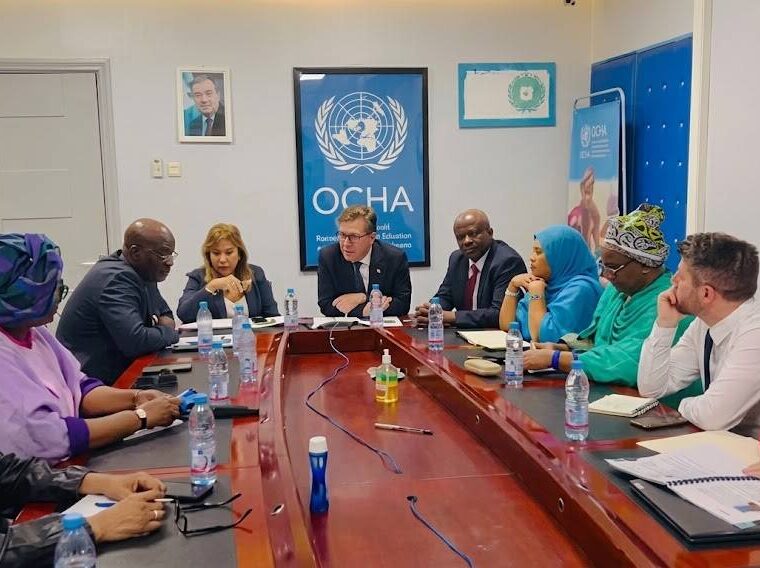
The United Nations has returned to Bamako with a high-level delegation led by Tom Fletcher, UN Under-Secretary-General for Humanitarian Affairs and Emergency Relief Coordinator. The visit comes as Mali grapples with one of its most severe humanitarian crises in years, with 5.1 million people projected to require assistance in 2026.
Bamako hosts UN mission amid rising needs
Monday’s arrival of the UN team follows a period of strained relations between Malian authorities and several international organizations. Multiple aid groups have either scaled back operations or withdrawn entirely, leaving critical gaps in the humanitarian response. The UN delegation’s presence signals a renewed attempt to address the growing needs of vulnerable populations across the country.
5.1 Million at risk: the scale of Mali’s humanitarian emergency
According to the UN’s 2026 Humanitarian Response Plan, 5.1 million people in Mali—nearly one in four citizens—will require urgent aid. Of these, 3.8 million are identified as priority beneficiaries for planned interventions. Behind these figures lie stark realities: families displaced by conflict, communities cut off from basic services, and worsening food insecurity.
The UN warns that access to essentials—clean water, healthcare, sanitation, and protection services—remains a critical challenge. While 3.8 million people are slated for assistance, the gap between needs and available resources continues to widen, leaving hundreds of thousands beyond the reach of current aid efforts.
Diplomatic tensions vs. humanitarian urgency
The UN’s visit occurs against a backdrop of shifting Malian policies toward international actors. Recent government measures have restricted the presence and activities of some foreign aid organizations, framed as efforts to strengthen national sovereignty. The UN delegation’s acceptance by Malian officials suggests a distinction between broader international agencies and the organization itself—but the broader implications for aid delivery remain uncertain.
Analysts note that the challenge now is balancing sovereign priorities with the urgent need for coordinated, life-saving interventions. Can Mali’s transitioning authorities reconcile these objectives while ensuring that millions of displaced and vulnerable citizens receive the support they require?
Sovereignty and solidarity: the way forward
The core dilemma facing Mali is not just diplomatic—it is deeply humanitarian. With 5.1 million people in need, the country must navigate a complex web of constraints: financial shortfalls, logistical hurdles, and the need for seamless collaboration between national authorities, UN agencies, and on-the-ground partners.
The UN’s visit may signal a turning point, but the true test will be whether words translate into action. For the vulnerable communities caught in the crossfire, the need for support is immediate—and the window to act is closing fast.