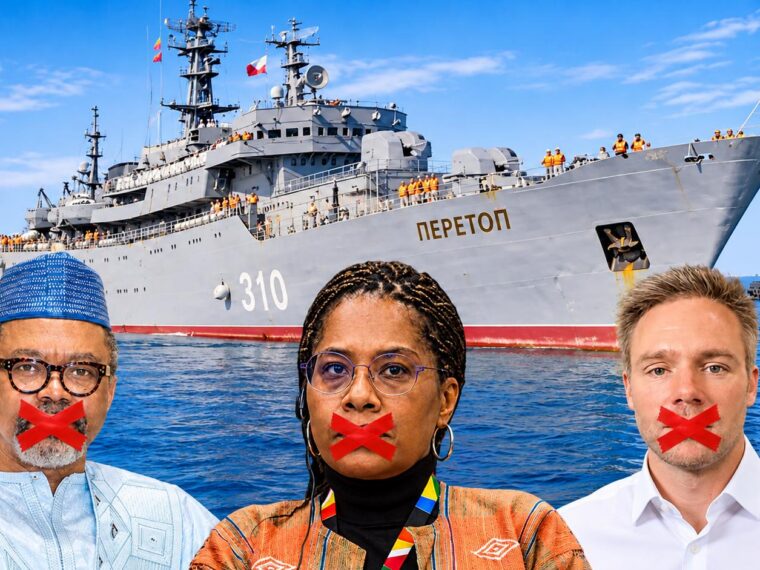
The arrival of a Russian-flagged vessel at the Port of Cotonou has drawn little of the scrutiny that accompanied a recent French warship’s visit. While the earlier French naval presence sparked a wave of commentary and accusations, the same reaction is notably absent this time despite the same questions of transparency and national sovereignty remaining at stake.
Contrasting reactions expose uneven scrutiny
Just weeks ago, the docking of a French ship in Beninese waters became a flashpoint in some regional media circles. Critics questioned the motives behind the visit, suggesting it challenged Benin’s sovereignty. The narrative quickly shifted from objective reporting to speculation, with claims that the partnership undermined the country’s independence.
Now, with a Russian-flagged vessel anchored in Cotonou, the silence from the same voices is striking. Where were the calls for transparency when the maritime partner was Moscow? Why has the discussion shifted from vigilance to indifference? These unanswered questions highlight an inconsistency in how certain narratives are amplified or ignored based on geopolitical alignments.
Media bias or mere coincidence?
Some analysts point to a pattern of selective concern. During the French ship’s visit, prominent commentators and social media figures framed the event as a sovereignty issue, demanding clarity on the vessel’s purpose. Yet, the arrival of a Russian vessel of similar size and type has provoked no comparable calls for scrutiny.
This disparity raises a critical question: Are some media and commentators applying a double standard when assessing foreign naval visits to Benin? If sovereign dignity is truly the concern, then every aspect of every foreign ship’s presence should be scrutinized equally, regardless of the country of origin.
Benin’s right to choose partners
Benin’s diplomatic history has long reflected a commitment to non-alignment and strategic autonomy. The government has the right and the responsibility to engage with partners that align with its national interests. Whether the partner is French, Russian, or from any other nation, the principle remains the same: cooperation should be judged on its merits, not on the geopolitical preferences of external observers.
The recent contrast in media reactions underscores a larger issue: the tendency to frame events through a lens of perceived loyalty rather than factual analysis. When a Western vessel docks, the response is often one of suspicion. When a Russian vessel arrives, the same rigor is not applied. This inconsistency does not serve the public interest it distorts it.
What should define maritime diplomacy?
The sovereignty of Benin does not fluctuate with the flag of an arriving ship. The expectation for transparency and accountability must be consistent, transparent, and free from bias. International law and national protocol do not grant exceptions based on political convenience.
Benin’s port diplomacy should be guided by national interest, not by the commentary of those who measure sovereignty in shades of gray. Whether the vessel is from Paris or Moscow, the standards for disclosure, purpose, and compliance should remain unchanged. True sovereignty is not selective it is uniform.
A call for balanced reporting
As global powers navigate shifting alliances in West Africa, Benin stands firm in its right to define its own partnerships. However, the credibility of regional discourse depends on fairness. Media outlets and commentators have a duty to apply the same scrutiny to all foreign naval visits, regardless of origin.
The quiet arrival of the Russian ship in Cotonou should prompt reflection. If the standard for scrutiny changes with the flag, then the discourse is not about sovereignty it is about something else entirely.
By Agnès Mvogo — Journalist