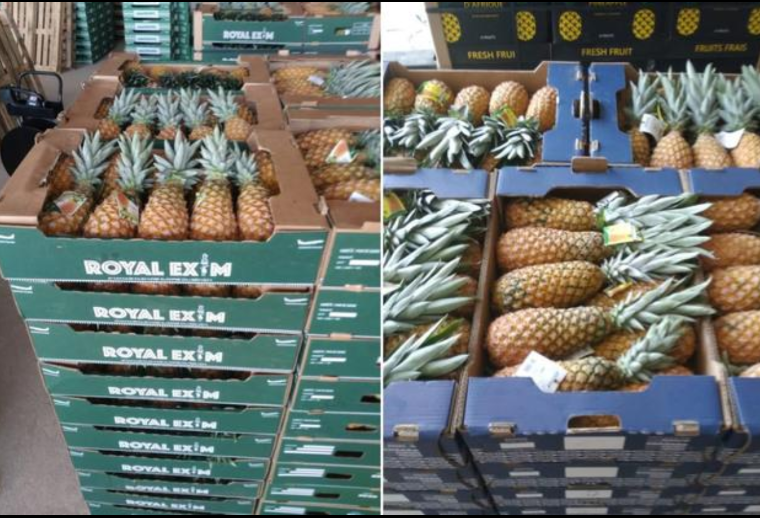
Benin has seen a remarkable 62.5% surge in exports to the United Kingdom over the past year, totaling £13 million as of June 2026, with fresh produce leading the charge. The latest trade data from the UK’s Department for Business and Trade highlights a stark contrast with the declining British exports to Benin, signaling a pivotal shift in bilateral trade dynamics.
Fresh fruits and vegetables drive the export boom
The exponential growth in Benin’s exports is primarily fueled by a 400% increase in merchandise sales, reaching £5 million. Notably, the UK’s demand for Benin’s fresh fruits and vegetables surged to £5.2 million, underscoring the country’s growing appeal in the British market.
The data reveals that agricultural products such as pineapples, cashews, and tropical vegetables are among the top exports, meeting the stringent quality standards required by UK retailers. This trend reflects Benin’s ability to meet international demand while positioning itself as a reliable supplier of high-value crops.
Record trade imbalance persists despite export gains
While Benin’s exports have soared, the UK’s exports to Benin declined by 6.9%, dropping to £54 million over the same period. Despite this reduction, British goods and services still dominate bilateral trade, accounting for 80% of the total £67 million exchanged between the two nations.
The trade surplus remains firmly in the UK’s favor, with a deficit of £41 million in Benin’s trade with the UK. The sharp rise in Beninese exports, however, marks a significant step toward rebalancing the commercial relationship and reducing reliance on traditional trade partners.
Opportunities and challenges for sustainable growth
Analysts emphasize that Benin’s export surge presents both opportunities and hurdles. To sustain this momentum, exporters must address critical challenges, including:
- Compliance with UK sanitary and phytosanitary standards
- Enhancing product traceability and quality control
- Improving storage and logistics infrastructure
- Reducing transportation costs to remain competitive
Experts suggest that investing in local processing and value addition could further boost Benin’s export competitiveness. By exporting processed goods rather than raw materials, the country could capture higher margins and strengthen its position in the UK market.
Long-term potential amid untapped trade corridors
Despite the progress, Benin’s share in the UK market remains modest. In 2025, Benin held just 1.3% of the UK’s import market, ranking 169th among its global trading partners. This figure underscores the vast untapped potential for deeper economic integration.
To capitalize on this growth, Benin must diversify its export basket beyond agricultural products and explore new sectors. Strengthening trade agreements, enhancing market access, and fostering private-sector collaboration could pave the way for a more balanced and resilient trade relationship with the UK.
A cautious outlook for sustained success
While the 62.5% export surge is a positive sign, Benin must consolidate this progress by addressing structural barriers. The coming months will be critical in determining whether this trend can translate into a long-term commercial advantage for local farmers, processors, and exporters.
The challenge now lies in ensuring that this growth is not just a temporary spike but a stepping stone toward a more diversified and competitive Beninese economy on the global stage.