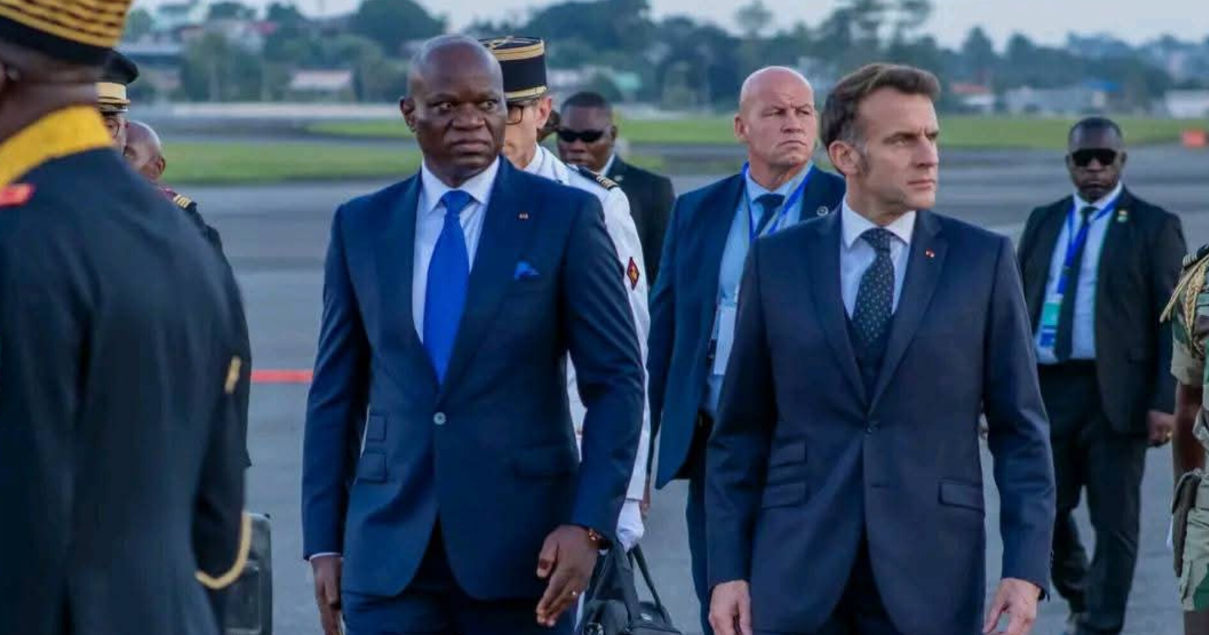
The President of Gabon, General Brice Clotaire Oligui Nguema, has just concluded a landmark state visit to France, where he redefined the future of the Camp de Gaulle military base and pushed for a strategic shift in manganese processing. This three-day diplomatic engagement was not about severing ties but about forging a new, more balanced partnership—one that balances sovereign ambitions with pragmatic cooperation.
Rethinking Camp de Gaulle: sovereignty with cooperation
The Camp de Gaulle, home to the French military presence in Gabon, has long been a symbol of France’s enduring influence in Central Africa. But times have changed. With France recalibrating its military footprint across West and Central Africa, Libreville is taking control of its own security narrative. Rather than demanding an abrupt withdrawal, President Oligui Nguema is negotiating a gradual restructuring of the base’s role.
Under the proposed model, the site could transition into a joint training center, with French involvement limited to technical support and counter-piracy operations in the Gulf of Guinea. This approach allows Gabon to reclaim national pride while preserving essential security cooperation. For Paris, it’s a chance to demonstrate adaptability in a region where recent shifts in alliances have left France scrambling to retain influence.
Manganese transformation: breaking free from raw export dependency
Gabon sits on the world’s second-largest manganese reserves, yet for decades, its mineral wealth has flowed abroad in unprocessed form. That model is now obsolete. During high-level talks in Paris, President Oligui Nguema made it clear to French industrial leaders and Eramet’s local subsidiary, Comilog: Gabon wants more than just extraction—it wants transformation.
The new demands are non-negotiable. Libreville insists on local processing of manganese into high-value products, fair revenue sharing, job creation for Gabonese youth, and financial and technological backing for advanced processing plants. This push aligns with Gabon’s ambition to capitalize on the global energy transition, where manganese is a critical component in electric vehicle batteries. The message is unmistakable: Gabon will no longer be a passive supplier but an active participant in the value chain.
Gabon’s middle path: a lesson in pragmatic diplomacy
While neighboring Sahel nations—Mali, Niger, and Burkina Faso—have embraced a confrontational stance toward former colonial powers, Gabon is charting a different course. The Gabonese approach rejects the false dichotomy of either total dependence or outright rupture. Instead, it embraces a third way: one of calculated negotiation, diversified partnerships, and unwavering self-interest.
Libreville is expanding ties with global players like China, Turkey, and India, all while maintaining a firm but constructive dialogue with France. This strategy underscores a key truth: asserting sovereignty doesn’t require burning bridges. It demands realism, leverage, and the ability to walk multiple paths at once. The Gabonese model offers a blueprint for other African nations seeking autonomy without isolation.
The digital dilemma: when sovereignty overshadows freedom
Despite Gabon’s bold foreign policy maneuvers, concerns linger closer to home. The government’s repeated internet shutdowns and social media restrictions have raised alarms among civil society and opposition voices. Authorities justify these measures as necessary to curb misinformation and preserve public order, but critics argue they reflect a growing authoritarian impulse.
During informal discussions on the sidelines of the summit, French officials privately emphasized the importance of upholding fundamental freedoms and freedom of expression. For President Oligui Nguema, the challenge is delicate: he must balance internal stability with the international credibility he’s worked hard to build. The world is watching not just how Gabon negotiates with France, but how it governs itself.
The road ahead: turning strategy into reality
As the state visit draws to a close, the stakes are clear. Gabon has laid out a vision for a partnership that is both assertive and adaptive—a model that prioritizes national development without severing strategic alliances. But vision alone won’t suffice. The true test lies in execution.
To succeed, Libreville must follow through on its promises: restructuring the military presence at Camp de Gaulle, accelerating local manganese processing, and ensuring that democratic freedoms—especially digital rights—are not sacrificed in the name of control. The Gabonese experiment in balanced diplomacy is far from over. Its outcome will shape not just Gabon’s future, but the broader debate on how African nations can reclaim agency without sacrificing stability.