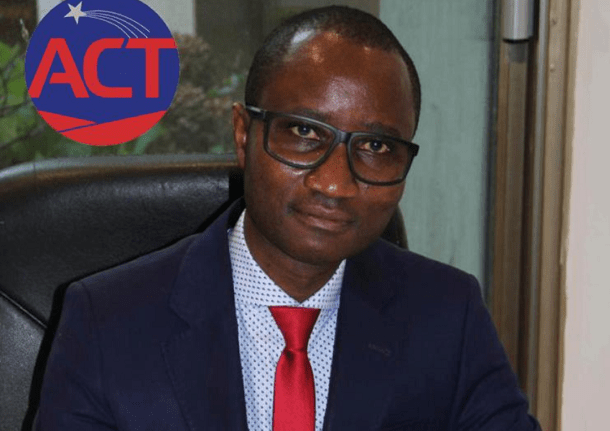
In a sharply worded critique, Ibrahima Thiam, leader of Senegal’s ACT party, has lambasted recent remarks made by Ousmane Sonko, labeling them a threat to national unity. Thiam’s response, articulated in a published opinion piece titled ‘The Strategy of Amalgamation: Sonko’s Latest Misstep’, underscores his view that Sonko’s comments unfairly targeted Touba and, by extension, the Mouride community.
Thiam argues that Sonko’s statements are not grounded in substantive debate but rather in a deliberate strategy of provocation, shock rhetoric, and divisive politics. He contends that implicating an entire city and religious community in alleged wrongdoing represents a serious political misstep, one that undermines the principles of individual accountability central to democratic governance.
Highlighting the gravity of such rhetoric, Thiam emphasizes that in a democracy, responsibility is personal, not collective. He asserts that leaders who allow suspicion to linger over an entire group do not seek truth but instead fuel harmful generalizations. The ACT president goes further, accusing Sonko of adopting a populist approach where sensationalism replaces reasoned argument and media spectacle overshadows substantive discourse.
According to Thiam, this tactic is designed to energize PASTEF’s base by fostering an atmosphere of confrontation. He stresses that Touba is not merely a city but a vital spiritual, economic, and historical hub of Senegal. The Mouride community, he notes, is a cornerstone of national cohesion, and any public statement that could be interpreted as a broad indictment of this group must be handled with the utmost care.
Concluding his remarks, Thiam calls for more measured political discourse, one anchored in facts and mutual respect. He advocates for a tone that prioritizes national unity over divisive rhetoric, warning that unchecked passions risk overshadowing the democratic process.