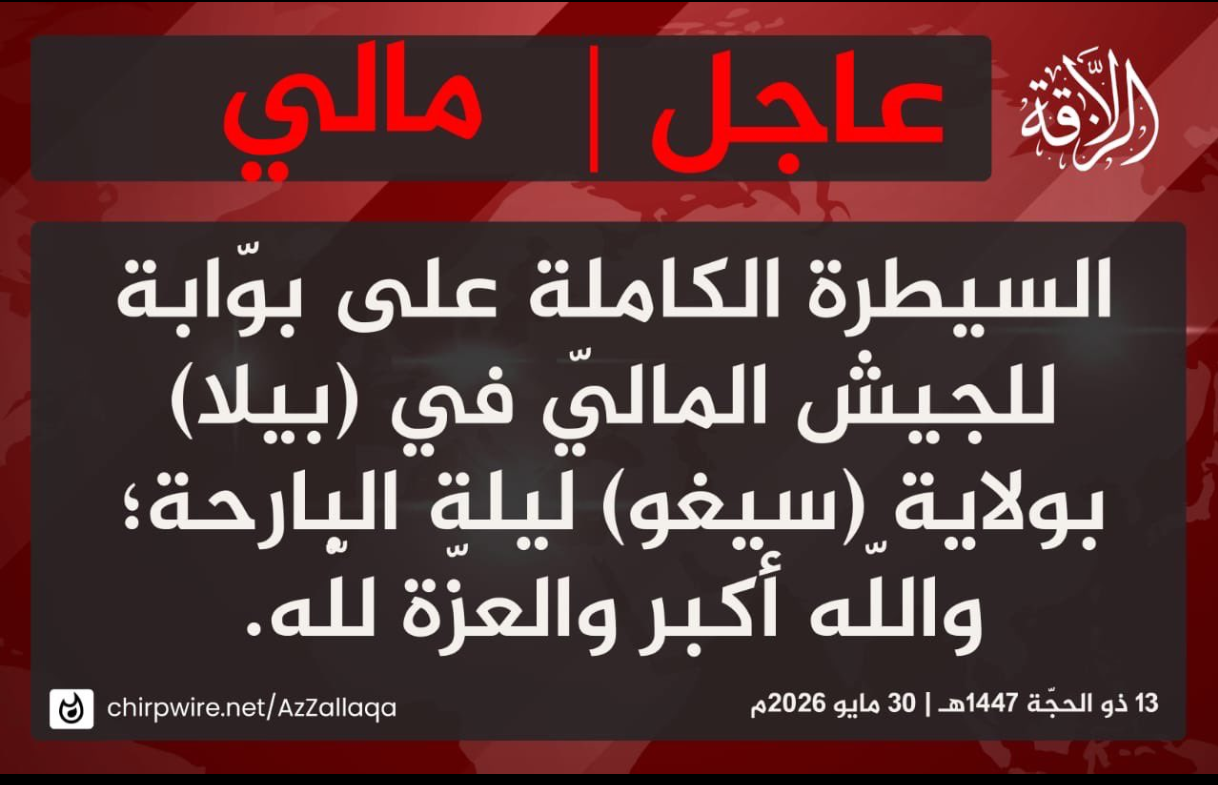
A coordinated assault by the Group for the Support of Islam and Muslims (JNIM) in the early hours of May 30 left Mali’s military scrambling to assess losses after jihadists overran a strategic outpost in the Ségou region. The attack, which the group claims included the seizure of weapons and ammunition, underscores the widening gap between Bamako’s stated security objectives and the relentless insurgency threatening central Mali.
Night of terror rattles central Mali
The raid on the military position unfolded under cover of darkness, with local accounts describing intense exchanges of fire that continued until dawn. While the JNIM’s claim of seizing equipment has not been independently verified, the scale of the operation suggests a level of operational sophistication that challenges the narrative of territorial control being restored by Malian forces.
Despite the junta’s pledge to reclaim all areas under threat, the seizure of yet another military installation in a region previously described as stabilized highlights the fragility of the state’s security position. The failure to prevent such strikes raises questions about the effectiveness of the current counter-insurgency strategy, which has relied heavily on external support.
Russian partnership fails to stabilize the region
The arrival of Russian military advisors and contractors was touted as a game-changer in Mali’s fight against armed groups. Yet the Ségou attack casts doubt on the success of this approach. While Moscow-backed operations have included aerial strikes and large-scale sweep operations, these measures have not succeeded in curbing the JNIM’s ability to conduct mobile, surprise attacks.
The jihadist group’s continued ability to infiltrate and overrun well-guarded positions suggests that the security landscape remains fluid—and dangerously unpredictable. With no clear signs of a shift in tactics, the Malian authorities appear increasingly unable to anticipate or counter the insurgents’ movements.
From insecurity to hunger: a humanitarian emergency unfolds
The violence in Ségou is not just measured in military losses—it is also fueling a growing food crisis. The region, once a breadbasket thanks to its fertile lands along the Niger River, is now grappling with widespread agricultural abandonment as farmers flee or avoid working their fields out of fear. Markets have been disrupted, supply routes cut by improvised explosive devices, and livestock looted, leaving local populations with dwindling access to food.
The JNIM’s strategy appears to include the deliberate use of hunger as a weapon, exacerbating an already dire situation. With state institutions stretched thin by military priorities, humanitarian assistance remains insufficient, pushing more families to the brink of survival.
Displacement surges as civilians flee violence
As attacks multiply and food shortages deepen, thousands are abandoning their homes in Ségou, seeking refuge in urban centers like Bamako or in overcrowded, under-resourced displacement camps. These communities, now living in precarious conditions, face a lack of basic services, including healthcare and sanitation.
Women and children bear the brunt of this displacement crisis, with many families struggling to meet even the most basic needs. The strain on local NGOs, which are struggling to provide even minimal support, reflects the broader failure of the state to protect its people.
Military focus alone cannot end the crisis
The Ségou attack serves as a stark reminder that military solutions alone cannot stabilize Mali. Despite the junta’s emphasis on regaining territorial control, the insurgency continues to gain momentum, while the humanitarian toll spirals. Without a broader strategy that prioritizes civilian protection, restores public services, and addresses food insecurity, the country risks seeing its social fabric unravel under the weight of unending conflict.