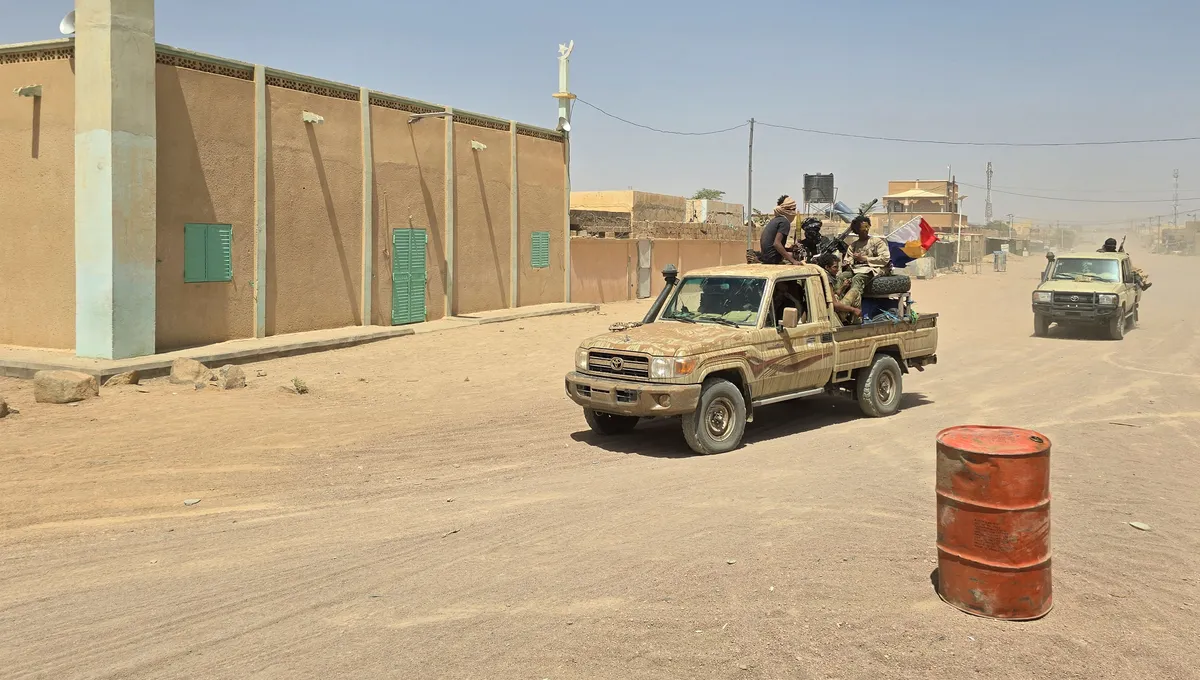
In a stunning turn of events, video footage has captured a column of Russian military vehicles withdrawing from the northern Malian city of Kidal without firing a single shot. The sudden evacuation left the path open for Tuareg rebels, allied with jihadist factions, to seize control of the strategic stronghold. This unprecedented development has sent shockwaves through Bamako’s military regime, which had positioned Russian forces as its primary security partner following the departure of French troops in 2022.
The Russian withdrawal from Kidal comes just one day after the Group for the Support of Islam and Muslims (JNIM) claimed responsibility for coordinated attacks across multiple regions, including the capital Bamako. In their statement, the jihadist coalition explicitly asked Russian forces to refrain from intervening, suggesting a quid pro quo for future cooperation—a request that appears to have been honored.
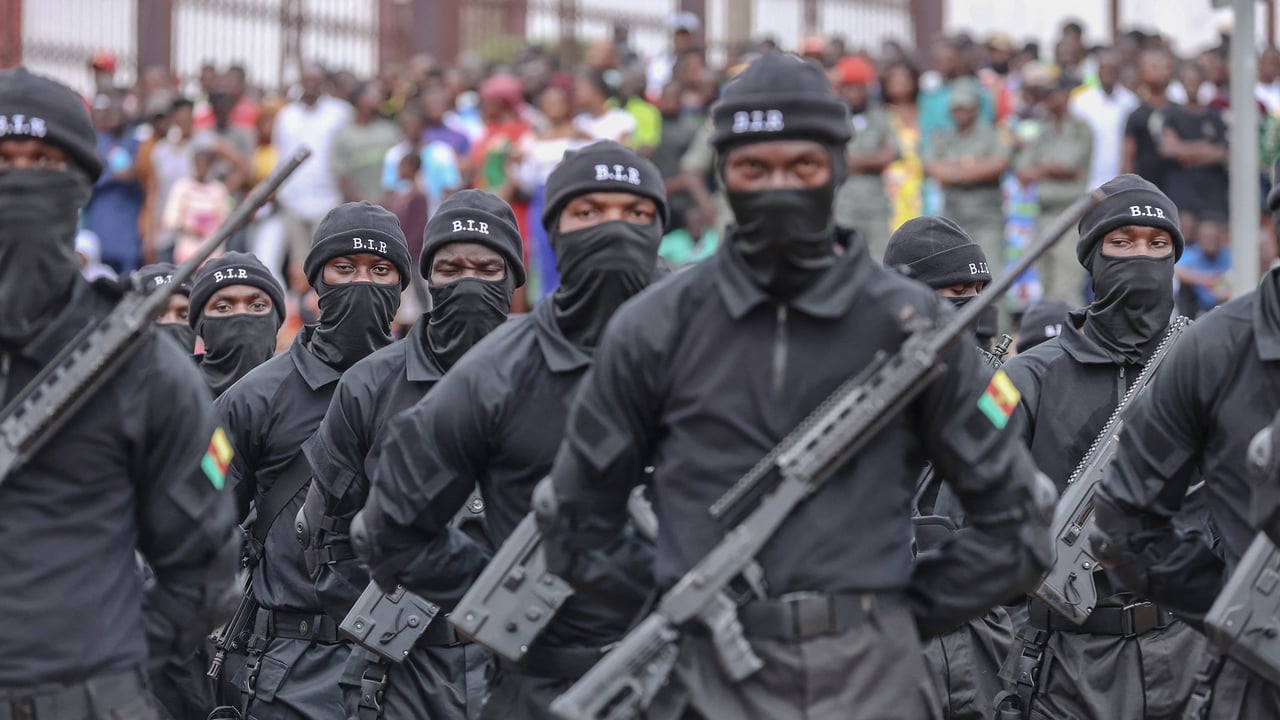
With approximately 2,500 Russian soldiers deployed in Mali as part of the Africa Corps (the successor organization to the Wagner Group), their passive response to the ongoing security crisis marks a significant setback for both Bamako’s junta and Moscow’s strategic ambitions in the Sahel. The Malian regime, which overthrew the democratically elected government in 2021 and expelled French forces the following year, had gambled on Russian military support to stabilize the country. Yet the latest developments expose the fragility of this alliance.
military regime in Bamako faces unprecedented challenges
The fall of Kidal—once a symbol of the junta’s military prowess—underscores the regime’s growing vulnerabilities. The city had been recaptured in 2023 after an 11-year insurgency led by Tuareg separatists, who declared the region the independent state of Azawad. The victory, achieved with Russian backing shortly after the withdrawal of French and UN forces, had been hailed as a major triumph for the Malian military and its leader, Colonel Assimi Goïta.
Today, the situation has dramatically reversed. The assassination of the powerful Defense Minister during a weekend attack on his residence, combined with simultaneous assaults across multiple regions, suggests that rebel and jihadist forces are operating with unprecedented coordination. Reports indicate that these groups have expanded their territorial control, posing an existential threat to the Malian state.
regional implications of the crisis
The consequences of this escalation extend far beyond Mali’s borders. The JNIM, which spearheaded the recent offensive, maintains close ties with Al-Qaeda and has long-term regional ambitions. Analysts warn that if Bamako falls, neighboring countries—including Niger and Burkina Faso, both members of the Sahel Alliance—could face similar destabilization. Coastal nations such as Côte d’Ivoire and Ghana are also at risk, as jihadist incursions creep southward.
For the Malian population, the collapse of security arrangements over the past decade has been catastrophic. After France’s 2013 intervention successfully pushed back jihadist advances, the subsequent years saw a deterioration in governance, culminating in military coups and the expulsion of Western forces. The arrival of Russian mercenaries was supposed to reverse this trend, but the latest events prove otherwise.
a decade of failed strategies
The current crisis is the culmination of years of missteps. Following France’s initial success in halting jihadist expansion, Mali’s military leadership undermined democratic institutions, dissolved political parties, and installed a leader without elections. Public discontent has simmered, exacerbated by economic hardship, including a recent blockade of Bamako that cut off fuel supplies from neighboring countries.
While the fall of Bamako remains uncertain, the junta’s grip on power is clearly weakening. With Tuareg separatists consolidating control in the north and jihadist factions vying for dominance in the center and south, Mali risks fragmentation. For the Sahel region, this unraveling could trigger a domino effect, drawing in additional countries and deepening a crisis that has already claimed thousands of lives.