Bamako’s streets reveal Mali’s governance breakdown
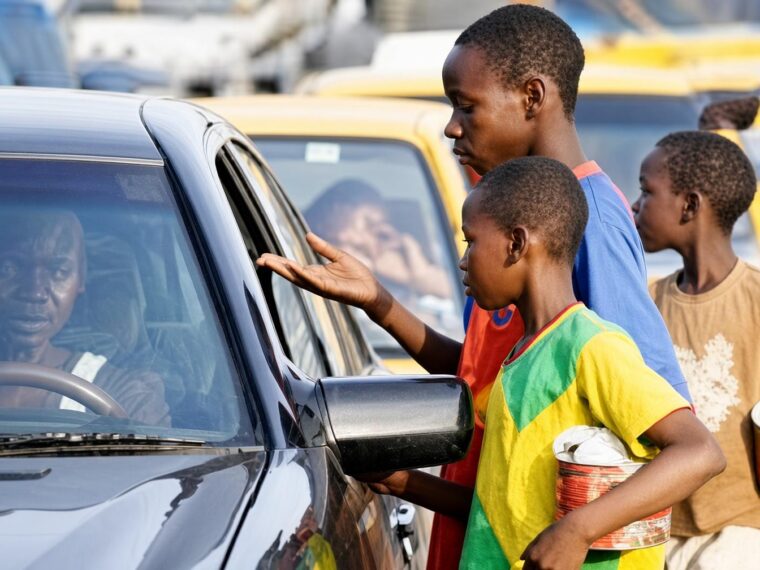
Every day in Bamako’s busiest intersections, public buildings, and places of worship, a relentless wave of beggars takes over the urban landscape. From children forced into alms-seeking to disabled adults and elderly citizens, the crisis shows no sign of abating. Despite repeated government pledges and high-profile awareness campaigns, Mali’s battle against street begging remains a glaring failure—one that lays bare the country’s deep-rooted institutional collapse.
Urban begging: a structural crisis disguised as tradition
The problem has evolved beyond a social issue; it has become embedded in the city’s fabric. At traffic lights and outside mosques, talibés—young Quranic students often exploited by unscrupulous teachers—mix with abandoned minors, risking their lives to survive. Government initiatives aimed at removing children from streets and providing social protection have proven ineffective. Operations to rescue minors and raise awareness, spearheaded by the Ministry of Women, Child and Family Promotion, achieve little beyond temporary relief. The root issue remains unaddressed: insufficient shelters, inadequate funding, and a chronic lack of sustainable follow-up ensure that those pulled from the streets return within hours.
Governance failures fuel the crisis
Structural state deficiencies are the engine behind this explosive growth in begging:
- Collapsing social services: Decades of underfunding have gutted education and social protection systems. The state’s failure to deliver free, quality compulsory education leaves families with no choice but to send children into hazardous street labor.
- Unregulated traditional education: Informal Quranic schools operate with near-total impunity. Child exploitation disguised as religious education thrives under the noses of authorities, who cite fragile social and religious sensitivities as excuses to avoid enforcement.
- Resource misalignment and corruption: Public funds continue to pour into security and institutional upkeep rather than human development. Social programs, whether funded domestically or by international partners, suffer from glaring mismanagement. Bureaucratic red tape and embezzlement divert aid, ensuring it never reaches those most in need.
- Chronic institutional weakness: Transparency is nonexistent. Programs designed to reintegrate marginalized groups lack monitoring, evaluation, and accountability. Promises of reform vanish amid administrative chaos and political inertia.
The silent fuse of violence and instability
What began as a humanitarian crisis now threatens Mali’s long-term security. Vulnerable youth, abandoned by the state and stripped of education or dignity, become prime targets for radicalization and recruitment into armed groups. The expansion of street begging is not merely a social blight—it is a ticking bomb. Each neglected child, each abandoned elder, each disabled person forced to beg reinforces the cycle of poverty and fuels future instability.
Mali’s leaders have chosen public relations over action. Speeches and awareness campaigns replace real reforms. Laws remain unenforced. State coffers pour into illusions of control while the suffering of millions deepens. The street begging epidemic is not a temporary shock; it is the visible symptom of a broken social contract. Without bold systemic change—rooted in law enforcement, transparency, and investment in people—Bamako’s streets will continue to overflow with suffering, and Mali’s future will remain trapped in the dirt of its own failures.