Togo’s strategic shift raises questions about foreign military presence
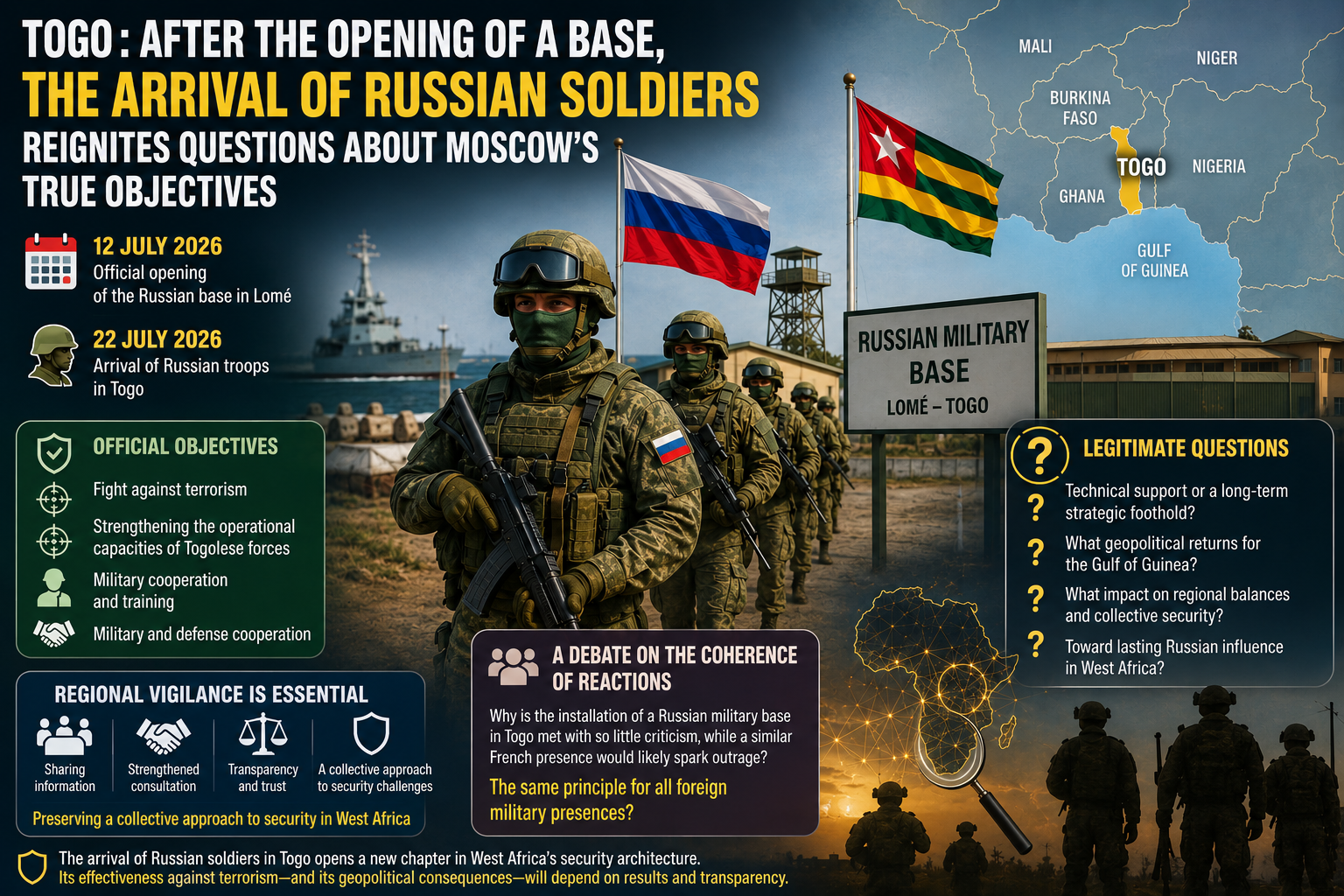
Togo has entered a new phase in its security partnerships after Russian troops arrived in the country on 22 July 2026, just days after the inauguration of a Russian military base in Lomé on 12 July. Officially, the deployment is framed as a joint effort to combat terrorism and enhance the operational capabilities of Togolese forces.
The move underscores Moscow’s expanding influence in West Africa, where it has steadily deepened military ties through defense agreements, training programs, equipment deliveries, and, in some cases, direct troop deployments. While Lomé presents this as a sovereign decision, the long-term implications for regional security dynamics remain a subject of intense scrutiny.
More than just counterterrorism?
The arrival of Russian personnel in Togo aligns with a broader pattern of Moscow’s growing engagement across Africa. Beyond immediate security concerns, the deployment could pave the way for expanded cooperation in intelligence sharing, logistics, defense industry collaboration, and diplomatic defense initiatives. These dimensions extend far beyond the stated counterterrorism objectives, raising questions about Russia’s long-term strategic goals in the Gulf of Guinea.
Analysts emphasize that the presence of foreign military forces is never a neutral act. It can reshape regional power balances, influence local security policies, and even alter the geopolitical landscape. For Togo, a country traditionally aligned with Western partners, this shift represents a significant recalibration of its defense posture.
Double standards in assessing foreign military presence?
A striking contrast has emerged in the public discourse surrounding foreign military deployments in West Africa. While the establishment of a French military base in similar circumstances would likely provoke strong reactions—particularly from members of the Alliance of Sahel States (AES), which has repeatedly criticized Western military presence—Russian military cooperation in Togo has so far faced comparatively little opposition.
This disparity has fueled speculation among observers. Some argue that the difference in perception stems not from principle, but from geopolitical alignment. If the presence of any foreign military is viewed as a potential threat to sovereignty or regional stability, critics contend, the same standards should apply regardless of the country of origin. Others suggest that the distinction may reflect broader shifts in global alliances, where partnerships are evaluated less on their stated objectives and more on their alignment with prevailing political narratives.
Regional implications and the need for transparency
For neighboring states, the evolving security landscape in Togo demands heightened attention. While no country has the right to dictate Togo’s defense choices, the expansion of foreign military influence in the subregion could have ripple effects on collective security frameworks and regional stability.
Experts warn that opacity in such arrangements risks breeding mistrust. To mitigate tensions, they advocate for greater information sharing and regional dialogue. A transparent approach—one that clearly outlines the scope, duration, and objectives of military cooperation—could help prevent misunderstandings and foster a more cohesive regional response to shared threats, particularly the cross-border menace of terrorism.
The arrival of Russian troops in Togo marks a pivotal moment in West Africa’s security architecture. Its success in combating armed groups, as well as its broader geopolitical consequences, will be measured not only by immediate outcomes but by the broader impact on Lomé’s relations with Moscow and its neighbors. As the situation evolves, the true extent of this cooperation—and its implications for the region—remains to be seen.