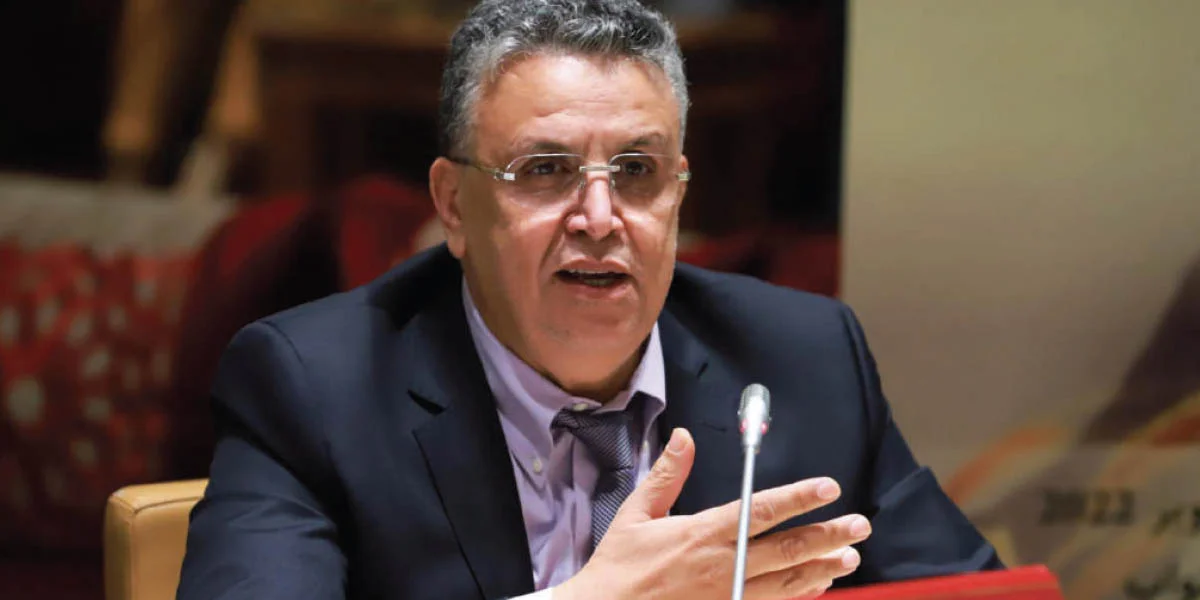
The Moroccan Minister of Justice, Abdellatif Ouahbi, has reignited discussions surrounding the status of Ceuta and Melilla, asserting that Morocco remains committed to pursuing negotiations with Spain regarding these territories, which Rabat considers integral to its sovereignty. In a recent statement, he emphasized that the matter remains an active topic within bilateral dialogues, framed by a long-term strategy of diplomacy and patience. This issue frequently surfaces during high-level meetings between officials from both nations, he noted.
Addressing the surge in irregular migration on July 30 and 31, Ouahbi underscored Spain’s obligation to facilitate the repatriation of unaccompanied Moroccan minors who crossed into Ceuta. He also criticized Spain’s expectations for Morocco to curb irregular departures, while allowing those who reach Spanish soil to access legal procedures—a point he argued creates an imbalance in responsibilities.
The minister further stressed the need for both countries to align on legal frameworks and operational mechanisms to combat illegal migration, stating that Morocco cannot be expected to serve as Europe’s sole enforcement arm in this regard.
Following these remarks, Spain’s Ministry of Foreign Affairs swiftly dismissed Morocco’s territorial claims. Officials reiterated that the status of Ceuta and Melilla is non-negotiable, firmly asserting that these cities are “an internationally recognized part of Spain’s territorial integrity.”
Diplomatic posturing: Albares stays measured, Imbroda reacts strongly
During a visit to Ceuta, Spanish Foreign Minister José Manuel Albares focused exclusively on the recent migration challenges, avoiding any mention of the sovereignty dispute. In his public statements, he acknowledged Morocco’s willingness to take back unaccompanied minors who entered during the latest influx.
Meanwhile, Juan José Imbroda, President of Melilla and a prominent figure from Spain’s Partido Popular, took a more confrontational stance. In a public address, he questioned the purpose of Ceuta and Melilla for Morocco, given its struggles with internal governance and youth migration. Imbroda described the situation as an “international embarrassment” for Morocco, urging the country to address the crisis with greater responsibility.
The Moroccan Ministry of the Interior responded by highlighting the shared responsibility required to manage irregular crossings into Ceuta. In a press statement, it warned of online calls encouraging further attempts to cross on August 15, stressing that combating human trafficking and illegal migration cannot rest solely on Morocco’s shoulders.