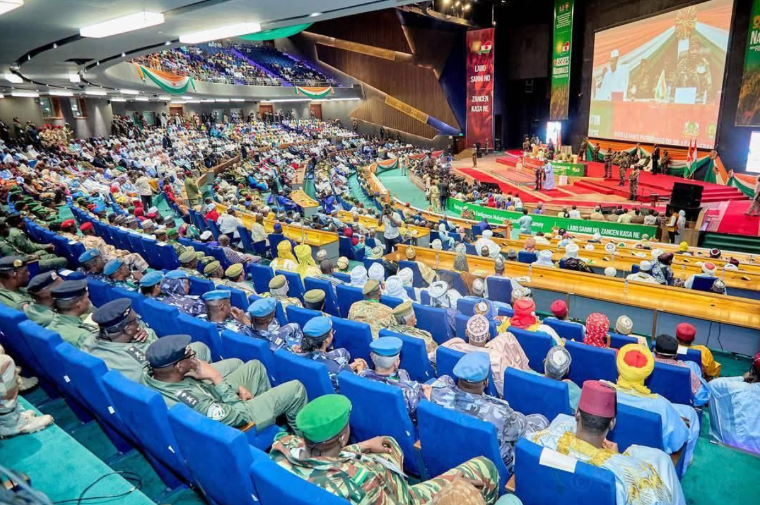
Military cooperation with Algeria faces legal scrutiny under Niger’s new charter
Niger is at the center of a constitutional debate after Algeria’s Parliament approved sending troops to the country on October 25, 2026. The move raises a critical question: did Niamey comply with its own Charter of Refoundation by consulting the public before allowing foreign forces on national soil?
The decision, framed as a security cooperation initiative aimed at protecting strategic interests, could redefine regional military dynamics. Yet the legal framework governing such deployments—specifically Article 45 of the 2025 Charter—demands transparency and public approval through a referendum in ordinary circumstances. With Algeria’s military presence imminent, the Nigerien government must clarify whether this requirement was met.
What the Charter of Refoundation says about foreign military presence
The Charter of Refoundation, promulgated on March 26, 2025, establishes the legal foundation for Niger’s transition period. It sets strict conditions for the presence of foreign forces, including a mandatory referendum to secure public consent. The president may bypass this requirement only in cases of proven emergency—but even then, the authorization is temporary and must be justified with a Council advisory opinion.
The Charter’s text is unequivocal: any long-term or permanent deployment of foreign troops requires democratic validation. Short-term emergency measures, while permitted, cannot serve as a blanket authorization for sustained missions. As Niger’s military leadership navigates this constitutional mandate, the absence of public consultation on the Algeria deal casts doubt on whether due process was followed.
Did Niger hold a referendum or declare an emergency?
Despite official Algerian approval, no verifiable evidence suggests Niger conducted a referendum on the Algeria troop deployment. Neither has the government provided public documentation of a presidential decree invoking emergency powers under Article 45. This ambiguity leaves the legitimacy of the agreement in question.
The Algerian Parliament’s approval satisfies Algeria’s internal institutional requirements—but it does not fulfill Niger’s constitutional obligations. The Nigerien government must now publicly justify its procedural choice: was this an exception taken in genuine urgency, or a deviation from the Charter’s democratic safeguards?
Sovereignty beyond borders: defending national interests through institutional compliance
Niger’s sovereignty is not solely about controlling its territory; it is also about honoring the rules that define its governance. Since the July 26, 2023 military takeover, the Charter has gained constitutional status, making compliance with its provisions a litmus test for institutional credibility.
International cooperation is vital in combating regional insurgency and securing critical infrastructure. However, partnership cannot override constitutional mandates. The Nigerien authorities must demonstrate that their decisions align with the Charter’s democratic principles—not just strategic expedience.
Risks of unchecked foreign military engagement
A poorly structured troop agreement can lead to long-term vulnerabilities. Niger risks becoming overly dependent on foreign protection, weakening its own security capabilities over time. Additionally, unclear mission objectives—whether focused on civil protection, counterterrorism, or infrastructure defense—can blur priorities and fuel public distrust.
There is also the danger of mission creep: a limited deployment to protect energy assets could expand in response to attacks or instability, without transparent benchmarks or timelines. Without clear public communication and oversight, such agreements risk eroding trust between citizens and state institutions.
Time for official clarity
The Nigerien government must now disclose the legal basis for the Algeria troop agreement: Was it enacted under emergency powers, or did it bypass constitutional procedure? Transparency is not optional—it is a constitutional obligation.
Publishing the key terms of the agreement—within legitimate security constraints—would allow civil society, political figures, and advisory bodies to assess whether the Charter was respected. This is not a challenge to cooperation, but a demand for accountability in a nation rebuilding its institutions on democratic principles.
Conclusion: Legitimacy depends on constitutional adherence
Niger’s relationship with Algeria must rest on more than military convenience. It must be built on adherence to the rule of law. The Charter of Refoundation does not merely guide governance—it embodies Niger’s contract with its people. When it comes to foreign troops, compliance is not just legal; it is an act of national self-respect.
Until the government provides definitive answers, the legitimacy of the Algeria troop deployment remains legally and democratically unresolved.
