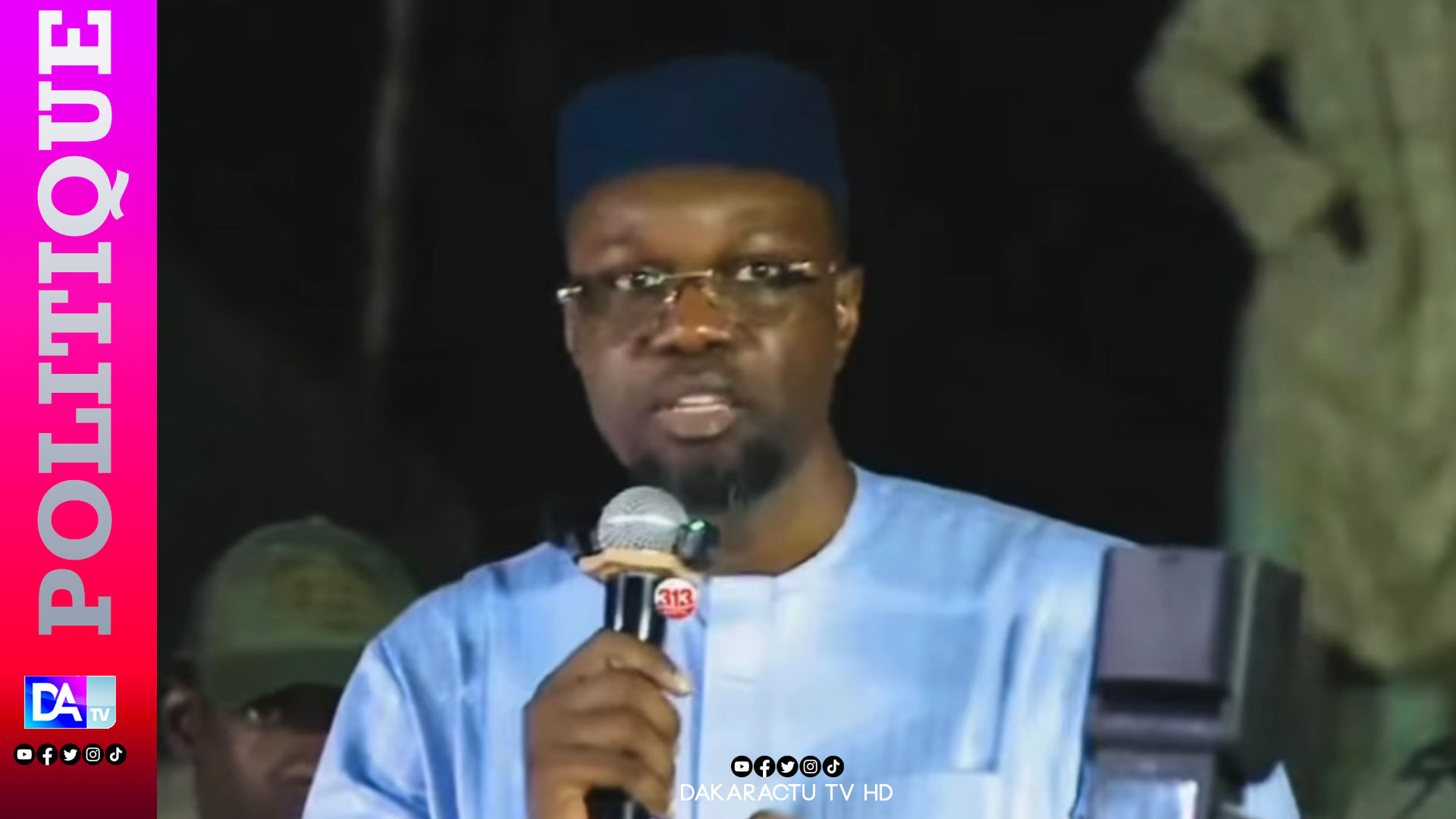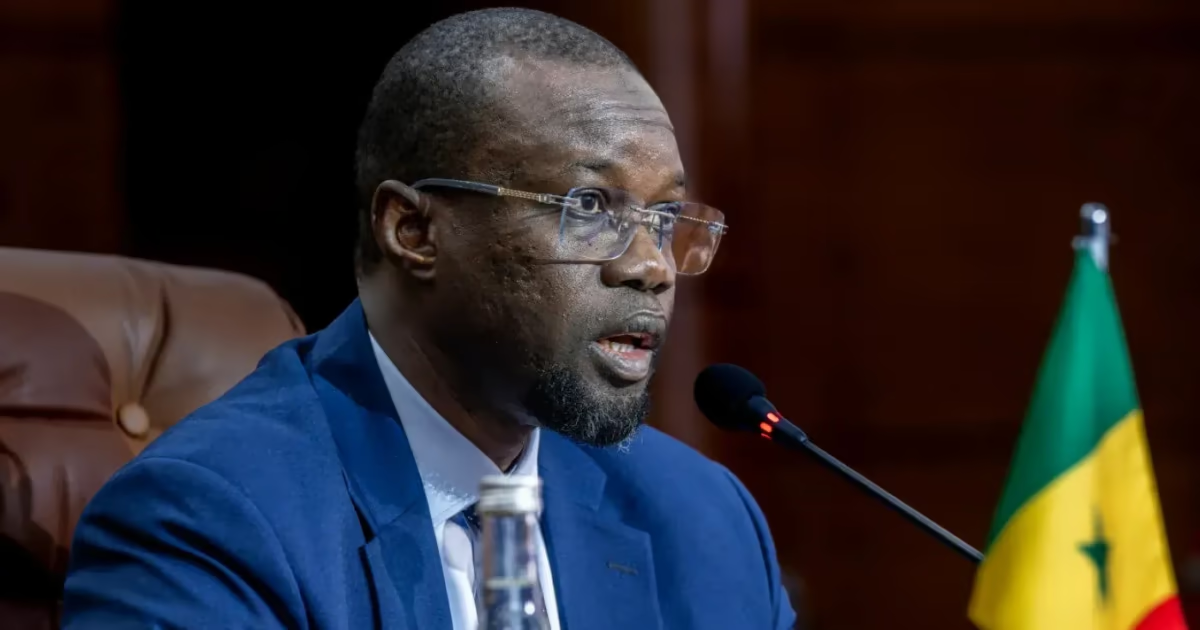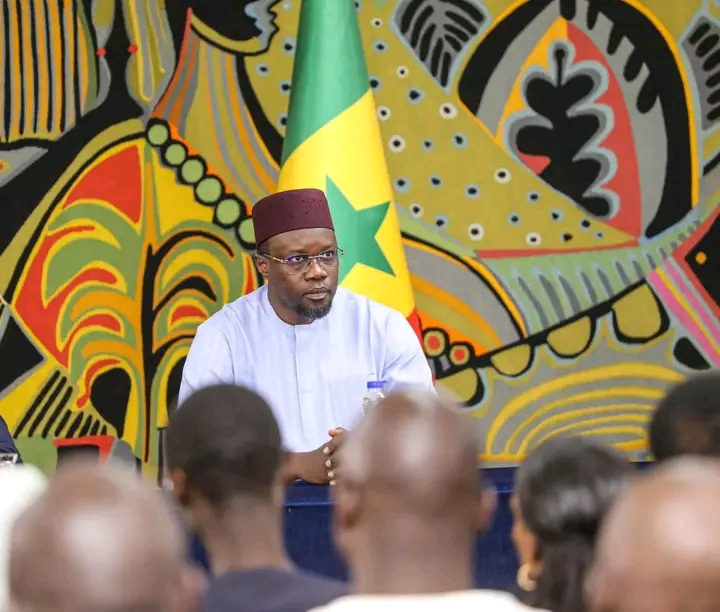
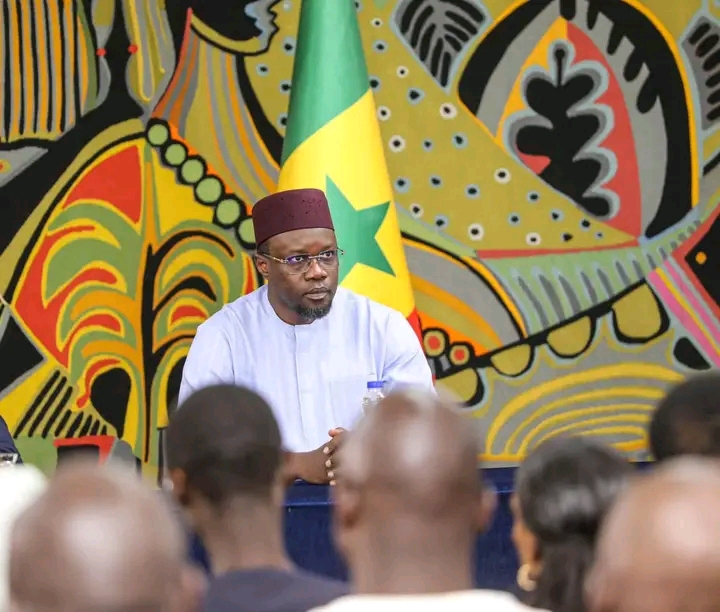
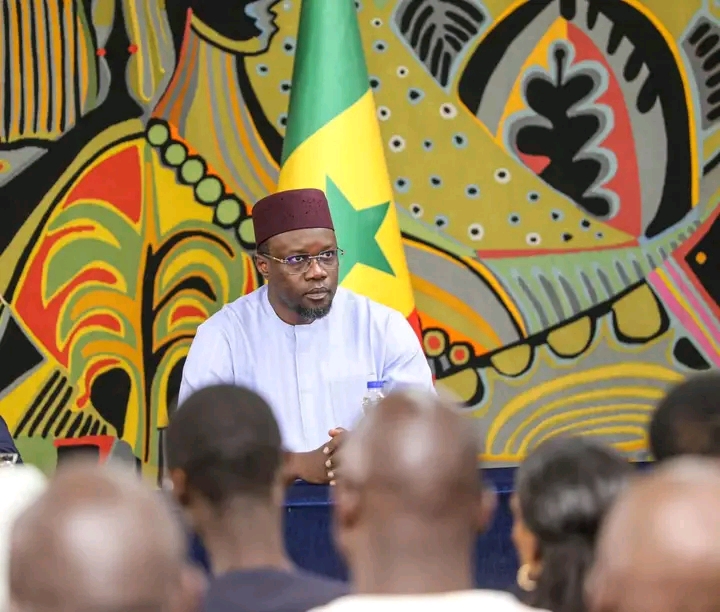
Senegal’s Prime Minister Ousmane Sonko presided over an inter-ministerial council on Thursday, May 21. During this significant gathering, the head of government forcefully voiced his indignation regarding the handling of various public matters. He reiterated strong accusations against the previous administration of Macky Sall, citing widespread prevarication and mismanagement of national resources.
“The sheer scale of these facts is truly incomprehensible,” Sonko declared following the presentation of an audit detailing Senegal’s public assets and infrastructure. The inventory from the Prime Minister’s Office revealed that 245 infrastructure initiatives and vital strategic assets are currently stalled, incomplete, or severely underutilized. The total financial impact of these issues is estimated to exceed 5,000 billion FCFA, a sum comparable to Senegal’s entire annual budget. The Prime Minister lamented, “Some even suggest this figure mirrors our national public debt… it represents nothing less than outright waste.”
Another alarming revelation highlighted that out of 94 construction projects presently underway across the nation, 62 have virtually ceased progress. These stalled endeavors have already consumed over 5,227 billion FCFA. The specific example of Lycée Sandiara, initiated in 2014 and still far from completion, particularly “shocked” Sonko. He passionately exclaimed, “Twelve years to build a high school! This is an absolute absurdity.”
Prime Minister Sonko’s stance on accountability
Furthermore, the head of government utilized the platform to once again criticize the judiciary. He openly accused the justice system of shielding influential figures from the former administration, whom he considers alleged perpetrators of public fund embezzlement.
“At times, I find myself questioning,” Ousmane Sonko confessed, “I wonder if it’s truly worth persevering. In this nation, individuals can seemingly act with impunity and remain well-protected. The underlying system remains unchanged.” He went on to suggest the presence of alleged “judicial sabotage,” implying the involvement of certain magistrates. “These cases are not the property of the magistrates; they belong to the people,” he asserted, concluding with a warning that he intends to “escalate his rhetoric” in the coming weeks.
“The sheer scale of these facts is truly incomprehensible,” Sonko declared following the presentation of an audit detailing Senegal’s public assets and infrastructure. The inventory from the Prime Minister’s Office revealed that 245 infrastructure initiatives and vital strategic assets are currently stalled, incomplete, or severely underutilized. The total financial impact of these issues is estimated to exceed 5,000 billion FCFA, a sum comparable to Senegal’s entire annual budget. The Prime Minister lamented, “Some even suggest this figure mirrors our national public debt… it represents nothing less than outright waste.”
Another alarming revelation highlighted that out of 94 construction projects presently underway across the nation, 62 have virtually ceased progress. These stalled endeavors have already consumed over 5,227 billion FCFA. The specific example of Lycée Sandiara, initiated in 2014 and still far from completion, particularly “shocked” Sonko. He passionately exclaimed, “Twelve years to build a high school! This is an absolute absurdity.”
Prime Minister Sonko’s stance on accountability
Furthermore, the head of government utilized the platform to once again criticize the judiciary. He openly accused the justice system of shielding influential figures from the former administration, whom he considers alleged perpetrators of public fund embezzlement.
“At times, I find myself questioning,” Ousmane Sonko confessed, “I wonder if it’s truly worth persevering. In this nation, individuals can seemingly act with impunity and remain well-protected. The underlying system remains unchanged.” He went on to suggest the presence of alleged “judicial sabotage,” implying the involvement of certain magistrates. “These cases are not the property of the magistrates; they belong to the people,” he asserted, concluding with a warning that he intends to “escalate his rhetoric” in the coming weeks.
Listen to this article3 min listen
Section feedCopy the feed link into your favourite RSS reader