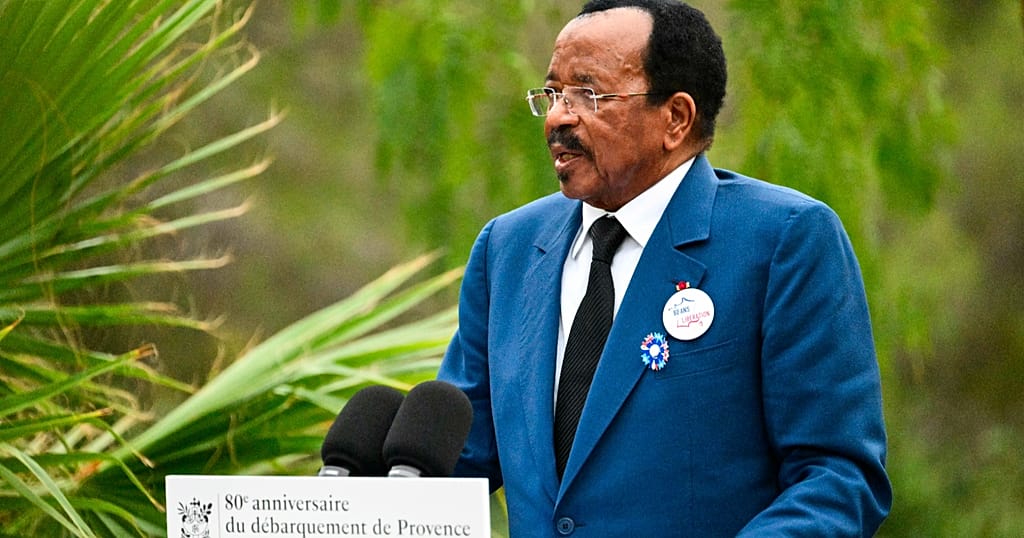
Amid mounting concerns over his prolonged absence, Cameroonian President Paul Biya has intensified the issuance of presidential decrees to assert his ongoing authority and counter claims of a leadership vacuum.
The 93-year-old leader departed Cameroon alongside his wife on June 7, initially framed as a “brief private stay in Europe.” However, nearly two months later, he remains out of public view, fueling speculation about his health and ability to govern.
Presidential decrees as a response to uncertainty
To address growing doubts, President Biya has adopted a more assertive communication strategy, relying heavily on executive orders. Late last month, he signed a decree granting the Minister of Economy the authority to finalize a financing agreement with the Islamic Development Bank, totaling nearly 28 billion Central African CFA francs.
Military reshuffles reinforce control
On August 3, the president carried out a significant reshuffle within the military hierarchy. Five colonels were elevated to the rank of brigadier general, while General Ebaka Hypolite was appointed as the new Chief of Staff of the Armed Forces. These moves not only demonstrate Biya’s continued influence over state affairs but also tighten his grip on the security apparatus.
Government officials have dismissed reports of a decline in the president’s health, reaffirming that he will return to Cameroon in due course. Yet, the prolonged absence has drawn sharp criticism from opposition figures, who argue that the country is operating in a state of “institutional paralysis,” with delayed appointments for a new vice president and cabinet reshuffle.