As the French parliamentary session resumes, a bold diplomatic campaign spearheaded by Congolese-origin French legislators is set to shine a spotlight on the GENOCOST—a term now synonymous with the systematic atrocities endured by the Democratic Republic of the Congo (DRC) since 1996. The CEFOCK, a coalition of French elected officials of Congolese descent, unveiled plans for a multipronged advocacy drive targeting French institutions, local governments, and the diaspora community to secure formal recognition of these crimes as genocide.
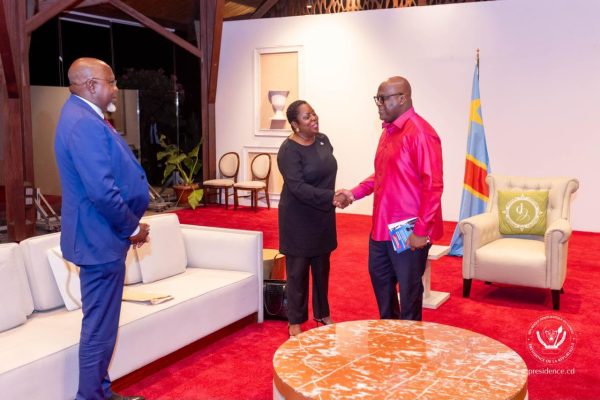
The initiative follows a high-level meeting between CEFOCK representatives and President Félix Tshisekedi at the Cité de l’Union Africaine in Kinshasa, where the President underscored the importance of international acknowledgment in advancing justice and reparations for victims. The CEFOCK’s strategy includes public awareness campaigns, academic symposia, and direct engagement with French lawmakers to incorporate the GENOCOST into national and European policy discussions.
Collaboration with Congolese institutions to amplify impact
To lend institutional weight to the campaign, CEFOCK has forged a strategic alliance with the CIA-VAR, the Congolese government’s inter-institutional body tasked with victim support and transitional justice. This partnership aims to document atrocities, preserve historical memory, and push for legal recognition of the GENOCOST as a genocide—paving the way for reparations and judicial mechanisms.
The collaboration reflects a dual focus: ensuring the victims’ stories are never erased from history and establishing a framework for accountability. By combining grassroots advocacy with high-level institutional backing, Kinshasa seeks to transform the GENOCOST from an NGO-driven issue into a cornerstone of international diplomacy.
The diaspora as a driving force for change
The Congolese diaspora in France has emerged as a pivotal player in this push, leveraging its growing representation in local and national governance. Elected officials from the diaspora now hold positions in French municipal, departmental, and regional councils, providing a direct channel to influence policy debates. Through the CEFOCK, the diaspora is transitioning from a role of testimony to one of proactive political action, targeting French legislators to secure parliamentary recognition of the GENOCOST.
This momentum builds on recent domestic efforts. On August 2, during the national GENOCOST commemorations in Kinshasa, President Tshisekedi laid the foundation for the National GENOCOST Museum and a dedicated memorial. The move signals a commitment to institutionalize remembrance and aligns with the broader diplomatic offensive to secure global acknowledgment of the atrocities.
The synchronized efforts—both at home and abroad—demonstrate Kinshasa’s determination to turn the GENOCOST into a defining issue of international justice. By mobilizing the diaspora, partnering with state institutions, and engaging French policymakers, the DRC is positioning itself to achieve what has long eluded victims: official recognition of genocide and the reparations that follow.