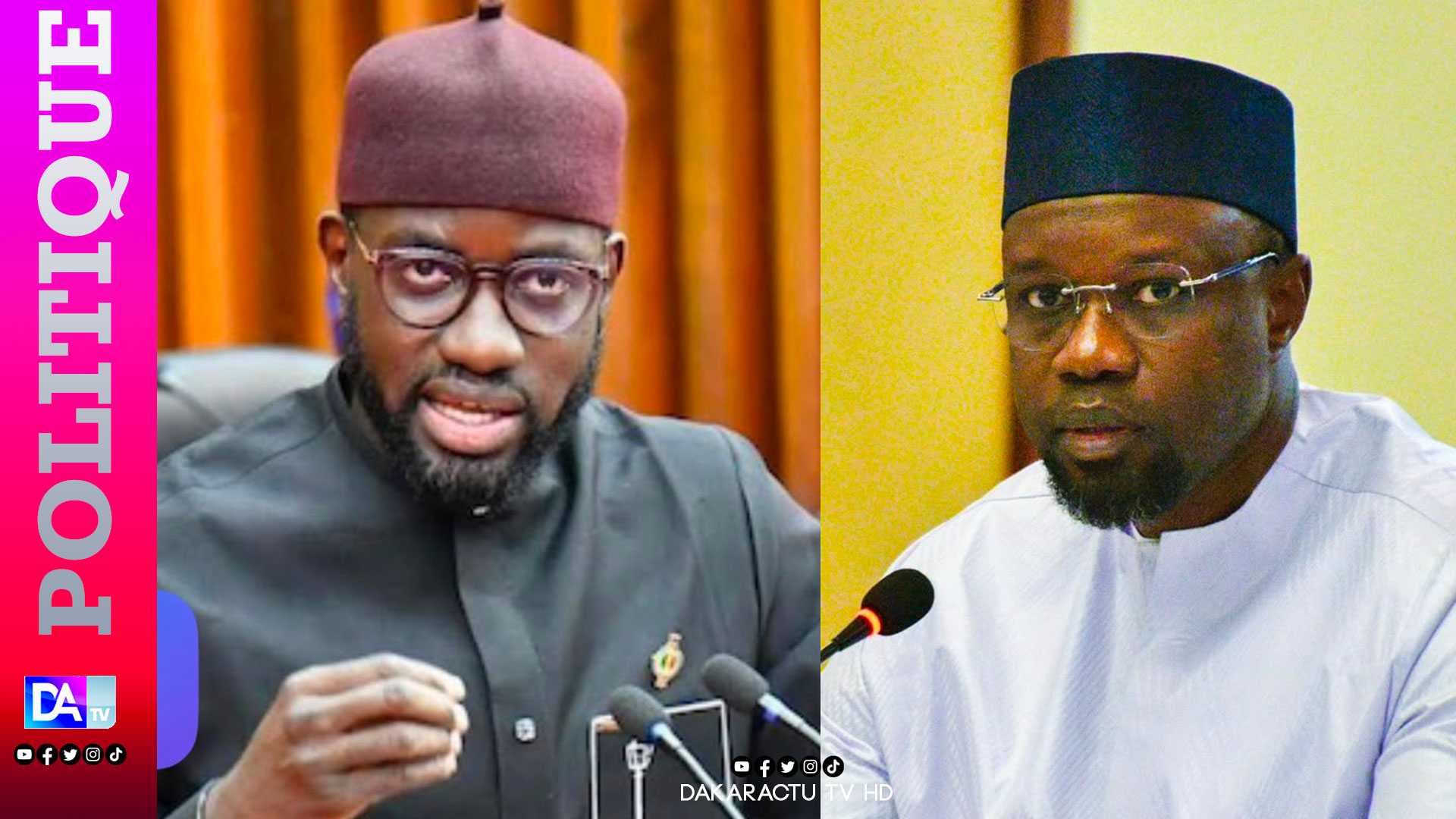
President Bassirou Diomaye Faye of Senegal has marked a pivotal moment in the nation’s political landscape, officially establishing KIIRAAY – Les Patriotes Républicains on Saturday, July 25, in Dakar. This announcement, made during a constituent general assembly held in a capital city hotel, signifies the head of state’s political independence from the African Party for Independence, Labor, Ethics and Fraternity (PASTEF), the formation that propelled him to power in March 2024. The newly formed party adopts the motto “La Patrie d’abord,” immediately signaling a focus on national sovereignty and robust institutional frameworks.
a clear departure from ousmane sonko
The emergence of KIIRAAY unfolds against a backdrop of public disagreements between Bassirou Diomaye Faye and his former mentor, Ousmane Sonko, who remains at the helm of PASTEF and serves as Prime Minister. Once viewed as complementary figures driving a wave of change, their paths have diverged significantly in recent months, culminating in this formalized organizational split. For President Faye, establishing his own partisan structure means overcoming an increasingly uncomfortable political dependency and acquiring an apparatus aligned with his presidential decisions.
The symbolic choice behind the name is far from coincidental. In Wolof, the term “kiiraay” conveys the idea of protection, a concept that contrasts sharply with the confrontational and protest-oriented stance long embodied by PASTEF. Where the former party championed sovereignty through rupture, the new formation aims to articulate patriotism, republicanism, and institutional stability. This semantic shift reflects the head of state’s repositioning towards a more institutional center of gravity as he consolidates his hold on power.
a patriotic and republican stance
KIIRAAY’s stated agenda emphasizes the defense of national interests, the strengthening of republican institutions, and the consolidation of the rule of law. These priorities, articulated during the founding assembly, outline a project less focused on protest and more geared towards the effective management of state affairs. The designation “Les Patriotes Républicains” seeks to reconcile two key registers: an unwavering commitment to sovereignty, a hallmark of the Faye-Sonko camp since the 2022 legislative elections, and fidelity to republican norms, a pledge extended to administrative, economic, and diplomatic elites.
This strategic framing holds significant implications for Senegal’s international partners. Since assuming the presidency, Bassirou Diomaye Faye has actively signaled openness to donors and investors, while concurrently pursuing renegotiations of crucial contracts in the hydrocarbon and mining sectors. The creation of a party explicitly centered on institutions aims to foster confidence in the predictability of public policy, particularly as Dakar strives to maintain its access to financial markets and its relationship with the International Monetary Fund.
reconfiguring Senegal’s political landscape
The arrival of KIIRAAY inherently reconfigures the balance of power within Senegal’s political arena. PASTEF, now without direct presidential endorsement, retains a substantial militant base but loses the symbolic leverage of the presidential palace. Traditional opposition parties, ranging from the Senegalese Democratic Party to structures stemming from the Benno Bokk Yaakaar coalition, must recalibrate their strategies in the face of a presidential majority now equipped with its own distinct partisan backbone. A key question remains regarding which segments of the PASTEF apparatus, especially among deputies elected in November 2024, will transition to the new structure.
The upcoming political calendar amplifies the stakes. Local elections and the preparations for the 2029 presidential poll will serve as the initial real-world tests for KIIRAAY. The party will need to swiftly demonstrate its capacity to establish a territorial network, formulate a distinct programmatic platform, and mobilize support beyond the militant base inherited from the 2024 campaign. Practically, the contest will also unfold over control of party resources, administrative relays, and regional economic networks.
For Bassirou Diomaye Faye, the political equation thus shifts from the realm of personal loyalty to the institutional construction of a potent presidential force, opening a new political phase for Senegal.