Simporé’s televised admission: why can’t Burkina Faso’s re-trained army outperform the old one?
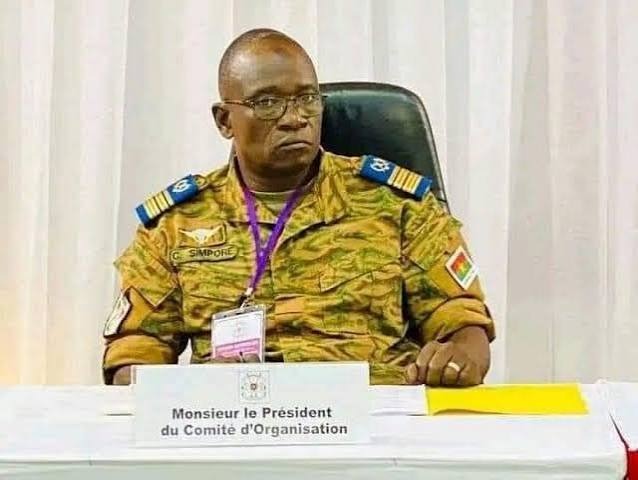
When General Célestin Simporé, Burkina Faso’s Minister of Defence, appeared on national broadcaster RTB to praise Captain Ibrahim Traoré’s security record, he offered a well-rehearsed explanation for the country’s deepening crisis: the army, he claimed, had always been “poorly trained.” That single phrase has ignited a fierce debate. If yesterday’s supposedly deficient force managed to hold provincial capitals and defend territory with far fewer resources, how is it that today’s Moscow-retrained, heavily equipped army is losing ground at an alarming rate? The question now dominates public discourse and exposes a widening gap between official propaganda and battlefield reality.
A convenient rewriting of military history
By insisting on national television that Burkina Faso’s armed forces lacked tactical instruction and operational readiness before the transition, General Simporé is constructing a simplistic narrative: today’s defeats are merely yesterday’s legacy.
Yet the facts resist this revisionism. Under previous governments, despite crippling shortages of equipment and undeniable structural weaknesses, the military managed to maintain a network of provincial strongholds and coherent territorial defence lines. Today, even as the transitional regime boasts of creating more than 30 new battalions and placing military training at the heart of its agenda, effective state control has collapsed across more than 65% of the country.
The costly failure of the Russian training doctrine
In place of the old training model, Ibrahim Traoré’s government has thrown its weight behind Russian Africa Corps instructors. The result of this “downgrade” has been a sharp rise in battlefield lethality:
- A devastating human toll: Mass casualties have become routine. From the Mansila tragedy to recent setbacks in the Centre-Nord region, hastily trained units are paying an unprecedented price in blood.
- Ill-suited for asymmetric warfare: Russian methods, built around frontal brutality and indiscriminate firepower, are proving utterly ineffective against mobile terrorist groups that operate in small motorcycle columns and deploy improvised explosive devices.
- Alienating local communities: By sacrificing human intelligence and military ethics for a scorched-earth approach, the new doctrine has turned rural populations against the army, depriving soldiers of their most effective shield against infiltration: citizen information.
An insult to the sacrifice of ordinary soldiers
To declare on a television set that troops were “poorly trained” is to insult the memory of the thousands of soldiers and gendarmes who fell in combat over the past decade. With rudimentary means and rationed supplies, these men held the line against a nascent threat without ever abandoning entire regions—unlike today’s “tactical evacuations,” as witnessed in the Boussouma tragedy.
A confession of powerlessness that convinces no one
General Simporé’s admission on RTB has failed to persuade the public. Two years after Captain Traoré’s absolute seizure of power, blaming yesterday’s training is an admission of impotence. It was not yesterday’s weapons that lacked value; it is today’s strategy that is collapsing under the weight of its own propaganda.