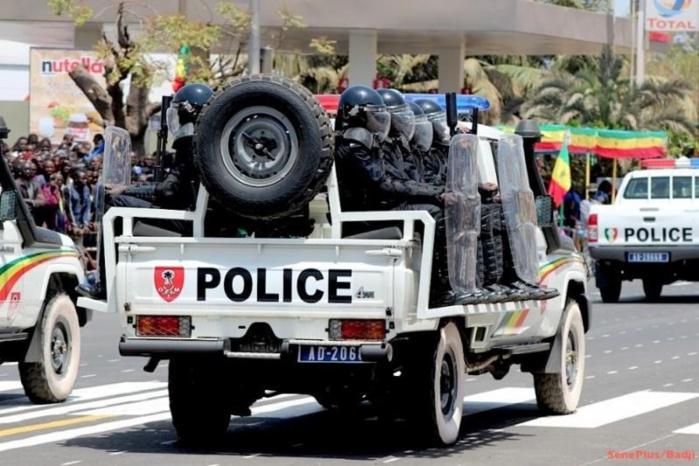
Dakar has seen a sharp rise in police checks targeting foreigners in recent weeks. Within just eight days, authorities conducted 490 identity verifications, with 36 individuals referred to prosecutors for irregular stay permits. While officials frame these operations as routine administrative procedures, the growing frequency has sparked concern among civil society groups and foreign residents.
One such case involved Amadou Bangoura, a 30-year-old Beninese student who has lived in Senegal for five years pursuing higher education. After finishing his workout at Liberté 6 around 10 PM, he was stopped by a police patrol demanding identification. “My documents are at home,” he explained, unaware that such checks had never targeted him during his years in the country. The sudden confrontation left him anxious—fearing deportation, imprisonment, or legal trouble. The officers eventually accompanied him home, where he presented his valid passport and residency papers, resolving the situation without further consequences.
The incident reflects a broader trend. Between June 30 and July 8, the Direction de la police des étrangers et des titres de voyage (DPETV) carried out sweeping identity checks across Dakar and its suburbs. Nearly 500 foreigners of various nationalities were scrutinized, with 36 facing legal proceedings for staying in Senegal without proper authorization.
Civil society voices growing unease
Human rights organizations have criticized the crackdown, arguing that the measures reflect a troubling shift in how foreigners are perceived in Senegal. In a joint statement released on July 13, groups including Legs Africa, Frapp, Nawle, Afrikajom Center, and Diwan Citoyen condemned what they describe as an escalation in administrative harassment against foreign residents. While acknowledging the state’s right to regulate immigration, they warned that sovereignty “should not be confused with arbitrariness.”
The coalition highlighted a disturbing pattern: foreigners, once seen as guests contributing to Senegal’s cultural and economic fabric, are increasingly being treated as potential threats rather than individuals with rights. “The problem isn’t the existence of migration policies,” their statement read, “but the normalization of a climate of permanent suspicion that reduces legal residency to a bureaucratic obstacle course.”
Balancing security and tradition
Elimane Kane, president of Legs Africa, emphasized that security and hospitality are not mutually exclusive. While acknowledging the state’s duty to secure borders and enforce laws, he cautioned against measures that could alienate foreign communities. “Security does not exclude otherness,” he argued, urging better coordination among security forces to prevent controls from being perceived as persecution rather than regulation.
He also stressed the importance of professional mobility in a globalized world. “Just as Senegalese citizens seek opportunities abroad, foreigners contribute to our economy and society,” Kane noted. “The solution isn’t to scapegoat migrants but to create pathways for young Senegalese to access local opportunities.”