United Nations flags growing ISIS presence in Africa’s critical regions
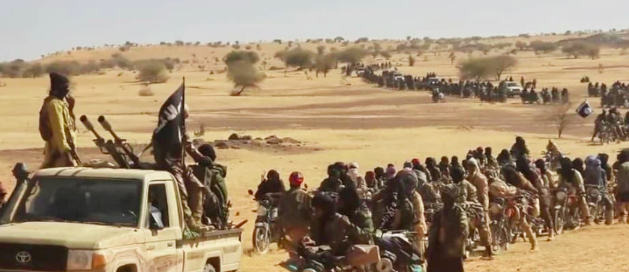
The United Nations has raised the alarm over a persistently high terror threat in the Sahel and around the Lake Chad basin, where the Islamic State (ISIS) continues to expand despite setbacks to its central leadership. In a fresh assessment submitted to the UN Security Council, the organization warns that regional affiliates are now operating with greater autonomy, exploiting local weaknesses to sustain and grow their influence.
According to a report presented by Antonio Guterres, UN Secretary-General, the Sahel and Lake Chad region remain the group’s primary strongholds on the continent. The document, prepared by Oguljeren Niyazberdiyeva of the UN Office of Counter-Terrorism (UNOCT), highlights how ISIS branches in Africa are increasingly decentralizing, making them harder to dismantle through conventional military means.
ISIS in West Africa remains the group’s most active franchise
The report identifies the Islamic State’s West Africa Province (ISWAP) as the most operationally active affiliate globally. It notes that the group has not only maintained but enhanced its military capabilities, notably through the use of commercial drones for surveillance and targeted strikes. This technological adaptation underscores ISIS’s shift toward hybrid warfare, blending traditional insurgency tactics with modern tools.
In the Democratic Republic of the Congo (DRC) and Mozambique, affiliated factions continue to launch offensives despite sustained pressure from national and regional forces. These groups persist in recruiting fighters and reinforcing local networks, demonstrating resilience in the face of counter-terrorism efforts.
Decentralization strengthens ISIS’s survival despite leadership losses
The UN report emphasizes that while international military campaigns have weakened ISIS’s central command and reduced its capacity for large-scale, coordinated attacks, the group’s decentralized structure has allowed it to adapt and survive. Regional branches now operate with significant autonomy, linked primarily by ideology rather than centralized control. This evolution enables ISIS to capitalize on institutional fragilities, prolonged conflicts, and economic hardships to deepen its foothold in vulnerable areas.
‘ISIS has fundamentally transformed its operational model to endure sustained military pressure. Despite global efforts, the group remains a grave threat to international peace and security,’ Niyazberdiyeva stated, as quoted in the UN’s internal communications.
Technology as a double-edged sword in terror networks
A critical concern raised in the report is ISIS’s growing reliance on advanced technologies. The group is leveraging artificial intelligence, encrypted communications, digital platforms, cryptocurrencies, and unmanned aerial systems to enhance propaganda, recruitment, financing, and attack planning. This digital expansion poses new challenges for security agencies, necessitating stronger international cooperation and closer engagement with tech firms to regulate emerging tools.
The UN acknowledges that these same technologies could also serve as powerful instruments for counter-terrorism when deployed responsibly and within the bounds of international law. However, the report stresses the urgent need for coordinated action to prevent their misuse by terror networks.
Call for enhanced global and private sector collaboration
The findings underscore the necessity of a unified, multi-sector response to curb ISIS’s expansion. The UN calls for strengthened international cooperation, improved intelligence sharing, and proactive partnerships with technology companies to disrupt the group’s digital ecosystem. It also highlights the importance of addressing root causes such as political instability, economic deprivation, and social fragmentation in affected regions.
Without sustained and coordinated efforts, ISIS’s ability to regroup, adapt, and inflict harm remains a significant risk to regional and global stability.