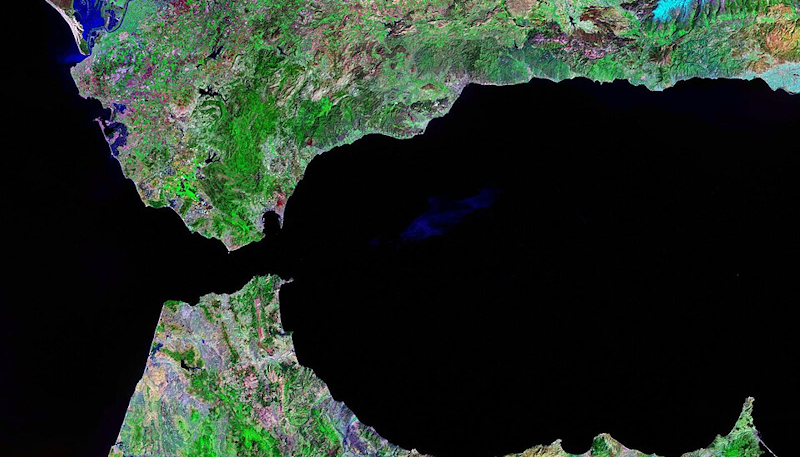
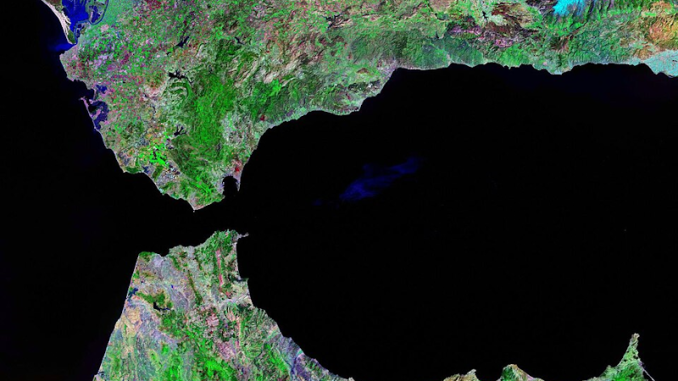
New signals from Washington are reshaping the partnership between the United States and Morocco, with Ceuta and Melilla and the Western Sahara emerging as central issues in this evolving dynamic. The shift comes as both nations deepen a strategic alliance that spans political, economic, and security spheres, potentially altering the geopolitical landscape of North Africa and the western Mediterranean.
Washington’s evolving stance on Morocco’s territorial claims
Since late July, the U.S. has intensified its engagement with Rabat, signaling stronger support for Morocco’s positions on both Ceuta and Melilla—two Spanish enclaves long considered non-negotiable by Madrid. While these territories have historically been viewed as integral parts of Spain, recent American rhetoric suggests a nuanced shift toward Morocco’s sovereignty claims.
This development follows the 2020 U.S. recognition of Morocco’s Western Sahara autonomy plan, a move that solidified bilateral ties and set the stage for deeper cooperation. The timing of this shift coincides with a period of heightened tensions between Rabat and Madrid, particularly amid a recent migration crisis that saw tens of thousands of individuals attempt to reach Ceuta within 24 hours, overwhelming Spanish authorities.
Western Sahara: a cornerstone of Morocco-U.S. relations
Morocco’s efforts to secure sustained American backing for its Western Sahara autonomy initiative have taken on renewed urgency. The December 2020 decision by the Trump administration to recognize Moroccan sovereignty over the region—exchanged for Morocco’s normalization with Israel—remains a pivotal achievement for Rabat. Now, the kingdom is doubling down on this diplomatic victory, as evidenced by the naming of a major highway in the Western Sahara after former U.S. President Donald Trump.
Analysts suggest this symbolic gesture is part of a broader strategy to maintain U.S. support during critical negotiations over the territory’s future. The Trump administration’s focus on economic investments, including a recent agreement to fund a hydrogen and ammonia production unit in Laâyoune, underscores the depth of this partnership.
Political and economic pillars of the alliance
The Morocco-U.S. relationship is now built on multiple foundations: unwavering political support from Washington, lucrative economic opportunities for American firms, and shared security objectives in the region. The convergence of these interests has created a framework that benefits both nations, particularly as Morocco seeks to leverage its strategic position in North Africa.
However, this alignment has also raised concerns among observers, particularly regarding its implications for the Polisario Front. Recent legislative proposals in the U.S. Congress, including attempts to classify the group as a foreign terrorist organization and investigate alleged ties with Iran, reflect a broader geopolitical shift favoring Rabat’s narrative.
Ceuta’s migration crisis: a calculated move by Rabat?
The sudden influx of migrants into Ceuta in late July has intensified scrutiny of Morocco’s role in the crisis. While some speculate that the surge was deliberately facilitated, analysts argue that the situation was largely spontaneous, though later exploited for political leverage. The episode served as a reminder to Madrid that Ceuta and Melilla remain unresolved territorial disputes from Rabat’s perspective.
For Morocco, the crisis underscores the urgency of addressing these long-standing claims, particularly as U.S. rhetoric aligns more closely with its sovereignty narrative. The timing of the migration surge—coinciding with Washington’s shifting stance—has not gone unnoticed in European capitals.
Madrid’s strategic dilemma amid shifting alliances
Spain finds itself at a crossroads as the U.S. and Morocco strengthen their ties. While Madrid has traditionally relied on transatlantic alliances for security guarantees, the evolving dynamic between Washington and Rabat introduces new uncertainties. The potential U.S. endorsement of Morocco’s claims on Ceuta and Melilla could redefine the region’s power balance, leaving Spain to navigate a more unpredictable geopolitical environment.
In response, Spanish Prime Minister Pedro Sánchez recently visited Algeria—a key ally of the Polisario Front—to bolster energy cooperation, a move that may be interpreted as a strategic counterbalance. However, analysts suggest this does not signal a fundamental shift in Spain’s position, which remains supportive of Morocco’s autonomy plan for Western Sahara.
The road ahead: uncertainty and renegotiation
While an immediate crisis is unlikely, the current trajectory suggests that the sovereignty question over Ceuta and Melilla could resurface in future diplomatic discussions. The Morocco-U.S. partnership, now extending to territorial disputes, may set the stage for a long-term renegotiation of these issues, reshaping alliances in North Africa and the western Mediterranean.
The coming months will reveal whether this evolving dynamic fosters stability or fuels further tensions in a region already grappling with complex geopolitical challenges.