Algeria strengthens commercial ties with Niger through massive shipment
A fleet of 25 heavy-duty trucks carrying 1,050 tonnes of Algerian goods has departed from Adrar in southern Algeria, marking another step in the country’s aggressive trade expansion toward Niger. The shipment, organized with nine economic operators, includes dried dates, detergents, packaging products, and salt—all targeting Niger’s consumer market.
The operation, coinciding with Algeria’s National Export Day, underscores Algiers’ push to diversify its export portfolio beyond hydrocarbons and tap into African markets. Additional consignments are already scheduled in the coming weeks, signaling a sustained commercial strategy.
Local producers brace for impact as Algerian goods flood the market
The surge of Algerian goods is highlighting long-standing concerns among Nigerien producers about their ability to compete in an increasingly open market. While imported goods may offer price advantages and availability, local industries face structural hurdles such as high production costs, inadequate infrastructure, and limited access to financing.
The date palm industry in Niger’s Kawar region under threat
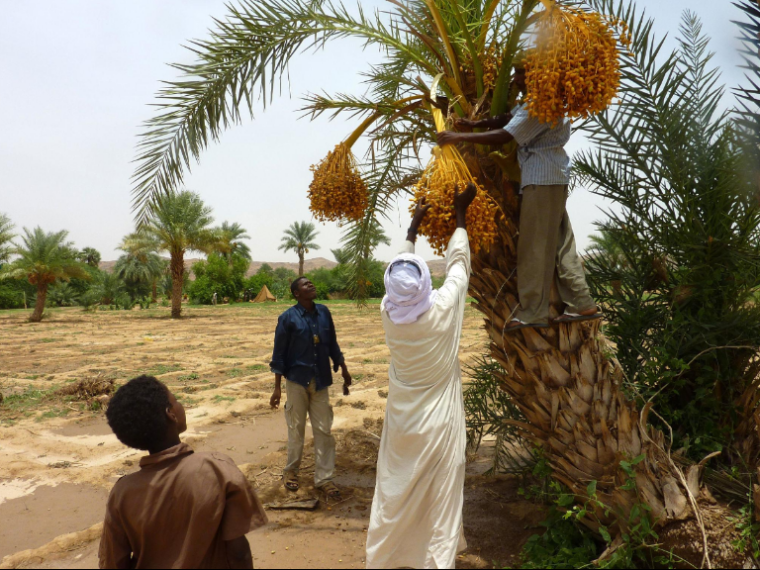
The date production sector in Niger’s Kawar region—centered around cities like Bilma, Fachi, Dirkou, and Djado—has historically struggled with low yields, water scarcity, and poor post-harvest facilities. Although the region boasts a rich variety of date palms and generations-old expertise, local farmers report persistent challenges in marketing their produce amid cheaper Algerian and Libyan imports.
A recent market analysis reveals that Nigerien dates often fail to match imported alternatives in terms of shelf appeal and pricing, putting local producers at a disadvantage. Unless local actors gain better access to distribution channels and production support, the influx of Algerian dates could further squeeze the industry’s viability.
Small industries face uphill battle against imported detergents and packaging
Niger’s small and medium-sized industries, particularly in light manufacturing, are already grappling with rising input costs, erratic supply chains, and limited industrial zones. Reports indicate that several local detergent and packaging manufacturers have scaled back operations or ceased production due to the pressure of lower-cost Algerian products.
If this trend continues, the domestic industrial base—already fragile—could face further contraction, threatening jobs and economic diversification efforts. The question now is whether local industries can adapt or if the market will favor imported goods en masse.
Niger takes steps to balance openness with domestic protection
In response to growing concerns, Niger’s Ministry of Commerce and Industry announced on July 30, 2026, the launch of a mandatory inspection and compliance verification program for imported goods. Effective August 1st, the initiative aims to screen out substandard or hazardous products and prevent unfair competition from undermining local producers.
While quality control is essential for consumer safety, experts argue that it alone is insufficient. Local industries also need targeted support—including access to credit, improved storage and processing facilities, and technical assistance—to enhance competitiveness and meet market demands on equal footing.
From market consumer to industrial partner: rethinking trade relations
The expanding trade flow between Algeria and Niger presents a dual opportunity. For Niger, imports can ease supply bottlenecks and provide affordable goods. Yet, without reciprocal investments or collaboration in local manufacturing, the relationship risks turning Niger into a passive consumer market rather than an active industrial partner.
Algeria’s commercial push could evolve into a platform for joint ventures, technology transfer, or regional production networks—benefiting both economies. The real test lies in whether Niger can leverage this openness to build its own production capacity while protecting vulnerable sectors.
The 25 trucks that rolled out of Adrar are more than a logistical achievement. They symbolize a crossroads: will commerce between the two nations foster mutual growth, or will it deepen dependency on foreign goods at the expense of homegrown industry?