Benin has launched a $15.5 million initiative to protect nine of its most climate-vulnerable districts from escalating droughts, floods and erratic rainfall. The Integrated Climate Resilience Project for Vulnerable and Border Districts (ICRP) runs from 2026 to 2031 and focuses on transforming farming systems, securing water supplies and stimulating local economies.
Nine districts in the crosshairs of climate risk
The initiative targets Sèmè-Kpodji, Sakété, Kétou, Savalou, Dassa-Zoumè, Djougou, Copargo, Ouaké and Malanville—areas repeatedly hammered by erratic rains, soil degradation and water shortages. These pressures shrink yields, squeeze household incomes and threaten food security across more than 1.5 million people.
Agriculture’s heavy dependence on seasonal precipitation has left family farms dangerously exposed. Maize and groundnut fields have already shown how quickly climate shocks can wipe out entire harvests, pushing rural livelihoods to the brink.
Water security and solar power lead the charge
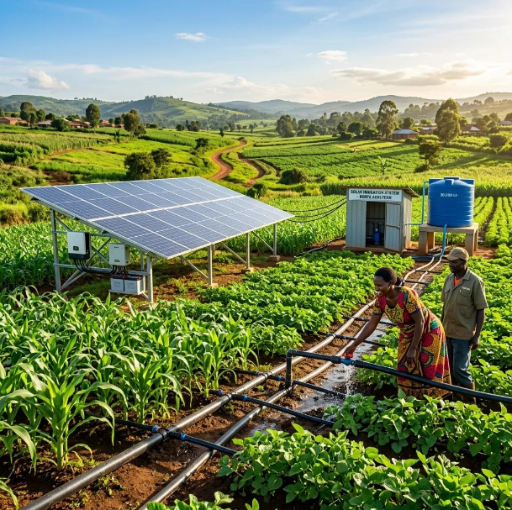
The project’s first pillar concentrates on securing reliable water access. It plans to install three new reservoirs, rehabilitate two inland valleys, set up five drip-irrigation networks and drill twelve pastoral boreholes. Solar-powered pumps will cut energy costs and slash dependence on fossil fuels.
Digital tools are also slated for integration, offering farmers real-time weather and market data, agronomic advice and climate-smart training to sharpen adaptation skills.
Local materials drive circular-economy gains
Beyond the farm gate, ICRP promotes compressed-earth blocks, stabilised-soil bricks and other locally available construction materials. The shift supports local artisans, small contractors and green businesses while reducing the carbon footprint of rural construction.
Swiss development partners see this as a dual win: cutting emissions while creating jobs—especially for young people and women—in the building trades.
31,000 Direct beneficiaries, 1.5 million touched overall
The project expects to reach 31,687 people directly—over 12,300 of them women—and benefit roughly 1.5 million indirectly. By 2031 it aims to:
- Train and mentor 20,000 individuals in climate adaptation strategies
- Lift farm productivity by 20 %
- Boost incomes for 10,000 households by 30 %
- Generate 5,000 new direct jobs and 15,000 indirect positions in agriculture, livestock, renewable-energy and tech sectors
Funding mix and execution hurdles ahead
The $15.5 million budget blends contributions from the United Nations Development Programme (UNDP), Switzerland, Belgium and Benin’s national and local governments. While the financing is in place, success hinges on transparent fund flows, timely infrastructure delivery and genuine community ownership.
Local authorities will play a central role in monitoring progress, ensuring fair distribution of assets and helping residents adopt new technologies. For the farmers in these nine districts, the proof will be in their fields: more reliable water, stronger harvests and incomes that can withstand whatever the shifting climate throws at them.