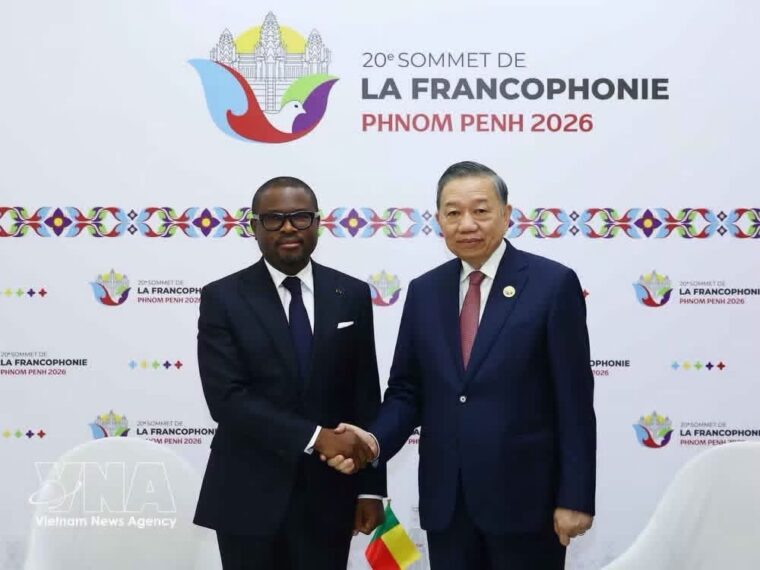
The future of Benin’s economic partnership with Vietnam took center stage this month when Minister of Economy and Finance Romuald Wadagni met his Vietnamese counterpart, Tô Lâm, on the sidelines of the Francophonie Summit in Phnom Penh. The meeting underscored a critical juncture in bilateral trade relations, with discussions centered on rice, cashews, cotton, aquaculture, and port infrastructure sectors pivotal to Benin’s agricultural, industrial, and commercial ambitions.
Can Benin’s economic relationship with Vietnam drive industrial development?
The timing of the meeting is no coincidence. At stake is whether Benin will solidify its role as a supplier of raw materials ultimately ceding value addition, jobs, and profits or leverage this partnership to fuel domestic industrialization. The distinction is critical.
Cashews: A test case for value addition
Vietnam is a global leader in cashew processing, transforming raw nuts into finished products for export. Benin, a major cashew producer, provides raw material for Vietnamese industries. This complementarity offers an opportunity, but it also carries a risk: Benin could remain confined to exporting unprocessed nuts, with the bulk of economic benefits industrial jobs, technological know-how, and higher revenue accruing abroad.
The true economic potential of Benin’s cashew sector lies not in exporting raw cashews but in building a complete value chain: hulling, packaging, processing, and marketing. Each stage kept within Benin’s borders translates into job creation, skill transfer, and long-term economic growth. The choice Benin faces is clear: attract buyers or attract investors who will establish processing facilities domestically.
From trade talks to industrial transformation
This is not just a question of attracting deals it is about securing investments that embed industrial activity in Benin. A trade agreement signed in 2024 between the two countries has yet to fully materialize. The urgency now is not to renegotiate terms but to implement what has already been agreed and to clarify why progress has lagged.
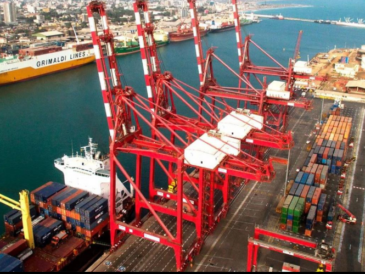
Rice, cotton, aquaculture, and port infrastructure were also on the agenda. Benin’s interests lie not in merely selling its agricultural output but in securing partnerships that enhance yields, adopt modern techniques, and expand agro-industrial processing. Port infrastructure, in particular, is a linchpin: without efficient logistics, storage, and competitive trade networks, any expansion in trade will be constrained.
Beyond diplomacy: Measuring success in concrete outcomes
For African economies, the trap is often mistaking diplomatic engagement for development. Agreements signed and communiqués issued do not equate to real economic change. What matters are tangible results: implemented investments, jobs created, technologies transferred, and wealth retained within Benin’s borders.
Wadagni’s meeting with Tô Lâm marks the start of a strategic project for Benin not just to negotiate better terms but to redefine its role in the partnership. The goal is to prevent Benin from becoming an agricultural hinterland serving foreign industries. Instead, it must evolve into a hub where raw materials are transformed, skills are developed, and investments generate direct benefits for its people.
A partnership with a clear vision
Vietnam can be a key ally in this transformation. However, for that to happen, Benin must insist on agreements that prioritize local processing, technology transfer, and industrial development. The message to investors should be unambiguous: Benin is open for business but not as a supplier of raw inputs. Its ambition is to become a competitive industrial player, capturing a far greater share of the value derived from its own resources.
As the Beninese delegation departs Phnom Penh, the road ahead is defined. The question is no longer whether Benin and Vietnam can cooperate but how they will shape a partnership that delivers lasting economic transformation for Benin.
By Agnès Mvogo — Journalist