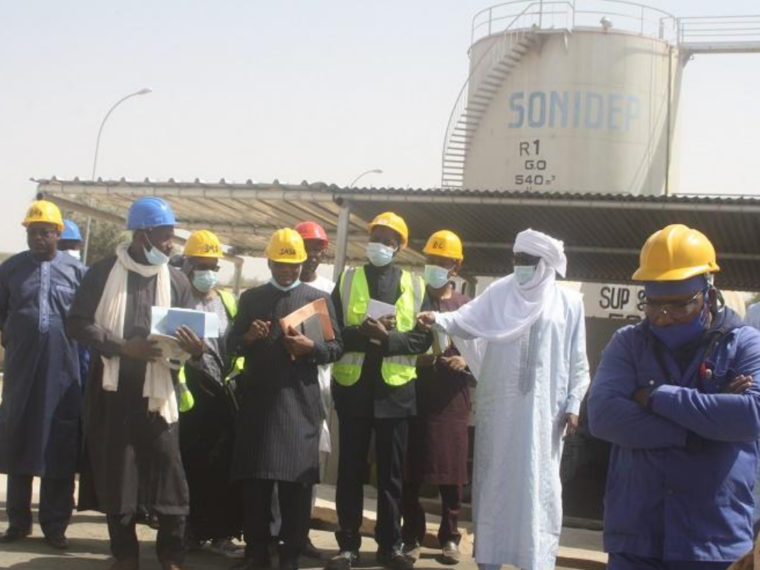
Investigations into Niger’s oil sector have uncovered financial irregularities exceeding 7 billion FCFA in just two files, according to insiders familiar with the audit. The findings, part of a broader probe into the SONIDEP petroleum company, are raising alarms over governance and the abrupt halt of critical inspections by state auditors.
Insiders reveal explosive financial discrepancies at SONIDEP
The audit of SONIDEP, Niger’s state-owned petroleum company, has taken a dramatic turn after officials examining just two financial files uncovered irregularities totaling nearly 7 billion FCFA. The discovery comes as inspectors from the Inspectorate General of State (IGE) were analyzing a stack of over 100 additional documents, suggesting the total irregularities could be far greater.
While the exact nature of the discrepancies remains undisclosed, the revelation has sent ripples through Niger’s political circles, where powerful figures are closely watching the investigation’s progress. The scope of the irregularities, disclosed by a confidential source within the audit team, points to systemic issues in financial oversight at SONIDEP.
IGE audit derailed amid political pressure
The advance of the IGE’s investigation was abruptly suspended, sparking allegations of political interference. Sources close to the matter claim the intervention came directly from the highest levels of government, with figures linked to the regime seeking to shield allies implicated in the financial irregularities.
The decision to halt the audit has ignited a debate over transparency in Niger’s oil sector. Questions are mounting about the motivations behind the intervention, particularly as the initial findings suggest significant financial misconduct. Critics argue that the suspension undermines efforts to combat corruption and erodes public trust in state institutions.
Diplomatic shuffle raises eyebrows: Issaka Gado’s new posting
The political fallout from the investigation has intensified with the unexpected announcement of Issaka Gado’s appointment to Niger’s permanent mission at the United Nations in Djibouti. Gado, brother of former Prime Minister Ali Mahamane Lamine Zeine, previously served as chairman of the SORAZ oil refinery’s board—a role that placed him at the heart of the sector’s controversies.
While officials cite administrative reasons for the transfer, the timing has fueled speculation about a strategic move to distance Gado from the unfolding scandal. His deep involvement with SORAZ, which has been scrutinized in past audits, adds another layer of intrigue to the situation.
SORAZ-SONIDEP: a history of unresolved audits
Gado’s appointment comes at a time when audit efforts in Niger’s oil sector have repeatedly stalled. His predecessor, Dr. Sahabi Oumarou, had also attempted to revive audits into the financial ties between SORAZ and SONIDEP but was removed from his position before completing the work.
Under former Minister Barké, Gado himself had initiated an audit into these financial relationships. That probe led to severe consequences, including nearly a year of detention for Barké and four months for Gado. The episode underscored the high stakes in the oil sector and the resistance to external scrutiny.
International audits promised but delayed
Efforts to restore transparency in Niger’s oil sector received a boost when officials announced plans to conduct an independent international audit. The proposal, documented in a joint workshop report from April 2026, named Mazars as the preferred auditing firm. However, nearly eight months later, no progress has been made, and the audit remains in limbo.
The delay has raised concerns about the commitment to accountability. Questions persist about whether the contract was ever signed, who is responsible for the stall, and why a long-awaited independent audit has yet to begin. Without transparency, the sector’s financial irregularities risk becoming a persistent stain on Niger’s governance.
UN corridors and shifting power networks
The oil scandal has taken on an international dimension, with officials highlighting the influence of networks within UN organizations. Statements from government representatives have pointed to individuals aligned with past regimes operating behind the scenes to influence diplomatic and institutional processes.
Gado’s diplomatic posting to Djibouti adds another layer to this narrative, raising questions about whether such appointments serve as political refuges for figures tied to sensitive dossiers. The phenomenon suggests that Niger’s oil industry is not only a domestic concern but also a battleground for global influence.
What’s at stake for Niger’s oil sector
The financial irregularities uncovered in SONIDEP’s operations represent only the beginning of what may be a much larger crisis. The sector, critical to Niger’s economy, has become a flashpoint for political rivalries and power struggles. Transparency is essential not just for financial integrity but for restoring public confidence in the government’s ability to manage its resources.
As Nigerians demand answers, the suspension of the IGE audit and the stalled international probe underscore deeper issues within the system. The oil scandal is no longer just about missing funds—it is a test of governance, accountability, and the willingness of authorities to confront corruption at all levels, including within their own ranks.
The coming weeks will reveal whether Niger’s leaders are committed to uncovering the truth or if the oil sector’s challenges will remain buried beneath layers of political protection.