In a rapidly shifting West African geopolitical landscape, Bénin is embracing a bold and pragmatic diplomatic approach. Recently, the country’s ambassador to Russia engaged in high-level talks with Saint-Petersburg authorities to expand bilateral cooperation in critical sectors such as energy, agriculture, and healthcare. While this initiative reflects Russia’s growing interest in Africa, it aligns perfectly with Porto-Novo’s broader strategy: expanding economic partnerships while reinforcing long-standing and strategic ties with Western powers.
Strategic negotiations with far-reaching implications
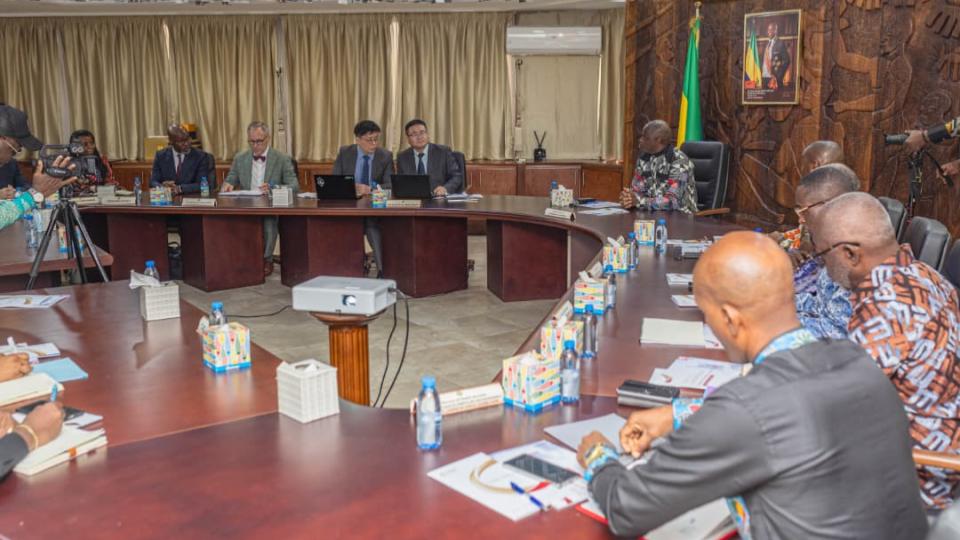
The heart of the discussions between Evgueni Grigoriev, member of the Saint-Petersburg government and Chair of the Municipal Committee for Foreign Relations, and Bénin’s ambassador to Russia, Akambi André Okounlola Biaou, centered on economic diplomacy. Held in a warm and collaborative atmosphere, the meeting laid the groundwork for an expanded partnership between the Russian metropolis and the West African nation.
As a gesture of mutual respect, Grigoriev took the opportunity to congratulate his counterpart on the occasion of Bénin’s Independence Day, celebrated on August 1st. Beyond diplomatic pleasantries, the talks were notably results-oriented. The official statement from the Saint-Petersburg committee highlighted a wide range of promising sectors, including energy, agriculture, fisheries, infrastructure projects, pharmaceuticals, and education—all of which hold strategic importance for Bénin’s development.
For Bénin, a nation undergoing significant structural reforms, these sectors are vital. Reliable energy access is crucial for industrialization, while modernizing agriculture remains the backbone of its economy and food security.
Saint-Petersburg’s business charm offensive
To turn these ambitions into reality, Russia mobilized its business sector. The meeting featured active participation from representatives of the Saint-Petersburg Export Support Center, a non-profit organization dedicated to promoting local expertise internationally. They were joined by leaders of key regional companies presenting tailored solutions for Bénin’s market needs.
The delegation included Baltiski Bereg, a major player in fisheries and seafood processing, whose expertise could support Bénin’s aquaculture development. The technology firm Radar MMS, specializing in information systems and infrastructure, also showcased innovative projects. In healthcare and food security, Polysorb (pharmaceutical and medical industry) and Lignohumate (agricultural fertilizers and productivity enhancers) presented compelling proposals that captivated the Bénin delegation.
The ambassador, Okounlola Biaou, expressed strong enthusiasm for these offers. Proactively, he proposed a decentralized approach: fostering direct regional engagement between Saint-Petersburg and Cotonou. By targeting Bénin’s largest port city and economic hub, this strategy aims to bypass national bureaucratic hurdles and facilitate more agile, city-to-city trade agreements.
A 2025 milestone: 65 years of diplomacy and a commercial mission
These preliminary discussions are far from mere rhetoric. Both parties agreed on an ambitious timeline, with the first major step being the preparation of a Bénin-led commercial mission to Saint-Petersburg.
Scheduled to coincide with the 65th anniversary of diplomatic relations between Russia and Bénin next year, this mission is more than a symbolic celebration. It is designed to transform current discussions into signed contracts and mutually beneficial joint projects, solidifying an economic bridge between Eastern Europe and the Gulf of Guinea.
Security cooperation: the defense dimension
While economics dominated the agenda in Saint-Petersburg, Bénin-Russia cooperation extends into the sensitive realm of security. This economic rapprochement follows recent military engagements: in May, a Russian Defense Ministry delegation met with Bénin’s Naval High Command to discuss the possibility of joint naval exercises. Given the persistent threats of maritime piracy in the Gulf of Guinea, Bénin is exploring every avenue to enhance its naval operational capabilities and secure its territorial waters, which are vital for international trade.
Bénin’s balanced diplomacy: no shift away from the West
It would be a mistake to interpret Bénin’s growing engagement with Moscow as a geopolitical realignment or a break from its traditional allies. Instead, Bénin exemplifies a sophisticated strategy of multi-alignment, avoiding entrenchment in rigid blocs.
The country continues to strengthen its relationships with Western partners. Unlike some Sahelian neighbors who have distanced themselves from the West in favor of new alliances, Bénin views the European Union, the United States, and France as indispensable pillars of its development and security.
Economically, the United States remains a key partner, particularly through the Millennium Challenge Corporation (MCC), which has injected hundreds of millions of dollars into Bénin’s electricity infrastructure—a sector also discussed with Russian counterparts in Saint-Petersburg. Bénin also benefits from the African Growth and Opportunity Act (AGOA), facilitating exports to the U.S. market.
The European Union and France, meanwhile, are Bénin’s top donors and commercial partners. The relationship between Paris and Porto-Novo is robust, forward-looking, and marked by recent restitutions of historical artworks, as well as significant French investment in logistics, infrastructure, and services. In terms of security, facing the jihadist threat in its northern regions, Bénin relies heavily on material, logistical, and intelligence support from France and the United States.
Bénin’s outreach to Saint-Petersburg is not a substitution but an addition. By welcoming Russian capital and expertise, Bénin is asserting its sovereign interests and diversifying its partnerships to accelerate its economic emergence—wherever the opportunities may come from. The year 2025 and the upcoming commercial mission will reveal the tangible impact of these new Russian ambitions in Bénin.