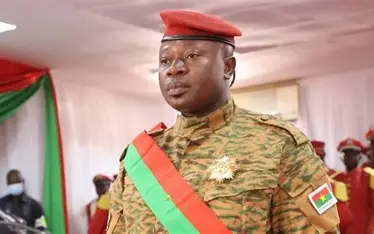
Paul-Henri Sandaogo Damiba faces serious terrorism charges in Burkina Faso, a case now under judicial investigation in Ouagadougou. The accusations complicity in terrorist group association, illegal arms possession, and terror financing mark a sharp escalation in a politically volatile dispute that has drawn international attention.
Legal proceedings intensify as extradition from Togo faces scrutiny
After seeking refuge in Lomé, Damiba was extradited to Burkina Faso in January 2026 following a formal request from Ouagadougou. The extradition was not unconditional: Togo insisted on guarantees regarding his safety, fair trial rights, and a commitment that the death penalty would not be imposed key assurances that shaped Lomé’s decision.
With Damiba now in Burkinabè custody, the validity of those earlier assurances has come under sharp focus. The government of Faure Gnassingbé, which approved the transfer, had built its decision on the expectation that Ouagadougou would uphold its legal promises. The evolving judicial landscape in Burkina Faso now casts doubt on whether those guarantees will survive.
New penal code reintroduces death penalty for terrorism offenses
In October 2026, Burkina Faso adopted a revised Penal Code that reintroduces capital punishment specifically for terrorism-related crimes. Given that Damiba’s charges fall precisely within the scope of these new provisions, the timing raises concerns about potential retroactive application and the fairness of his trial.
While no conviction has been handed down, the legal uncertainty surrounding possible death sentence eligibility has intensified scrutiny. Legal experts emphasize that procedural fairness, respect for non-retroactivity rules, and strict adherence to due process must guide the proceedings. Any deviation from these principles risks undermining the integrity of the case and the credibility of Burkina Faso’s justice system.
Diplomatic fallout looms as trust in extradition agreements erodes
The case is no longer purely judicial it has become a test of inter-state trust. Togo’s decision to extradite Damiba hinged on Ouagadougou’s binding assurances. Should these promises be broken, especially in light of the reintroduction of the death penalty, Lomé may face reputational damage and legal consequences.
This diplomatic tightrope is further complicated by Burkina Faso’s recent political upheaval. Ibrahim Traoré’s 2022 takeover from Damiba introduced a deep political rift, and the current charges must be seen against this backdrop. While the legal system must operate independently, the perception of political retribution cannot be ignored. Transparency in the judicial process and strong evidentiary standards are essential to prevent accusations of selective justice.
What comes next: accountability, justice, and the rule of law
For Togo, the stakes are high. Faure Gnassingbé’s government must now assess whether the assurances secured before the extradition are being honored. Burkina Faso, in turn, faces the challenge of conducting proceedings that respect both national security imperatives and fundamental human rights.
As Africa strengthens regional judicial cooperation, this case could set a troubling precedent. When extradition agreements are undermined by legal or political shifts in the receiving state, the foundation of trust between nations weakens. The fight against terrorism cannot justify the circumvention of due process or the erosion of diplomatic commitments.
Ultimately, the outcome of Damiba’s case will reflect on both countries’ commitment to justice, human rights, and the preservation of legal guarantees that form the backbone of international cooperation.
By Agnès Mvogo — Journalist