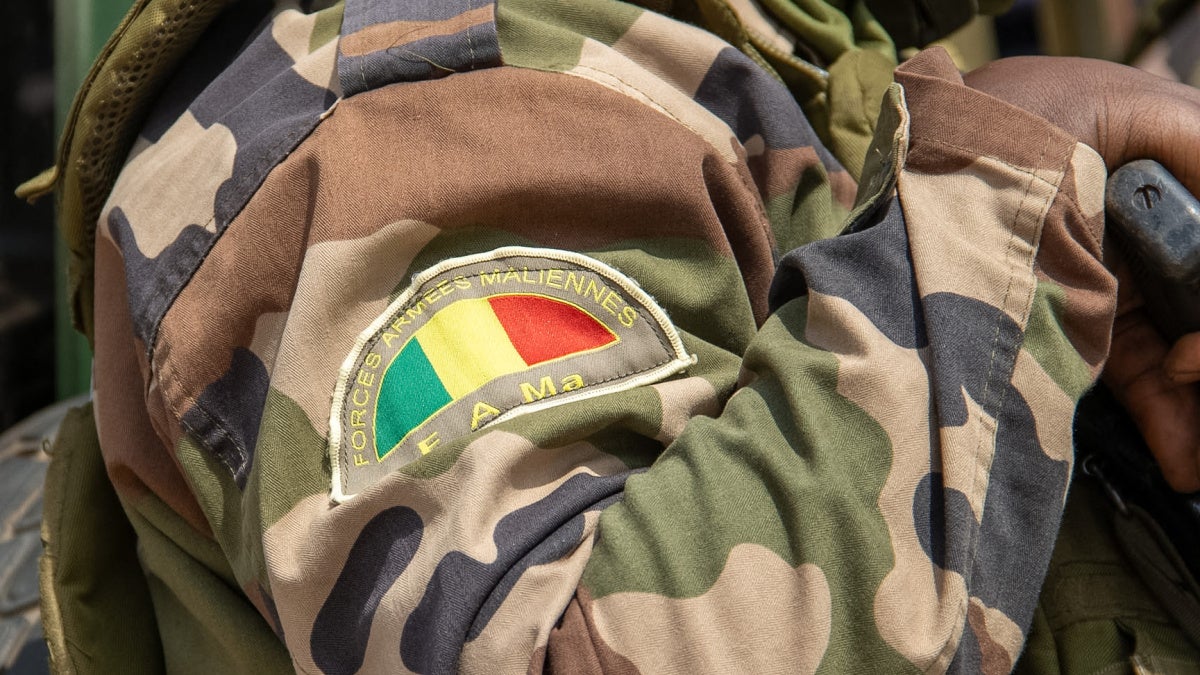
In the heart of central Mali, two villages became the grim stage for a brutal confrontation between state forces and armed groups. On October 2 and 13, soldiers of the Malian Armed Forces (FAMA) and allied militias—primarily Dozos hunters—carried out deadly raids in Kamona and Balle, resulting in the deaths of at least 31 civilians and the destruction of homes.
a systematic campaign of violence
The first attack struck Kamona on October 2. According to local testimonies, soldiers arrived in at least seven pickups and three armored vehicles, accompanied by Dozos on motorcycles. They targeted men specifically, accusing them of collaborating with the Group for the Support of Islam and Muslims (JNIM), an Al-Qaeda-affiliated militant faction controlling the region.
Witnesses reported that many residents fled after the JNIM fighters alerted them to the army’s approach. Those who remained were gathered and executed. At least 21 men perished in the assault. The attackers also set fire to 10 homes and three storage huts belonging to Fulani residents.
A 40-year-old shepherd, who had hidden in an abandoned house with his 9-year-old daughter, recounted discovering 17 bodies under a tree. “The victims were riddled with bullets,” he said. “One man’s skull was shattered. Spent bullet casings littered the ground.”
Local residents compiled a list of 21 male victims, aged 20 to 65. They suspect additional deaths occurred in the surrounding bush. “We heard at least 15 more men were killed that day,” one villager said. “But we didn’t check—we were too afraid the army would return.”
another village, another tragedy
Thirteen days later, on October 13, the violence spread to Balle, 55 kilometers away. Soldiers in five pickups and Dozos on 30 motorcycles descended on the village, prompting some residents to flee immediately. Others remained, only to face brutal treatment.
A 24-year-old man described how soldiers went door-to-door, beating and kicking men before opening fire. In the end, ten civilians were killed—nine men aged 22 to 67 and a 55-year-old woman. The attackers also stole over 100 cattle.
A 33-year-old survivor found the bodies scattered in the village center. “They were lying side by side, shot repeatedly,” he said. “Some had broken limbs.” The woman’s 21-year-old daughter recalled her mother confronting the soldiers. “She accused them of abusing villagers,” she said. “They took her where the men were held and executed her.”
denials and shifting narratives
The Malian military issued a statement claiming its October 13 operation near Balle was a “offensive reconnaissance mission” that “neutralized around 20 terrorists” and seized weapons. However, residents of Balle—a village under JNIM control for years—reject this version.
“We pay zakat to the group every year,” one man explained. “They settle disputes, and there are no soldiers, gendarmes, or police here. The army doesn’t distinguish between us and them.”
This pattern of violence follows JNIM’s intensified attacks in the Ségou region, including a strike on the Siribala sugar factory in August. The group has since besieged Bamako, disrupting fuel supplies and forcing the military junta to suspend all schools and universities nationwide.
accountability under international law
All parties in Mali’s conflict are bound by international humanitarian law, including the Geneva Conventions and customary laws of war. These prohibit attacks on civilians, executions, and cruel treatment. Perpetrators of war crimes may be prosecuted under domestic or international law.
Although Mali withdrew from the International Criminal Court (ICC) in September 2023, it remains a party to the Rome Statute until September 2026. The ICC opened an investigation into alleged war crimes in Mali in 2013, focusing on abuses committed since 2012.
The African Union (AU), tasked with promoting peace and security, has largely failed to address the escalating crisis. Despite the worsening security situation, the AU Peace and Security Council has limited itself to issuing statements of concern, avoiding concrete action.
“The AU must prioritize Mali,” said a regional expert. “Regular briefings, strengthened diplomacy, and coordinated regional efforts are essential to hold all parties accountable for their actions.”