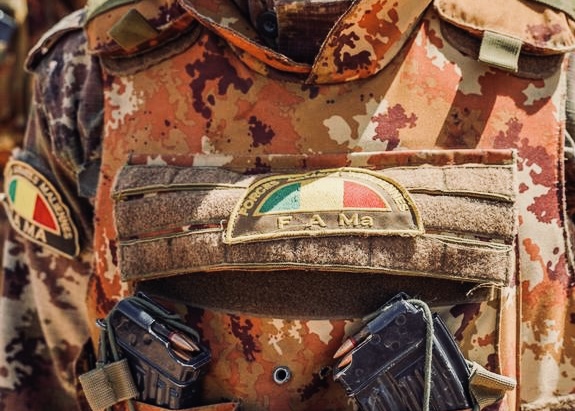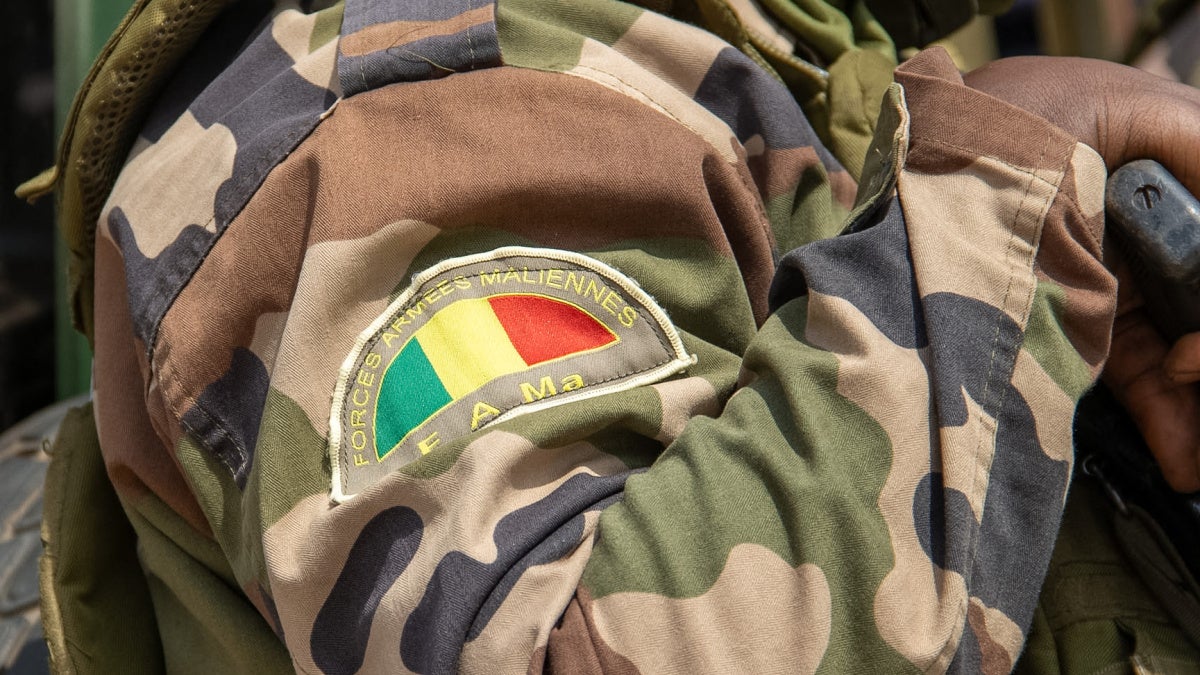
In central Mali’s conflict-ridden Ségou region, soldiers from the Malian Armed Forces and allied dozos militias stand accused of committing a series of brutal attacks against civilians in early October. According to local testimonies, the forces stormed two villages on October 2 and 13, resulting in the deaths of at least 31 unarmed villagers and the destruction of homes.
On October 2, armed men in military camouflage and traditional dozos attire—identified by witnesses through their distinctive clothing and protective amulets—descended on Kamona village in at least seven pickup trucks, three armored vehicles, and several motorcycles. The attackers, who arrived around 10 a.m., allegedly executed at least 21 men and set fire to over ten homes. Survivors recounted that many residents fled after receiving warnings from local Islamist militants about the approaching army. Those unable to escape were rounded up and killed, with some victims found with gunshot wounds to the head and torso.
a pattern of retaliatory violence
Witnesses confirmed that Islamist fighters from the Group for the Support of Islam and Muslims (JNIM), an Al-Qaeda-affiliated group active in the area, had already left the village before the military’s arrival. No clashes between the two sides were reported during the operation. Survivors believe the attacks were a direct response to recent JNIM offensives in Ségou, including a devastating assault on a sugar processing plant in Siribala on August 8, which left the region under heightened tension.
Local accounts describe harrowing scenes: 17 bodies were discovered under a single tree in Kamona, with four additional victims found north of the village. A 40-year-old herder who had hidden with his nine-year-old daughter in an abandoned home described the aftermath. “The bodies were riddled with bullets,” he said. “One man’s skull was shattered. Spent cartridges littered the ground.” A 39-year-old man who helped bury the dead recounted digging a mass grave under the tree to inter the 17 men. “Further north, we found four more bodies—all shot in the stomach and head,” he explained. “We buried them in another grave and covered them with sand.”
Residents provided a list of 21 male victims aged 20 to 65. Some villagers claimed that as many as 15 additional men may have been killed in nearby bushland, though they dared not investigate further for fear of the army’s return.
another village, another tragedy
Thirteen days later, on October 13, a similar operation unfolded in Balle, a village roughly 55 kilometers from Kamona. Around 1 p.m., Malian soldiers in five pickup trucks and at least 30 dozos on motorcycles entered the village, prompting some residents to flee. A 24-year-old man who initially stayed behind described how soldiers went door-to-door, assaulting men and firing indiscriminately. “I saw soldiers beating and kicking villagers,” he said. “From my hiding place, I heard gunshots.”
By the time the attackers withdrew around 4 p.m., ten civilians lay dead—nine men aged 22 to 67 and a 55-year-old woman—along with the loss of over 100 cattle. A 33-year-old survivor found the bodies strewn in the village center. “They were lined up, riddled with bullets,” he recalled. “Some had broken limbs.” The victim’s 21-year-old daughter tearfully recounted how her mother, defiant to the end, confronted the soldiers before being dragged away and shot. “She shouted at them, accusing them of abusing us,” the daughter said. “They took her where the men were gathered and killed her.”
military claims and local realities
The Malian Armed Forces’ Chief of Staff issued a statement on October 14, claiming that a “offensive reconnaissance” mission near Balle had “neutralized around twenty terrorists” and seized military equipment. Yet residents paint a starkly different picture. For years, Balle has been under the de facto control of JNIM, with locals paying religious taxes and settling disputes through the group’s judicial system. “We pay zakat every year,” one villager explained. “If there’s a dispute, the jihadists resolve it. There are no soldiers, gendarmes, or police here. The army assumes we’re all JNIM fighters—no distinction is made.”
The escalation in central Mali comes amid a broader surge in Islamist violence, including a blockade on Bamako that has crippled the capital’s fuel supply since early September. The military junta responded by shuttering schools and universities nationwide, exacerbating an already dire humanitarian crisis. Since 2012, Mali’s ongoing conflict has claimed thousands of civilian lives and displaced over 400,000 people.
call for accountability and justice
International humanitarian law prohibits attacks on civilians, extrajudicial killings, and cruel treatment of detainees. Those responsible for war crimes—whether through direct action or command responsibility—can face prosecution. Though Mali withdrew from the International Criminal Court (ICC) in September, it remains bound by the Rome Statute until September 2026. The ICC opened an investigation into alleged war crimes in Mali in 2013.
The African Union (AU) has faced criticism for its limited response to Mali’s deepening crisis. Despite its mandate to uphold peace and security, the AU’s Peace and Security Council has confined itself to issuing statements expressing concern, without implementing concrete measures to hold perpetrators accountable. “The AU must prioritize Mali’s conflict,” stressed a regional analyst. “Regular briefings, strengthened diplomacy, and coordinated regional and international action are essential to ensure justice for victims and deter future atrocities.”