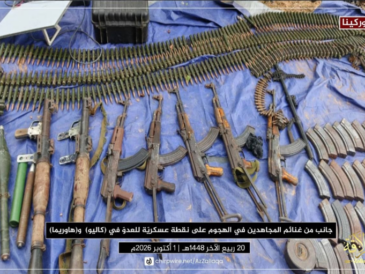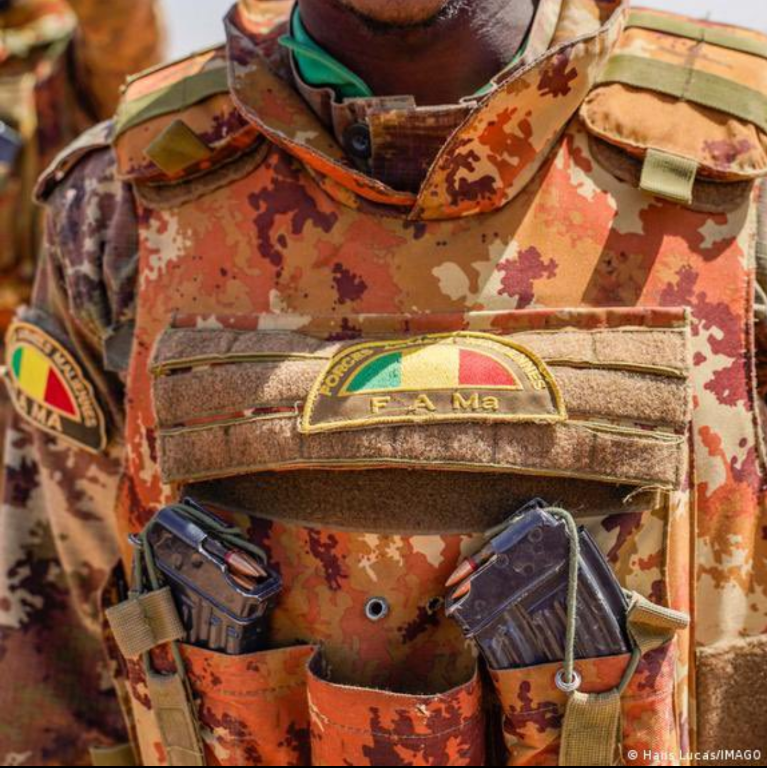
The central region of Mali once again became the epicenter of coordinated violence on Sunday, July 19, as the Group for the Support of Islam and Muslims (JNIM) executed a series of simultaneous assaults targeting Malian Armed Forces (FAMa), Russian-backed Africa Corps mercenaries, and local defense militias. This bold offensive, claimed by the Al-Qaeda-affiliated group, underscores its continued operational freedom despite government assurances of territorial restoration.
Coordinated assaults target key military and civilian assets
In a single day, the JNIM launched four distinct attacks across the Mopti region, demonstrating sophisticated tactics and persistent operational capacity. In the Douentza area, three improvised explosive devices (IEDs) detonated along a military convoy, a supply truck, and a motorcycle detachment, all carrying FAMa soldiers and Africa Corps mercenaries. Further south, near Kansila, the group launched a direct assault on a Dozo militia unit—a traditional hunter group often deployed as auxiliary forces by Bamako—resulting in three fatalities among the militia members.
Five years of junta rule: promises unmet by stark realities
The colonel Assimi Goïta-led junta seized power with a mandate to reclaim national sovereignty and restore stability, positioning itself as the solution to the failures of democratic governments and Western-backed operations like Barkhane. Yet, five years later, conflict monitoring data reveals a starkly different reality. Reports indicate a dramatic surge in fatalities, with deaths from political violence and terrorist attacks doubling or tripling in key provinces compared to pre-coup levels. The proliferation of armed actors, including the rise of Africa Corps and targeted violence against specific communities, has intensified interethnic tensions and fueled jihadist recruitment. The frequency of attacks has also accelerated, with daily IED detonations and ambushes, such as those on July 19, crippling critical road networks.
Territorial erosion and a hidden humanitarian catastrophe
Despite official narratives celebrating the FAMa’s alleged operational gains—such as the symbolic recapture of Kidal in late 2023—the reality on the ground paints a bleak picture. Vast swathes of Mali, particularly in the Center and North, have slipped into lawlessness, where state institutions are either absent or non-functional.
United Nations agencies report that over 400,000 internally displaced persons (IDPs) now inhabit makeshift camps, fleeing both terrorist brutality and the collateral damage of military operations. The JNIM and the Islamic State in the Greater Sahara (EIGS) have further tightened their grip by blockading entire localities, cutting off food supplies and humanitarian aid. The inability of Malian forces—or their Russian allies—to secure these routes has transformed a security crisis into a silent humanitarian emergency.
Russia’s Africa Corps: a flawed military partnership
Facing the withdrawal of French troops and the dissolution of the MINUSMA peacekeeping mission, the Malian junta turned to Moscow for security support. Initially relying on the Wagner Group and later shifting to Africa Corps—a Kremlin-aligned paramilitary force tied directly to Russia’s Defense Ministry—Bamako banked on Russian firepower to reverse its fortunes. The results have been underwhelming at best and counterproductive at worst.
Africa Corps has been repeatedly accused of human rights abuses, including the Moura massacre, which only deepened local resentment and pushed communities toward jihadist factions. Militarily, the group has failed to curb the insurgency, suffering consistent losses due to insufficient troop numbers and an inability to conduct effective counter-insurgency operations across Mali’s vast terrain.
Aerial strategy falters as insurgents adapt
With ground forces stretched thin, the Goïta regime has heavily invested in aerial capabilities, procuring drones and attack helicopters—primarily from Russia and Turkey. While these assets initially enabled large-scale strikes, their effectiveness has waned. Maintenance challenges, compounded by the high cost of Russian spare parts and delayed shipments, have left a growing number of aircraft grounded. Several L-39 Albatros jets and Mi-24 helicopters have been lost to technical failures or rebel fire. Meanwhile, insurgents have adapted, dispersing into smaller units, blending into civilian populations, and using dense vegetation as cover—rendering aerial strikes either ineffective or tragically indiscriminate.
Military-first approach hits a dead end
The July 19 attacks in Mopti are not isolated incidents but symptoms of a systemic failure. Bamako’s all-military strategy—marked by severed diplomatic ties, alienated regional partners, and an overreliance on Russian mercenaries more interested in resource extraction than stabilization—has led the nation into a deadlock. Without a comprehensive political solution that re-establishes governance, restores public services, and protects civilians, Mali risks losing more territory each day to an emboldened Sahelian jihadism on the march.