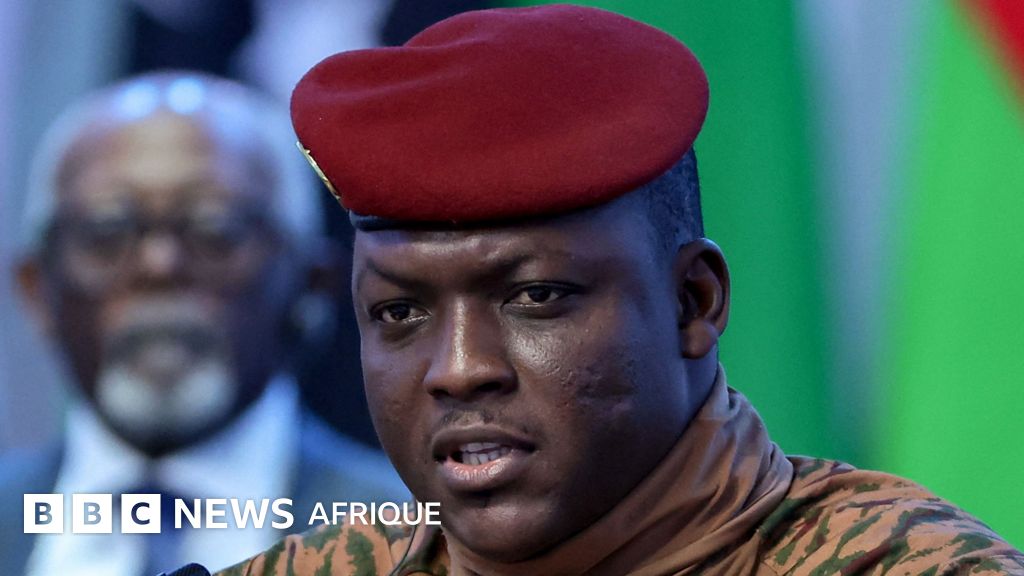
In a bold televised address, Burkina Faso’s military head declared that the nation must abandon democratic ideals, calling the system fundamentally flawed for African nations. Captain Ibrahim Traoré, who seized power in a 2022 coup, made the controversial remarks during a prime-time interview on state television, sending shockwaves across West Africa.
a radical shift away from democratic governance
Traoré’s statements mark a dramatic departure from Burkina Faso’s previous commitments. Just two years ago, the military government pledged to restore civilian rule by July 2024. Yet with the deadline approaching, the junta extended its mandate by five years, citing the need for a “transition period.”
“The people must forget about democracy,” Traoré asserted during the interview. “It is not for us.” He framed the system as inherently incompatible with African realities, drawing parallels to the chaos in Libya after Muammar Gaddafi’s fall—a comparison that underscores the risks of abrupt regime changes.
political parties banned under revolutionary vision
The military leader also defended his decision to dissolve all political parties in January 2026, describing them as divisive and antithetical to national progress. “Here in Burkina Faso—or at least in our experience—politicians are liars, flatterers, and empty speakers,” he stated, dismissing the entire political class as corrupt.
Traoré’s government has framed its actions as part of a broader “revolutionary” agenda, emphasizing sovereignty, patriotism, and grassroots mobilization. Traditional leaders and community structures are being positioned as the foundation of this new order, though details of the proposed system remain vague.
economic and military independence prioritized
The captain-turned-leader argued that Burkina Faso must break free from Western influence to achieve true progress. He criticized the inefficiency of Western-backed democratic models, claiming they lead to bloodshed and instability. “Wherever they impose democracy, it comes with violence,” he declared.
Traoré’s vision includes self-sufficiency in both economic and military sectors, with a strong emphasis on labor reform. He insisted that Burkina Faso cannot develop with traditional work schedules, advocating for extended hours to accelerate growth.
controversial tactics and growing unrest
Critics argue that Traoré’s policies have stifled dissent. Opposition figures, independent media, and civil society groups have faced severe crackdowns. Reports indicate that government critics are often sent to frontline combat zones against Islamist militants—a tactic that has drawn condemnation from human rights organizations.
Despite these measures, Traoré has cultivated significant support across Africa for his anti-Western rhetoric and pan-African stance. His government’s pivot toward Russia for military assistance has further isolated Burkina Faso from traditional allies like France.
violence escalates under junta rule
Human rights monitors report a staggering rise in civilian casualties since Traoré’s ascent. Over 1,800 civilians have been killed since 2023, with two-thirds of the deaths attributed to state forces and allied militias. Islamist militants remain responsible for the remaining third.
The junta’s heavy-handed tactics have failed to quell the Islamist insurgency that has plagued the Sahel region for over a decade. Despite shifting alliances from Western partners to Russia, violence continues unabated, leaving communities trapped between military crackdowns and militant attacks.
The leader’s defiance of democratic norms and embrace of authoritarian methods signal a troubling trend in West Africa, where military rule is increasingly justified as a necessary alternative to instability.