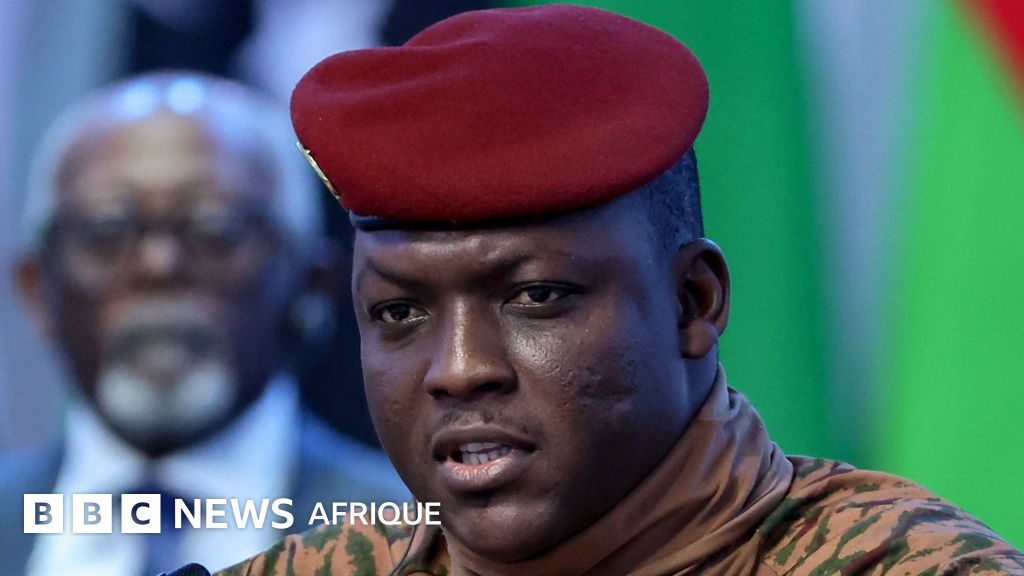
The military leader of Burkina Faso has declared that the nation must abandon democracy entirely, calling it a system that “destroys” rather than serves the people. In a televised address broadcast on national television, Captain Ibrahim Traoré made clear his government’s intention to forge a distinctly different path for the country’s future.
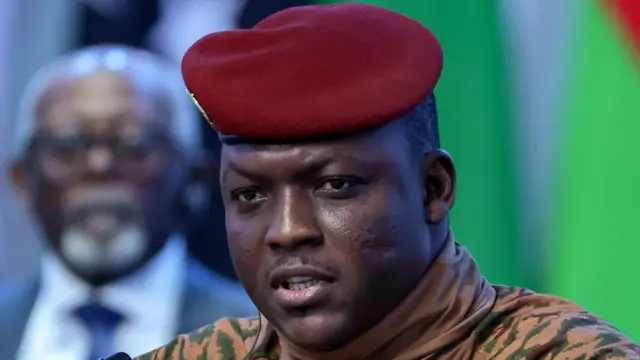
Democracy ‘not for us,’ says Traoré
During the prime-time broadcast, the 38-year-old leader stated bluntly: “People must forget about democracy. It is not for us.” He went on to claim that most Africans reject democratic governance, emphasizing Burkina Faso’s need to pursue an alternative model tailored to local realities. Traoré, who seized power in a 2022 coup, had previously pledged to restore civilian rule by July 2024—but his administration recently extended its mandate by five years, citing ongoing security challenges.
In January, the government banned all political parties, arguing they foster division rather than unity. Traoré dismissed traditional politicians as corrupt and ineffective, declaring: “In Africa—at least in Burkina Faso—a real politician embodies every vice: a liar, a flatterer, a smooth talker.”
Libya as a cautionary tale
Traoré cited Libya as a cautionary example, pointing to the chaos that followed the fall of Colonel Muammar Gaddafi after Western-backed intervention. Though Gaddafi’s regime was authoritarian, it provided social services, free education, and healthcare. His ouster led to prolonged instability, with no elections held since and a fractured nation split between rival administrations and armed groups.
“Wherever Western powers impose democracy, bloodshed follows,” Traoré asserted, framing his rejection of democracy as a rejection of foreign interference.
Vision for a new Burkina Faso
The junta leader outlined a future built on sovereignty, patriotism, and revolutionary mobilization, with traditional leaders and grassroots structures playing key roles. He stressed the need for economic and military self-reliance, arguing that Burkina Faso cannot progress with conventional work hours. “Six or eight-hour workdays won’t close the gap with wealthier nations,” he stated.
Traoré’s government has cracked down on dissent, targeting opposition figures, media outlets, and civil society groups. Critics accuse the administration of silencing opponents by sending them to frontline combat against Islamist militants. Despite this, Traoré has gained significant support across Africa for his anti-Western rhetoric and panafricanist stance.
A regional shift away from the West
Like neighboring juntas in Mali and Niger, Burkina Faso has distanced itself from Western partners—particularly France—in its fight against Islamist insurgencies that have plagued the Sahel for over a decade. Instead, the country has turned to Russia for military assistance, but violence continues unabated.
Human rights groups report that over 1,800 civilians have been killed in Burkina Faso since Traoré’s rise to power in 2022. According to the latest findings, two-thirds of these deaths are attributed to state forces and allied militias, with the remainder linked to Islamist militants.