First AES education summit kicks off in Niamey amid severe teacher shortages and school closures
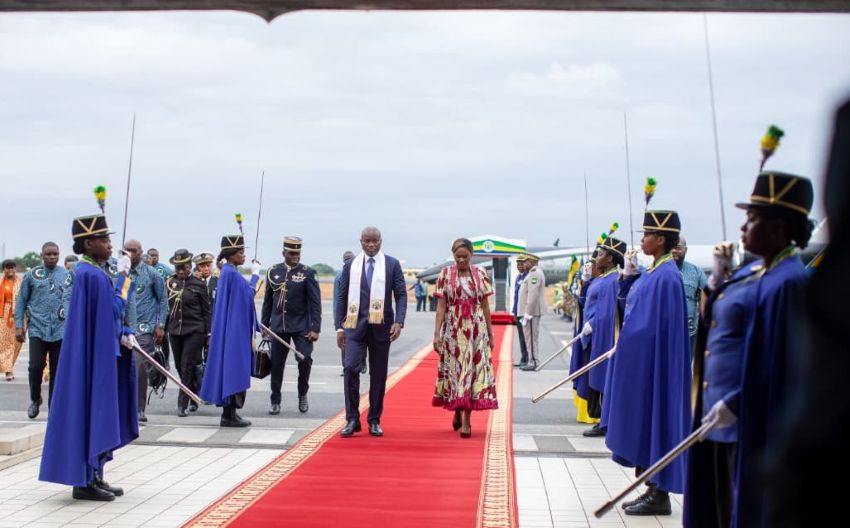
The capital of Niger is hosting today the inaugural Alliance of Sahel States (AES) Education and Training Ministers Conference, bringing together education leaders from Niger, Mali, and Burkina Faso. The event, chaired by Niger’s Prime Minister Ali Mahamane Lamine Zeine, aims to establish a unified, sovereign education system resilient to regional crises.
The opening ceremony saw participation from Niger’s National Council for the Safeguard of the Homeland, government officials, diplomatic corps, and delegations from Mali and Burkina Faso led by their respective education ministers.
Critical shortages cripple education systems across the Sahel
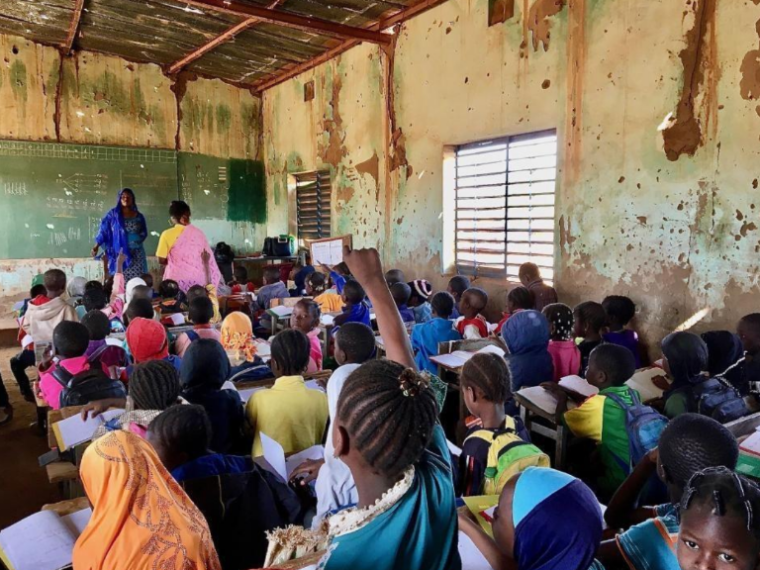
Structural challenges threaten the viability of education systems in all three countries. At the heart of the crisis is a severe shortage of qualified teachers. In Niger’s 2023-2024 academic year, 69,636 teachers served over 3 million primary school students, an average of 43 students per teacher—a ratio far exceeding sustainable classroom management.
Compounding the issue is the lack of teacher training. As noted by Niger’s Education Minister Élisabeth Shérif in mid-2026, many educators enter classrooms without formal pedagogical preparation. In 2017, 78.5% of 70,491 public school teachers were contract workers, with some teaching without any prior educator training. This underscores the urgent need to strengthen teacher training institutions across the Sahel.
Similar shortages persist in Burkina Faso and Mali, where security constraints hinder teacher deployment to remote areas and force educators to abandon posts in high-risk zones.
Terrorism drives mass school closures, cutting off thousands of children from education
School closures due to insecurity have left hundreds of thousands of children without access to education. In Burkina Faso, 5,336 schools were closed as of February 2024, affecting over 820,000 students and 24,000 teachers. Despite efforts to reopen facilities, ongoing violence continues to restrict access in multiple regions.
In Mali, 2,444 schools remained closed in June 2026, impacting approximately 733,200 children and 14,604 teachers—representing more than one in five schools nationwide.
In Niger, 1,097 schools were non-operational by the end of 2025, leaving 93,676 students—48% of them girls—without classroom access. The Tillabéri region alone accounted for 1,032 affected schools.
Mass displacement further destabilizes schooling across the Sahel
Ongoing violence has displaced millions, disrupting education for countless children. As families flee conflict zones, they lose access to schools, disrupting long-term learning. Displacement exacerbates pressure on host communities, where schools struggle to accommodate new students without adequate infrastructure or staff.
As of 2026, Burkina Faso recorded over 2 million internally displaced persons, Mali had around 414,524, and Niger reported 548,386. These population movements push already fragile systems to their limits, resulting in prolonged absences from school and, in many cases, permanent dropout.
From political ambition to classroom reality: what’s next for the AES education initiative?
The Niamey summit presents an opportunity to develop shared solutions: standardizing curricula, pooling educational resources, mutualizing teacher training, and expanding technical and vocational education. These measures could form the backbone of a resilient, sovereign education system.
Yet the path forward is complex. Ministries must also address immediate needs: reopening closed schools, securing facilities, recruiting and retaining teachers in high-risk areas, providing alternative learning pathways, and supporting displaced children.
Niger’s Education Minister recently reported that nearly five million children remain out of school—a stark indicator of the scale of the challenge ahead.
The AES education conference must move beyond declarations of intent. It needs to commit to measurable, localized actions that ensure every child in the Sahel—regardless of location or background—has access to quality learning. After all, the sovereignty of a region is strongest when its people are equipped with the knowledge and skills to shape their own future.