Niger’s new press law: the fallout, the debate, and where independent media goes next
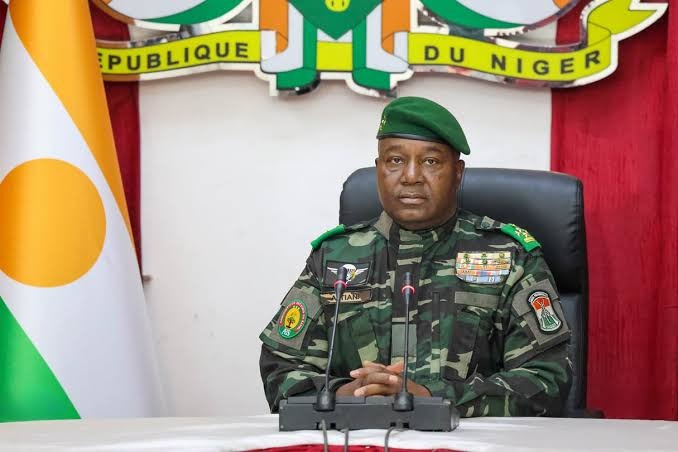
Niger’s decision to rewrite the legal framework governing online outlets and foreign newsrooms is no longer a quiet administrative matter. Announced at the close of a Council of Ministers session, the measure has touched off a widening argument about who controls the country’s information space — and about what comes next for the people who report inside it.
The Conseil national pour la sauvegarde de la patrie (CNSP) presents the overhaul as a defence of Niger’s virtual territory. The reaction from much of the media world reads it very differently: as the latest brick in an information wall closing in around the country’s remaining independent voices.
How the debate shifted once the ordinance became public
Read closely, the text devoted to electronic press provoked swift scepticism in media circles. The stated aims — “adapting the regulations” and “fighting disinformation” — sound reasonable at first glance. The difficulty, as many observers pointed out, lies in the machinery hidden behind that wording.
Traditional newsrooms had already been under pressure to echo the government line. That left digital platforms, bloggers and freelance journalists as the last place where the official narrative could be questioned. The new ordinance changes that equation, converting a space of relative freedom into one ruled by permission.
Who gets to decide what counts as false
This is where the argument becomes sharpest. No independent judge is being handed the power to define a “false information”; the state keeps that authority for itself. Under the banner of “professional responsibility,” what is really being installed is an obligation to conform.
For online reporters, the practical consequence is uncertainty: publish and risk sanctions, or stay quiet. For the wider public, the consequence is a narrower view of what is happening in their own country.
A tighter door for foreign correspondents
The second half of the text targets international outlets and their local correspondents, leaning on vocabulary such as “accreditation procedure,” “identification” and “traceability.” The language is polished, but the effect is straightforward — a monitoring system and a permanent right of scrutiny over how journalists do their work.
Niamey frames the measure as protection against foreign interference. In practice, it lets the authorities choose which witnesses are welcome and which accounts of the country are allowed to travel beyond its borders, leaving only government-stamped versions in circulation.
The fallout inside a country learning to lower its voice
Behind the institutional language sits a more personal set of consequences. Citizens who once turned to social platforms for a counterpoint to state media now face a familiar choice: imposed silence, or the discreet murmur of closed networks. The public conversation does not stop — it simply moves out of sight.
That shift carries its own costs. A debate conducted in the shadows is harder to verify, easier to distort, and far less useful to a population trying to understand the direction its country is taking.
What comes next for Niger’s information space
Two readings of the coming months are already competing. The official one holds that stricter rules will strengthen “sovereignty in the information space.” The other warns that confusing a government’s monopoly on speech with a nation’s sovereignty is a political mistake with lasting consequences.
A state that fears contradiction enough to shut down every channel of news does not project strength; it lays its fragilities bare. By turning the press into a propaganda instrument and reporters into default suspects, Niger does not reinforce its sovereignty — it deepens its isolation.
Information is not a threat to the homeland. It is the mirror of a country’s democratic health. The junta has just cracked that mirror, and the debate now unfolding will decide how long the pieces stay on the floor.