Togo’s press crackdown: what comes next after journalist’s suspension
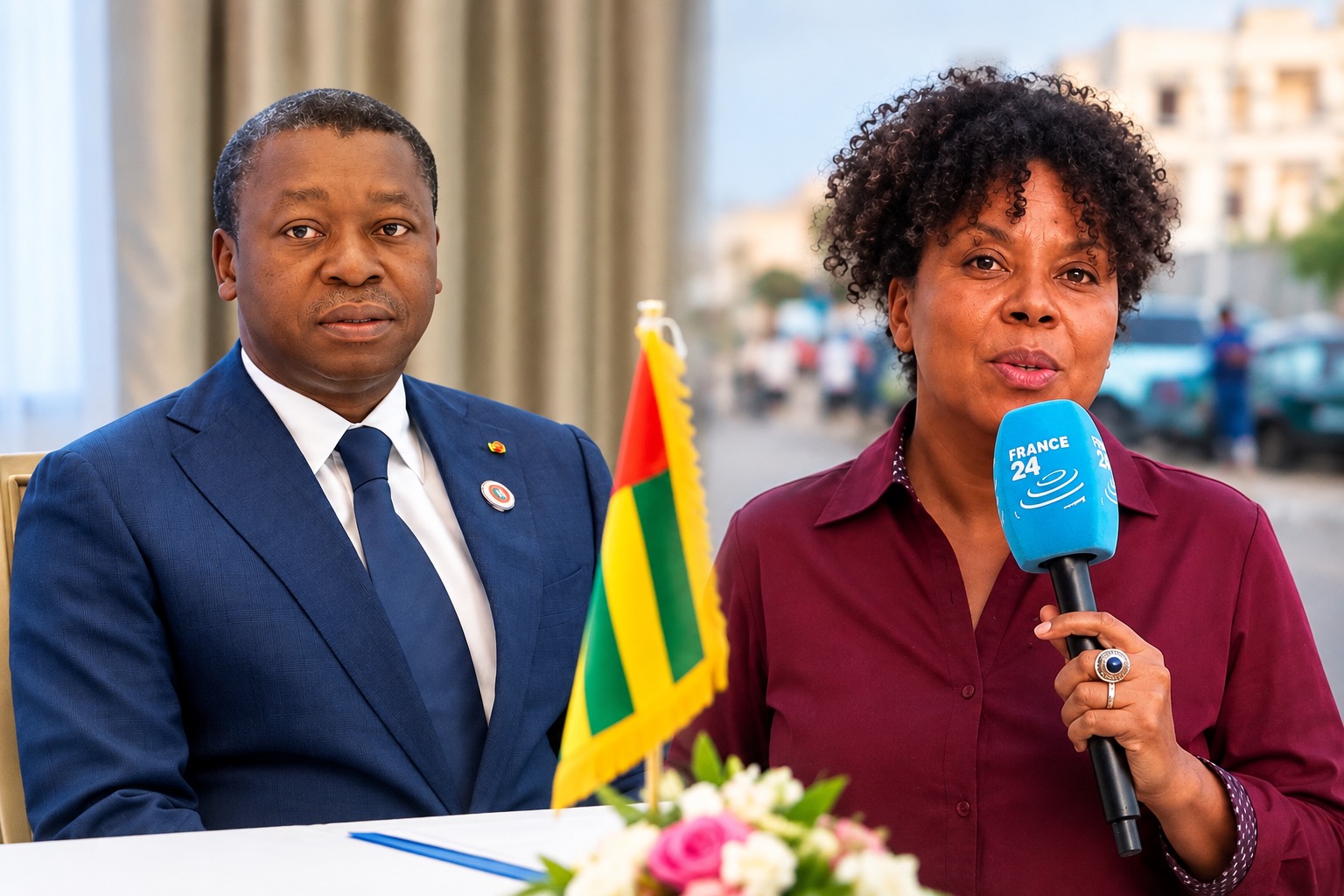
The recent suspension of a veteran journalist has ignited a fierce debate in Togo, raising critical questions about press freedom and the government’s approach to media regulation. The case, which has drawn international attention, underscores a growing unease over the shrinking space for independent journalism in the country.
How A Publicly Available Story Became A Flashpoint
Emmanuelle Sodji, a long-serving correspondent for an international news outlet, found herself at the center of a controversy after sharing information about the detention of two French filmmakers in northern Togo. While the details were already in the public domain through multiple sources, the authorities later cited her report as grounds for disciplinary action, reigniting concerns about arbitrary enforcement of media rules.
The filmmakers, Gaël Mocaër and Sebastian Perez Pezzani, had been held since late July 2026 on charges related to visa declarations while documenting a project in the region. Their provisional release on September 1 marked the end of a high-profile case that had drawn scrutiny from global press freedom advocates.
The Heart Of The Controversy: When Rules Collide With Public Information
The crux of the dispute lies in the timing and clarity of media regulations. Critics argue that sanctions imposed on journalists for reporting publicly available facts—before formal guidelines were explicitly communicated—set a dangerous precedent. The National Journalists’ Union (CGT) has condemned the move as a potential violation of professional ethics, emphasizing that no retroactive punishment should apply when information is already circulating widely.
The debate extends beyond individual accountability. It touches on a fundamental question: Can journalists in Togo safely report on sensitive issues when the boundaries between responsible journalism and state-sensitive information remain ambiguous?
A Media Landscape Under Strain
This latest episode unfolds against a backdrop of heightened tensions in Togo’s media environment. In mid-2025, the country’s broadcast regulator suspended programming from two major international outlets for three months, citing concerns over impartiality and factual accuracy. While the targeted networks defended their editorial standards, observers warned that such measures risked exacerbating an already fragile press freedom climate.
The timing of these restrictions—amid political shifts and social unrest—has amplified scrutiny of the government’s motivations. With public demonstrations against the administration met with heavy-handed security responses, every new restriction on media outlets is now analyzed through a political lens.
What Future For Togo’s Press?
The case of Emmanuelle Sodji is more than an isolated incident. It serves as a litmus test for the resilience of Togo’s democratic institutions and the government’s commitment to a free press. For journalists, the stakes are clear: Will they be able to hold power to account without fear of punitive measures for reporting matters of public interest?
As the authorities weigh their next steps, the international community—and local civil society—are watching closely. The response will determine whether Togo remains a place where information flows freely or whether it slides further toward a model of controlled media.
The Way Forward: Clarity, Accountability, And Reform
To restore confidence, several measures could help ease tensions:
- Transparent rulemaking: Media regulations must be clearly defined and communicated in advance, eliminating ambiguity in enforcement.
- Independent oversight: A neutral body should review sanction decisions to ensure they are proportionate and non-political.
- Protective guarantees: Journalists reporting on sensitive topics need legal safeguards against arbitrary disciplinary action.
The road ahead will require bold decisions from Togo’s leadership. The world is watching to see if the country will embrace a future where free speech is protected—or whether the current trajectory will lead to deeper restrictions on one of democracy’s most vital pillars.