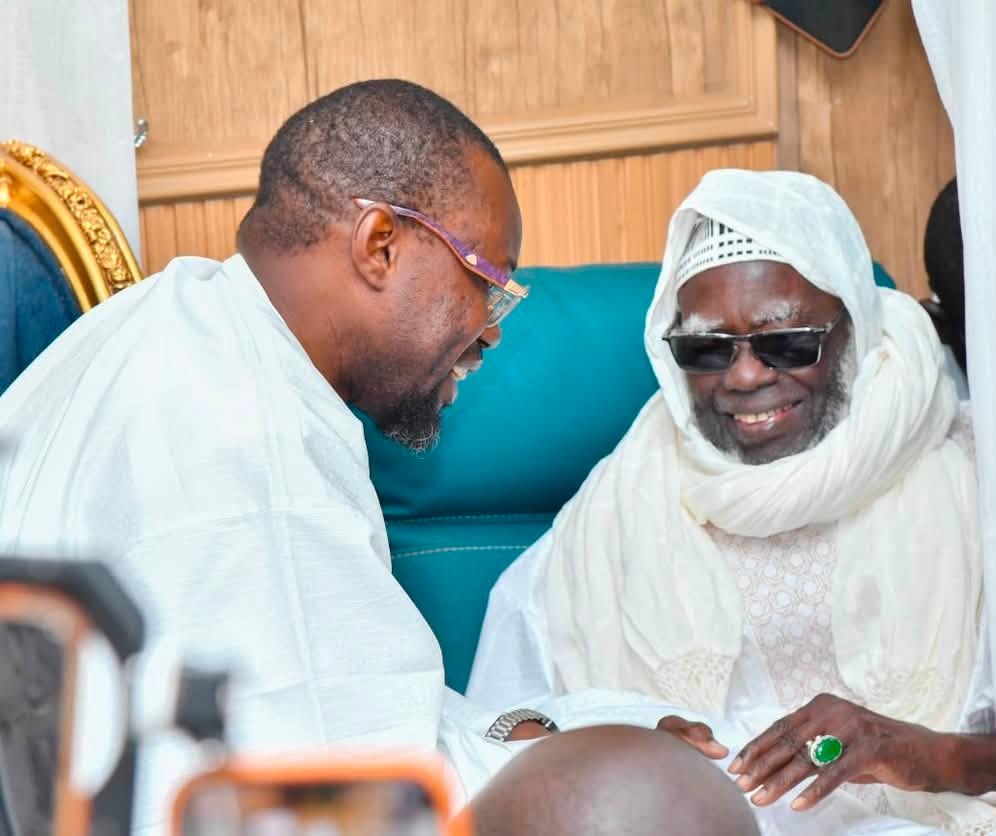
The traditional leaders of Benin remain deeply rooted in the nation’s sociocultural fabric, enjoying both public trust and formal state recognition. They serve as guardians of local traditions, values, and identities, embodying moral and cultural legitimacy across communities (Affo, Sina, & Gnanvi, 2019).
To solidify their role, particularly in conflict resolution and social cohesion, the government of Benin enacted Law No. 2025-09 of April 3, 2025, which establishes a legal framework for traditional chieftaincy. This legislation categorizes traditional leadership structures, grants them formal legal status, and highlights their contributions to socioeconomic development, social unity, and cultural preservation. Under this law, 16 kingdoms and 90 traditional chiefdoms are now officially recognized (Fatondji, 2025).
Despite their cultural significance, traditional leaders often find themselves entangled in national political dynamics. Political parties frequently seek their endorsement to sway voter preferences, sometimes offering material or financial incentives in return (Cessou, 2017). To curb such practices, Benin has explicitly prohibited traditional kings and chiefs from engaging in partisan politics (République du Bénin, 2025).
In this evolving landscape of institutional recognition and public debate, recent survey data sheds light on how citizens perceive traditional leaders—specifically their influence, effectiveness, and role in local governance.
Benin’s citizens continue to value traditional leaders highly. Nearly one in four reported reaching out to them in the year prior to the survey, while a majority expressed trust in their leadership and recognized their impact on local governance. Many respondents even advocated for an expansion of their influence.
However, this positive perception is increasingly overshadowed by concerns over integrity. Three-quarters of those surveyed believe that at least some traditional leaders are involved in corrupt activities—a concern that has grown since 2022—while trust in their leadership has declined compared to 2020.
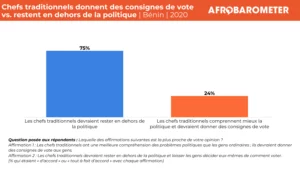
Despite their respected standing, a strong majority of citizens insist that traditional leaders should refrain from political involvement, allowing voters to make independent decisions in elections.