Explosive claims point to cross-border psychotropic trade
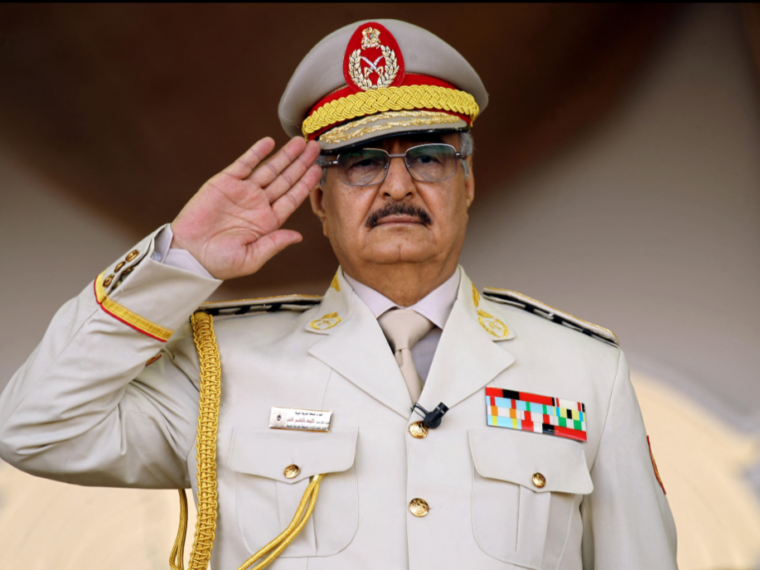
The latest allegations linking the United Arab Emirates to illegal psychotropic drug production facilities in eastern Libya have intensified diplomatic tensions with Algeria. In a direct accusation, journalist Mehdi Ghezzar alleged that Abu Dhabi is financing industrial-scale drug manufacturing operations in Libya’s eastern region, which falls under the control of Marshal Khalifa Haftar’s forces. According to his claims, these facilities operate beyond mere smuggling networks, functioning as structured production hubs equipped with specialized machinery and trained personnel.
The reporter’s statement—« These are factories owned by the Emirates »—suggests a deliberate effort to flood Algerian markets with synthetic substances, particularly targeting vulnerable youth populations. While these accusations carry serious geopolitical implications, no publicly available evidence has independently confirmed the UAE’s direct involvement in financing or orchestrating these operations.
Eastern Libya emerges as a growing drug production hub
The accusations gain credibility against the backdrop of Libya’s deepening drug crisis. Since the country’s political and security fragmentation post-2011, organized crime networks have thrived in ungoverned territories, exploiting porous borders and militia rivalries. A November 2026 court ruling in Qubbah, eastern Libya, exposed the scale of these operations when six individuals—including one sentenced to 25 years in prison—were convicted for manufacturing and trafficking Captagon. Court documents revealed seized tablets, packaging materials, and industrial compression equipment, confirming local production activities.
Military operations, such as an October 2026 raid by Haftar’s Libyan National Army in Kufra, have intercepted over 1.3 million Captagon pills, underscoring the region’s role as both a transit and production zone for synthetic drugs. These developments highlight the Libyan government’s struggle to curb illegal narcotics manufacturing and distribution.
The Haftar-Emirati alliance under scrutiny
The geopolitical dimensions of this crisis cannot be ignored. The UAE has long been a key backer of Haftar’s forces, which dominate Libya’s eastern and southern regions. This alliance fuels suspicions in Algiers that Abu Dhabi may be indirectly enabling or profiteering from drug trafficking networks operating in Haftar-controlled zones. However, establishing a direct causal link between UAE funding and Libyan drug labs remains unproven without concrete evidence, such as financial transaction trails, equipment provenance, or political-military collusion.
Algeria’s diplomatic standoff with the UAE deepens
The accusations arrive amid a severe deterioration in Algeria-UAE relations. Disputes over regional security, military alliances, and Sahel conflicts have escalated, culminating in Algeria’s September 2026 announcement of a full diplomatic break from Abu Dhabi. In this volatile context, even unproven allegations of cross-border criminal networks funded by foreign states carry heightened sensitivity for Algerian authorities, who perceive them as threats to national sovereignty and youth welfare.
Algerian president declares war on drug trafficking
President Abdelmadjid Tebboune has framed the drug crisis as an existential threat to Algeria, declaring in November 2026 that the country faces a « real war against our people and our youth » due to escalating psychotropic trafficking. While his remarks underscore Algeria’s security concerns, they do not explicitly name the UAE or any state actor as orchestrators of this phenomenon. Instead, the government is prioritizing interdiction operations, cross-border intelligence sharing, and crackdowns on precursor chemical supplies to dismantle trafficking networks.
Youth vulnerability exploited by drug cartels
The social and health repercussions of psychotropic drug proliferation in Algeria extend far beyond geopolitical tensions. Synthetic substances—whether diverted from medical channels or clandestinely manufactured—pose a severe public health crisis. Traffickers prey on economic desperation and social instability, recruiting young dealers to expand their reach. Combating this threat demands a multi-pronged strategy: dismantling financial networks, strengthening addiction treatment programs, and enhancing regional law enforcement cooperation to prevent drug flows from Libya.
What evidence could substantiate the accusations?
For the UAE’s alleged role in Libyan drug labs to be confirmed, several critical factors must be verified through independent investigations:
- Ownership and operation records of the identified facilities.
- Financial trails linking the production sites to Emirati entities or individuals.
- Supply chain analysis of industrial equipment and precursor chemicals to trace their origin.
- Political or military connections between Libyan factions and external financiers.
- Documented links between the production hubs and distribution networks supplying Algerian markets.
Without these elements, the accusations remain unconfirmed, and any assertion of a deliberate state-sponsored campaign to destabilize Algeria through drug trafficking remains speculative.
A regional powder keg
The fallout from these allegations could reshape North Africa’s security landscape. If future investigations uncover credible proof of state actors funding drug production to undermine neighboring countries, the diplomatic and military consequences would be profound. For now, confirmed realities include Libya’s expanding role in synthetic drug manufacturing, the circulation of contraband across borders, and Algeria’s urgent response to protect its citizens. The bigger question looms: Is eastern Libya becoming a key production base for amphetamine-type stimulants, and who truly profits from this illicit economy?
Algeria’s existential challenge
The drug trafficking crisis has evolved into an issue of national survival for Algeria. It threatens not only public health and social cohesion but also the country’s sovereignty and regional stability. While diplomatic tensions with the UAE add another layer of complexity, the primary focus remains on dismantling trafficking networks, securing borders, and safeguarding the nation’s youth. The stakes could not be higher—both for Algeria’s immediate security and its long-term geopolitical positioning.