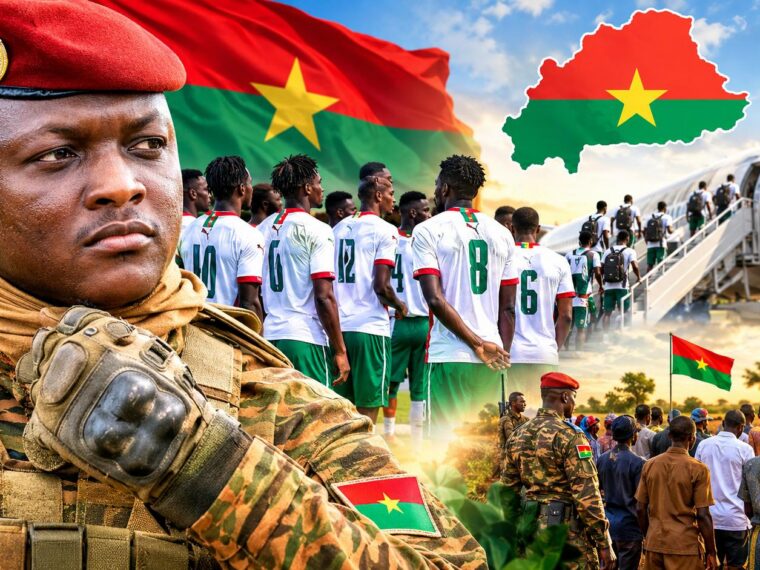
The abrupt absence of Burkina Faso’s senior national football team from the international fixture in Argentina has left observers questioning the strategic pivot underway in the country. Insider accounts suggest the entire squad was requisitioned at the behest of Captain Ibrahim Traoré under the banner of a sweeping ‘patriotic mobilization drive.’
While the full scope of this development remains unverified, if substantiated, it signals a fundamental recalibration of how national resources human and otherwise are allocated. The move raises immediate concerns over the future trajectory of Burkinabè athletics and the broader implications for sectors now being repurposed to serve a higher national cause.
From sporting excellence to national duty: a new role for the Étalons
Historically celebrated as ambassadors of Burkinabè pride and athletic prowess, the Étalons Burkina Faso’s revered national football team may now be navigating an unparalleled mandate. Rather than competing on foreign pitches, their members appear to have been redirected toward activities framed under the umbrella of patriotism. This unprecedented shift prompts reflection on the delicate balance between sporting ambition and the pressing demands of state security and social cohesion.
Observers note that this transition, while framed as a temporary measure, could redefine the very identity of the team. No longer exclusively bound by the rhythms of the FIFA calendar, the Étalons may now operate at the intersection of sports and nation-building a place where athletic talent converges with public service.
The wider implications: nationalism versus institutional priorities
Burkina Faso has, in recent years, witnessed a pronounced militarization of civic life, with mobilization campaigns extending across government bodies, educational institutions, and civil society organizations. The integration of elite athletes into this fold signals a possible expansion of that model. While authorities assert the necessity of such measures in response to heightened security challenges, critics warn of the long-term consequences for institutional autonomy and sectoral development.
The question looms: is every sphere of public life from education to athletics now subject to the imperatives of national mobilization? If so, what safeguards exist to ensure that short-term security goals do not permanently reshape the nation’s cultural and sporting landscape?
Unanswered questions and the need for clarity
At present, the precise circumstances surrounding the team’s absence remain shrouded in ambiguity. No official statement from the Burkinabè Football Federation, the Ministry of Sports, or government spokespeople has confirmed the scope or duration of the requisition. Without transparent communication, speculation continues to overshadow the true motives behind this strategic pivot.
Should the reports prove accurate, however, Burkina Faso may be witnessing a turning point one in which the traditional boundaries between sport, duty, and patriotism are being redrawn with decisive intent.
What lies ahead for Burkinabè football?
If the current trajectory persists, stakeholders must confront difficult choices. Will the national team reclaim its place on the international stage, or is this a permanent recalibration of its purpose? Moreover, how will fans, athletes, and governing bodies reconcile competing claims on talent and time?
One thing is certain: the absence of the Étalons in Argentina has catalyzed a debate that transcends the pitch. It forces a broader reckoning with the evolving priorities of a nation in transition and the cost of transformation.