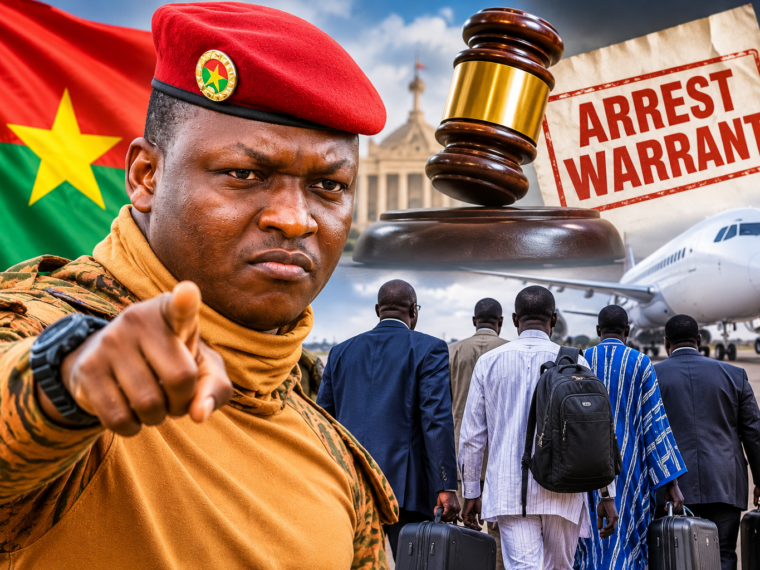
In Burkina Faso, the judicial pressure against former political leaders, military figures, and journalists has intensified, taking on an increasingly troubling dimension. Several individuals now residing abroad after fleeing the country amid political tensions and security threats have been brought into the crosshairs of the transitional authorities. Arrest warrants, legal proceedings, and extradition requests are being deployed against persons who have sought refuge beyond Burkina Faso’s borders.
Why target exiles through judicial channels?
The pursuit of these former officials raises a critical question: why is the government of Ibrahim Traoré directing so much effort toward individuals no longer present in the country? For these former leaders and critics, exile was meant to shield them from the pressures and threats they claimed to fear. Yet their departure has not ended the tensions with authorities in Ouagadougou.
This escalation of legal actions is beginning to shape a narrative that extends beyond the judicial sphere. With successive prosecutions targeting former collaborators, military leaders, political figures, and journalists, a pressing concern emerges: are these measures truly about delivering justice, or do they represent a calculated political and personal reckoning orchestrated by Ibrahim Traoré’s administration?
The limits of justice in political confrontations
The issue is not whether former public officials should face legal accountability no one is above the law. However, prosecutions must be grounded in verifiable evidence, credible procedures, and judicial independence free from political influence. Justice cannot be weaponized in the rivalry between past and present leadership.
Extradition demands and international obligations
Another critical aspect is the insistence on pursuing certain individuals even in the countries that granted them asylum. While exile does not grant immunity from prosecution, extradition must adhere to strict legal safeguards. Authorities must ensure the safety of the individuals involved, uphold judicial independence, and respect fundamental rights throughout the process.
The political fallout of judicial overreach
When a government appears unwilling to tolerate dissent even beyond its borders it fuels doubts about its commitment to pluralism, freedom of expression, and political opposition. A leader confident in their legitimacy should confront criticism through transparency, results, and institutional accountability rather than fostering the perception of perpetual threats from adversaries.
Shifting priorities amid national challenges
Burkina Faso faces pressing security, economic, and social crises, including widespread insecurity, internal displacement, and humanitarian needs. Citizens deserve solutions addressing these urgent challenges. The government’s preoccupation with pursuing former regime opponents raises legitimate questions about its priorities and the long-term stability of its approach.
The danger of justice becoming an instrument of repression
What is most concerning is the risk that justice could be perceived less as an impartial institution and more as a tool for political confrontation. If every change in leadership results in the systematic judicial persecution of former officials, Burkina Faso risks entrenching itself in a cycle of retaliatory politics with no end in sight.
At its core, Ibrahim Traoré faces a fundamental choice: are these actions rooted in a genuine commitment to justice within the bounds of the law and respect for rights or do they reflect a personal and political vendetta? Accusations must be weighed on evidence, not on retribution.
True statecraft is measured not by the number of former adversaries silenced, but by the ability to uphold independent institutions that render justice without political bias.
By Thomas Nkoulou — Journalist