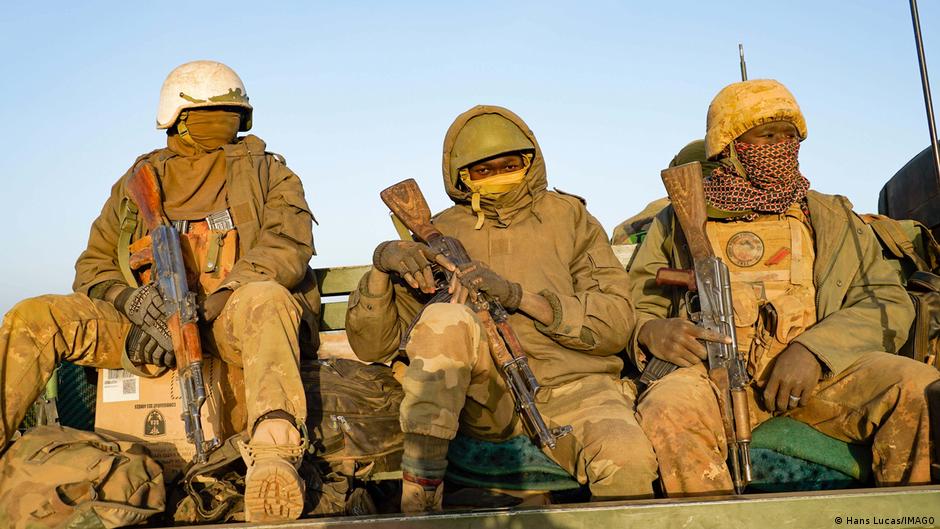
The Russia-backed Africa Corps fighters in Mali are faring better than Malian troops in confrontations with jihadist groups, raising questions about the discrepancy in losses. While the exact reasons remain debated, military analysts point to key differences in mission structure, troop numbers and combat tactics.
In most recent engagements across northern and central Mali, casualty reports have disproportionately affected Malian soldiers rather than the Russian paramilitary units. This pattern has intensified scrutiny over the operational roles each force plays.
Numbers tell a story
The first factor lies in sheer scale. Security experts estimate that between 1,500 and 2,000 Russian paramilitaries are currently deployed in Mali, compared with over 13,000 active Malian troops. Larger troop presence naturally increases exposure to attack.
Moreover, their missions differ significantly. While Malian forces remain on the front lines—patrolling high-risk zones and holding key positions—the Russian units operate primarily in a support capacity. Their role includes intelligence analysis, drone surveillance and securing critical infrastructure, rather than direct combat engagement.
Mamadou Mouth Bane, a Sahel security analyst and author of several books on jihadism and organized crime in the region, explains: “The explanation is straightforward. It is the Malian armed forces who bear the main burden. They are positioned in the most dangerous areas, facing the highest risk. The Africa Corps fighters typically operate from the rear, managing communications, processing drone data and coordinating operations. That’s why most battlefield fatalities—and most hostage-takings—involve Malian soldiers.”
Russian losses do occur
Despite their reduced exposure, Russian fighters are not immune to losses. Several have been killed in Mali in recent years, though precise figures remain unverified due to the absence of official disclosures from either Bamako or Moscow.
Another critical factor is combat experience. Unlike many Malian troops, Russian paramilitaries are often battle-hardened veterans of conflicts in Syria, Ukraine and other regions. Their training, tactical discipline and access to advanced equipment—including armored vehicles and air support—give them a tactical edge in high-pressure situations.
Abdoulaye Sounaye, a researcher at the Leibniz-Zentrum Moderner Orient in Berlin and Sahel specialist, adds: “We’re comparing two distinct forces: a national army and a corps of professional mercenaries. The Russians are highly trained operatives with extensive combat experience in multiple theaters. Their mastery of battlefield tactics, combined with superior equipment—from armored transport to aerial reconnaissance—provides them with greater protection and operational flexibility than the Malian army.”
Strategic choices also play a role. With limited personnel, Russian units prioritize high-value objectives and sensitive sites, often leaving routine territorial defense to Malian forces. This division of labor further reduces their direct exposure in prolonged skirmishes.