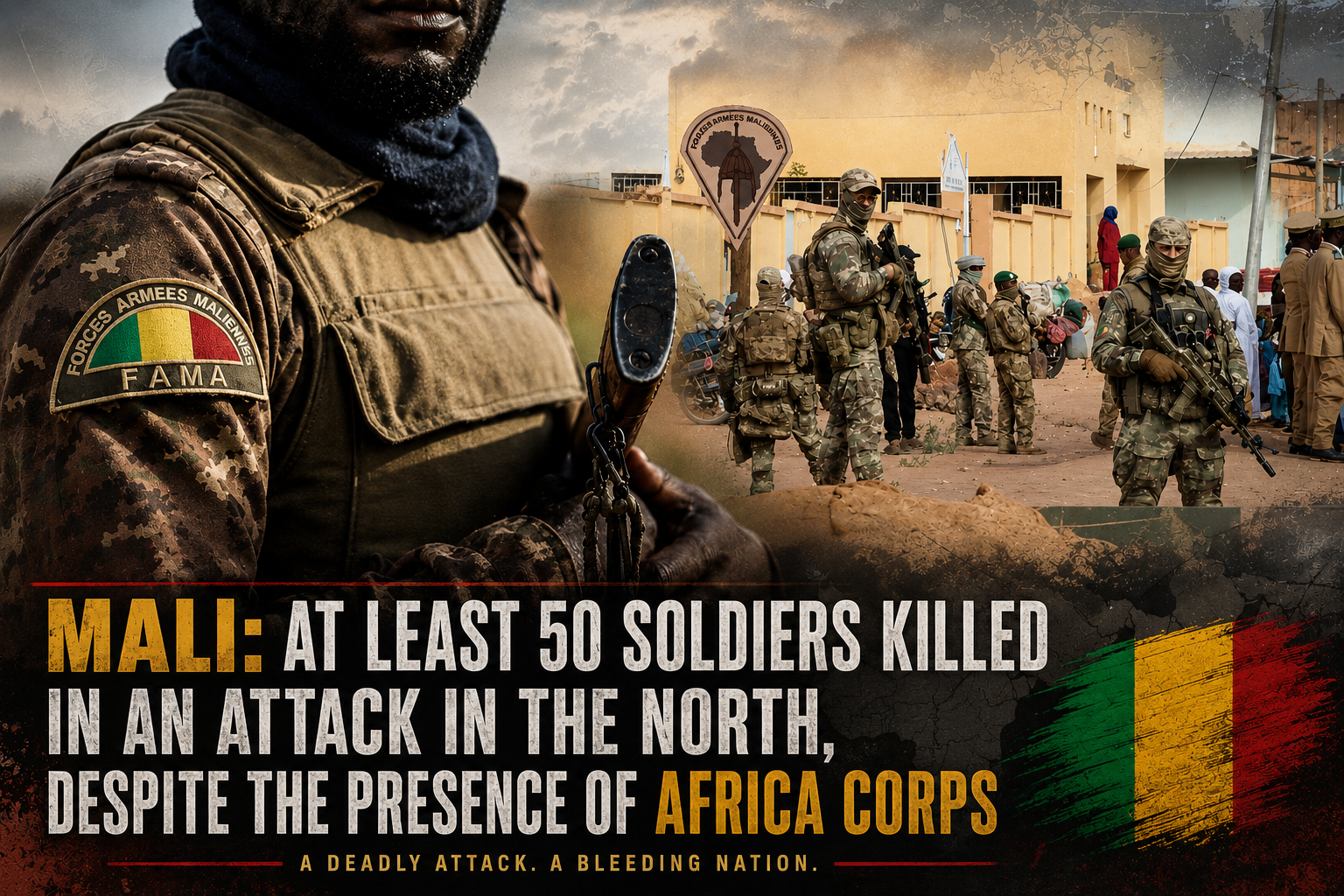
The northern region of Mali has once again witnessed a devastating attack, resulting in the deaths of at least 50 soldiers. The assault, attributed to separatist fighters operating alongside jihadist groups, underscores the persistent deterioration of security conditions in the country.
The human toll of this latest offensive has reignited debates about the effectiveness of Bamako’s military support network. Since the deployment of Africa Corps, portrayed by authorities as a pivotal partner capable of delivering decisive military expertise, expectations have been high. Yet, fatal attacks continue to escalate, with Malian forces sustaining heavy losses.
Doubt cast on Africa Corps’ operational role
The ongoing violence has prompted scrutiny over the true nature of Africa Corps’ engagement. Critics argue that if its involvement is confined to technical assistance, training, or advisory roles—without active participation in high-risk operations—the tangible value of its presence remains questionable. The recent surge in attacks suggests that combat burdens still fall disproportionately on Malian troops, while foreign partners maintain a largely peripheral stance.
Analysts warn that a partnership failing to curb attacks, enhance civilian safety, or safeguard soldiers risks eroding public trust. They contend that military cooperation must be judged by its real-world impact—altering the balance of power on the ground—rather than political rhetoric or signed agreements.
Regional implications for Sahel Alliance states
Observers suggest that Mali’s experience should serve as a cautionary tale for other members of the Alliance of Sahel States (AES). If a strategic partner’s role is limited to non-combat support, governments may need to reassess whether such an arrangement aligns with their security priorities. The debate hinges not on declarations of intent, but on measurable outcomes in the face of relentless violence.
Demands for transparency have grown louder, with calls for clarity on Africa Corps’ operational commitments, mission scope, and measurable progress since its deployment. The absence of visible improvements in security—despite ongoing cooperation—has fueled skepticism about the alliance’s long-term viability.
Security remains the ultimate test
For civilians, the only metric that matters is tangible protection. Until attacks subside and lives are spared, discussions about foreign military partnerships will dominate national discourse. Many analysts argue that Africa Corps—and similar arrangements—must demonstrate concrete, quantifiable contributions to security before their continued support can be justified. The crisis in Mali serves as a stark reminder that partnerships, no matter how well-intentioned, must deliver results to be deemed effective.