Kagame warns elimination of M23 risks Rwanda’s survival
- politics
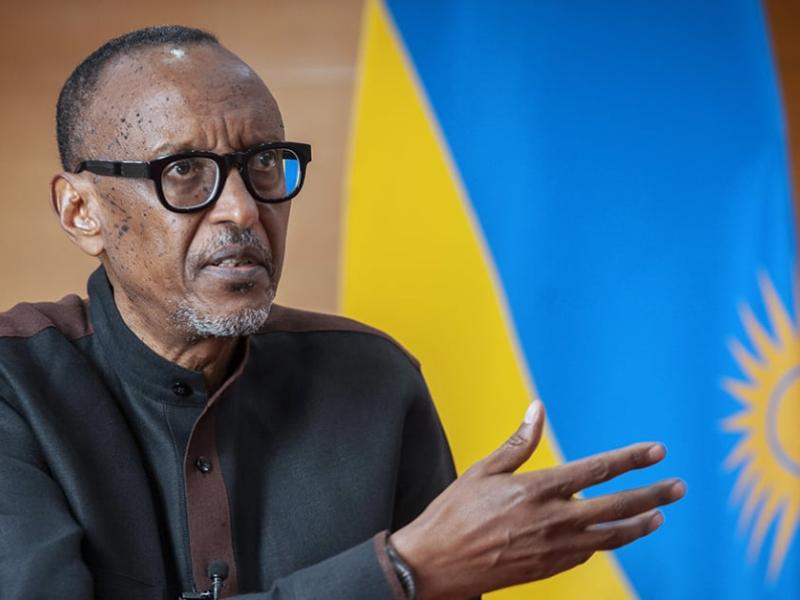
Rwandan President Paul Kagame, also leader of the ruling Rwandan Patriotic Front (RPF), delivered a stern message during a Friday, July 17, 2026, meeting of the party’s Political Bureau, reaffirming his country’s unwavering commitment to defend its sovereignty and security amid escalating tensions in the Great Lakes region.
Addressing an audience that included RPF officials and military leaders—many of whom face U.S. sanctions—Kagame rejected what he described as attempts to silence Rwanda and downplay its legitimate security concerns. To him, the only way to achieve such an outcome would be through Rwanda’s annihilation.
‘Silencing people will be harder than some imagine. If anyone tries to silence us, we will support those who come to kill you, just as they did the last time, and we will handle it our way. The only way to silence me is when I am dead. That’s all,’ he declared.
The Rwandan leader emphasized the equal value of every human life, rejecting any discriminatory approach. Acknowledging Rwanda’s small size and vulnerability, he acknowledged the country could face pressure but warned that any attempt to undermine its existence would be unacceptable.
‘Belittling everything and suggesting some lives matter more than others is not my policy. It is not the policy of the RPF. We are a small country, insignificant in many ways. You can harm us, but wishing our disappearance is no small matter,’ he stated.
Turning to the security crisis in the eastern Democratic Republic of the Congo (DRC), Kagame addressed calls for the elimination of the M23 rebel group—a movement the United Nations and several Western nations accuse Rwanda of supporting, a claim Kigali denies. The group currently controls large parts of North Kivu and South Kivu provinces. According to Kagame, these calls extend beyond the armed faction to target Rwanda itself.
‘When they said they would make the M23 disappear, they meant even Rwanda—we will make you disappear. Well, I cannot wish for that. I cannot desire such a thing. But if it happens, and I cannot prevent it, I believe they will find us [ready],’ he warned.
His remarks come at a time when, despite the Washington Agreement and ongoing review meetings, the security and humanitarian situation in eastern DRC continues to deteriorate. This contrast sharply with the flurry of diplomatic initiatives aimed at resolving the crisis.
The Doha process, under the auspices of Qatar, has also failed to bridge the gap between Kinshasa and the M23 rebellion, backed by Rwanda. The Montreux phase in Switzerland, intended to inject new momentum, yielded no tangible results. Commitments made during this round remain unfulfilled, while the worsening crisis in the Middle East has further sidelined the DRC file, slowing mediation efforts.
Calls for compliance with peace agreements continue to echo at national, regional, and international levels, yet tangible progress remains elusive. The persistent gap between diplomatic agreements and ground realities persists, as each party interprets the accords differently, rendering their implementation increasingly uncertain.