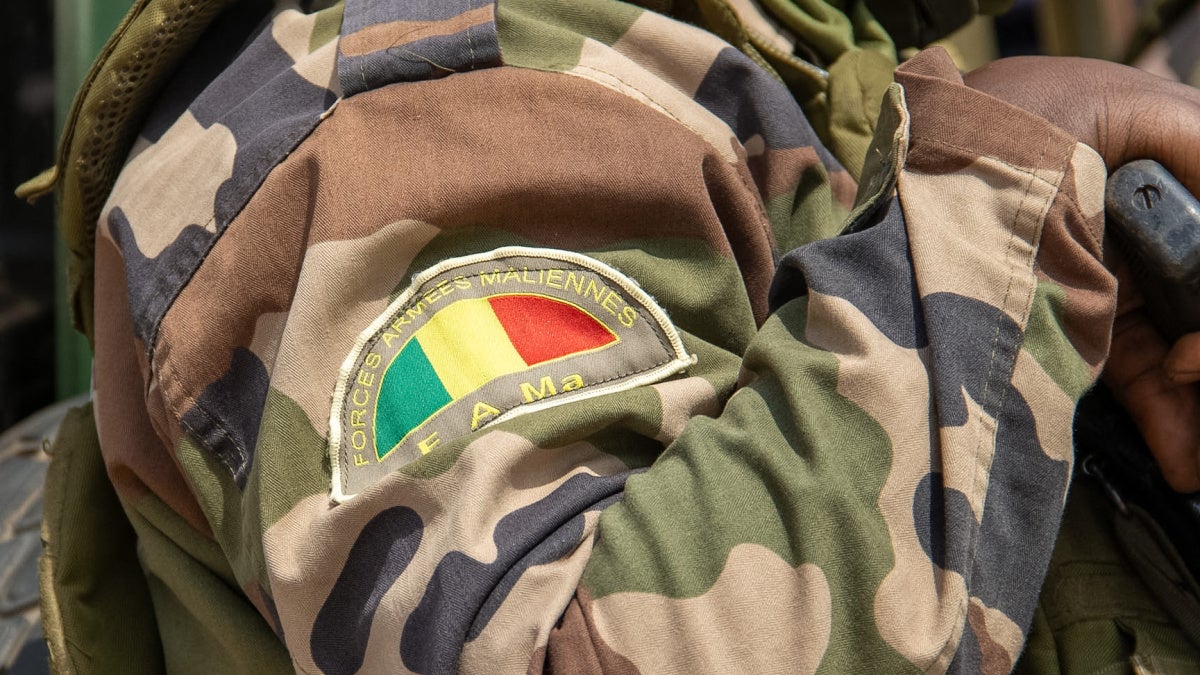
Bamako — New evidence has emerged that government forces and allied militias carried out deliberate attacks on unarmed civilians in central Mali’s Ségou region, resulting in at least 31 deaths and widespread destruction in early October.
Between October 2 and 13, uniformed soldiers alongside Dozo militias—traditional hunters predominantly from the Bambara ethnic group—stormed two villages under the control of the Group for the Support of Islam and Muslims (JNIM), an Al-Qaeda affiliate. Witnesses described how armed groups accused residents of collaborating with the JNIM, leading to summary executions and arson.
Kamona massacre: executions and burned homes
On October 2, shortly after 10 a.m., at least seven pickup trucks and three armored vehicles carrying Malian soldiers, accompanied by Dozo fighters on motorcycles, entered Kamona. Survivors reported that armed Islamists had warned villagers of the approaching forces, prompting many to flee. Those who remained were rounded up and shot.
« They gathered the men and executed them without a trial », said one survivor. « We found 17 bodies under a tree, and four more bodies north of the village. »
By the time the assault ended around 4 p.m., at least 21 men—aged 20 to 65—had been killed. The soldiers set fire to at least 10 huts and three storage buildings belonging to Fulani residents. A 40-year-old shepherd who hid with his 9-year-old daughter in an abandoned house recounted discovering the victims: « They were riddled with bullets. One man’s head was completely shattered. »
Residents provided a list of the deceased and expressed fears that additional killings had occurred in nearby bushland. « We heard at least 15 more men were killed that day, but we didn’t go check—we were too afraid the army would return », said one villager.
Balle killings: women and men targeted in second attack
Thirteen days later, on October 13, soldiers and Dozos again descended on Balle, a village reportedly under JNIM control for years. Witnesses said the attackers arrived around 1 p.m. in five pickup trucks and at least 30 motorcycles, forcing some residents to flee.
A 24-year-old man recounted: « I didn’t run at first, but when I saw soldiers going door-to-door and beating men, I fled. From my hiding place, I heard gunshots. »
The attackers killed 10 civilians, including a 55-year-old woman, and stole over 100 cattle. A 33-year-old resident found the bodies the next day: « They lay side by side, shot multiple times. Some had broken arms and legs. »
The slain woman’s 21-year-old daughter described how her mother confronted the soldiers: « She shouted at them, accusing them of abusing the villagers. They took her where the men were gathered and shot her. »
Military denies responsibility amid shifting narratives
Following the Balle attack, the Malian Armed Forces Chief of Staff released a statement claiming the operation was a « successful offensive reconnaissance » that « neutralized around twenty terrorists » and seized weapons. Yet villagers denied any armed confrontation had taken place.
« We’ve paid zakat to JNIM for years », said one resident. « They settle disputes, provide security—there are no soldiers here. The army treats everyone as a jihadist. »
Calls for justice and accountability
Human rights advocates have condemned the killings as war crimes, citing violations of international humanitarian law, which prohibits attacks on civilians, extrajudicial killings, and destruction of property. Despite Mali’s withdrawal from the International Criminal Court (ICC) in 2025, the country remains bound by the Rome Statute until September 2026, allowing continued scrutiny of alleged atrocities.
« These massacres are not isolated incidents but part of a pattern of abuse by state forces and their allies », said a senior Sahel researcher. « The government must conduct impartial investigations and hold those responsible to account in fair trials. »
With over 400,000 Malians displaced by the ongoing conflict since 2012, the international community has urged stronger regional and diplomatic measures to address the escalating violence and protect civilians.